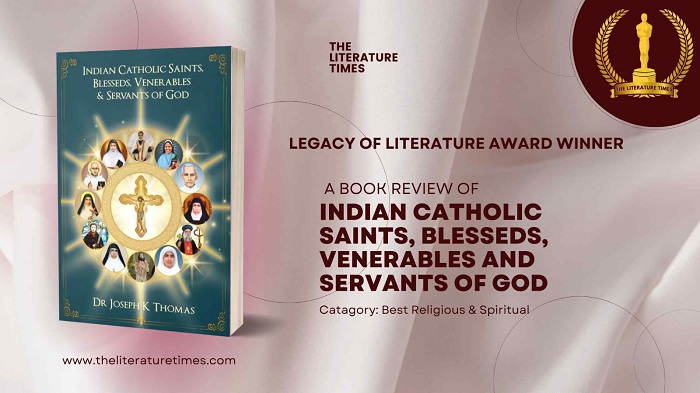
Indian Catholic Saints, Blesseds, Venerables and Servants of God by Dr. Joseph K. Thomas is a monumental and much-needed contribution to both the religious and historical literature of India. This work serves as a comprehensive guide to the lives and legacies of men and women who have walked the path of holiness within the Indian Catholic Church. More than a mere catalog, the book is a reverent homage to lives shaped by devotion, sacrifice, courage, and unwavering faith in the face of immense challenges.
From the outset, the book sets a clear and noble objective: to document and share the inspiring stories of those who have attained sainthood or are on the path toward canonization within the Indian context. In a country known for its spiritual plurality, Catholicism represents a significant, though often underrepresented, thread in the religious and cultural fabric. Dr. Thomas’s work not only shines a light on this underexplored dimension of Indian spirituality but also offers a lens through which readers can understand the deeply rooted faith and enduring service of Indian Catholics throughout history.
One of the book’s most commendable features is its accessibility. Though scholarly in its structure and depth, the prose remains clear, direct, and engaging. Dr. Thomas avoids unnecessary theological jargon, making the book approachable for a wide audience—from devout Catholics and curious readers of other faiths to historians, educators, and students of religious studies. Each entry is concise yet rich in content, giving readers a sense of the personal story, spiritual journey, historical background, and impact of each figure. The tone is reverent without being hagiographic, factual without being clinical.
The saints and holy figures profiled in the book represent a wide spectrum of Indian society. From early martyrs and missionaries to indigenous religious women and men who lived lives of quiet service, the diversity of personalities and experiences is both striking and moving. Readers will find familiar names such as St. Gonsalo Garcia, India’s first canonized saint, and St. Alphonsa, the beloved Franciscan Clarist nun from Kerala. Equally compelling are the lesser-known but spiritually significant lives of those declared Venerable or Servant of God—individuals whose causes are currently under consideration by the Vatican for beatification or sainthood.
What makes these profiles especially meaningful is Dr. Thomas’s attention to both the historical and cultural context in which these individuals lived. He places their lives within the broader narrative of India’s colonial past, social changes, religious tensions, and evolving Christian identity. In doing so, he not only honors their spiritual accomplishments but also recognizes their human struggles. Many of these men and women faced persecution, poverty, illness, or social rejection, yet they persisted in faith and service. Their stories are not idealized tales of perfection but testimonies to grace in action—faith lived through trial, humility, and quiet endurance.
The author’s attention to detail is meticulous, particularly in chronicling the stages of canonization—a process that remains unfamiliar to many outside the Catholic tradition. Dr. Thomas explains the significance of each stage: Servant of God, Venerable, Blessed, and Saint, thereby helping readers understand where each figure stands in the Church’s formal recognition process. He also provides insight into the role of miracles, martyrdom, and heroic virtue in determining sainthood, offering a valuable educational component that enhances the book’s credibility and purpose.
Another strength of the book lies in its subtle yet powerful thematic threads. While each biography stands alone, together they speak of a deep continuity: the universality of love, the call to service, the power of prayer, and the transformative force of suffering when embraced with faith. Whether it is a nun who cared for the poor with nothing but her bare hands, a priest who died for his faith, or a layperson who lived with exemplary charity and humility, the stories echo the same virtues that transcend time, culture, and denomination.
The design of the book is user-friendly, with clear section divisions and a well-organized presentation that makes it easy to navigate. It can be read cover-to-cover or used as a reference work, depending on the reader’s interest. There is also a quiet reverence in the way the entries are presented—never overly embellished or sensationalized, but rather with the dignity befitting their subjects.
That said, one possible shortcoming of the book is that, in its brevity and broad scope, some of the individual stories feel like starting points rather than complete portraits. Readers who are deeply interested in a specific figure may need to seek additional resources to gain a fuller understanding of that person’s life and spiritual teachings. However, this seems less a flaw and more a reflection of the book’s primary aim—to introduce, to inspire, and to honor.
It is also worth noting that Indian Catholic Saints, Blesseds, Venerables and Servants of God has relevance beyond religious circles. In an age where spirituality is often individualized and stripped of historical context, this book serves as a reminder that sanctity is not abstract but rooted in community, sacrifice, and the moral courage to stand for one’s convictions. For a nation like India, where religious coexistence is both a challenge and a necessity, this work fosters greater awareness of how Catholicism has contributed to the broader spiritual and social landscape of the country.
Dr. Joseph K. Thomas’s work ultimately succeeds not just as a collection of biographies but as a living archive of faith. It invites reflection on the enduring power of belief and how it can shape lives in every generation. In celebrating these holy figures—many of whom remain largely unknown even within their own communities—the book does more than inform; it uplifts, inspires, and honors a legacy that continues to grow.
In a time when faith is often tested and spiritual role models seem distant, Indian Catholic Saints, Blesseds, Venerables and Servants of God offers a rich treasury of lived holiness. It is a book that belongs not only in parish libraries and seminaries but in every home where faith, history, and inspiration are cherished. Through this work, Dr. Thomas has not only preserved the stories of India’s Catholic heroes but also contributed to the ongoing dialogue between past and present, between sanctity and society, and between the sacred and the everyday.