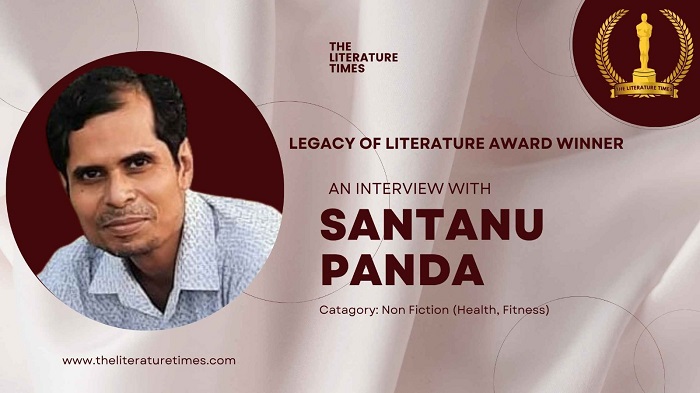
Dr. Santanu Panda is a veterinary science graduate with a Ph.D. in Animal Biotechnology from the National Dairy Research Institute, India. With deep expertise in animal infectious diseases, while working as an Assistant Director at the Institute of Animal Health Veterinary Biologicals, Kolkata, under Animal Resources Development Department, Government of West Bengal, he has written this book. Currently he is working as Block Livestock Development Officer under this department. Dr. Panda has contributed in the area of veterinary science research, with publications in esteemed international journals like PLOS ONE, Protein Expression and Purification, and Reproduction in Domestic Animals. His debut book, Fighting the Invisible Enemies, blends scientific insight with cultural imagination, advocating for the One Health approach to address the growing threat of zoonotic diseases.
The Literature Times:What motivated you to write Fighting the Invisible Enemies, and how did your professional background influence its development?
Dr. Santanu Panda: In a clear-cut way, the COVID19 pandemic motivated me to write the book Fighting the Invisible Enemies, in wish to make the ordinary people aware about zoonoses and One Health.
The word ‘One Health’ hit my ear during the initial years of my veterinary profession in the course of my groundwork as a speaker for a scientific seminar on zoonoses. Thereafter, I joined in the animal disease diagnostic laboratory where variety of infectious diseases of animals were screened on routine basis. A few of them had zoonotic importance. But I never thought to write a book on zoonotic threats. It was not until COVID 19 hit the human race, a thought on zoonoses enveloped my mind. As of everyone, I wanted out of the bizarre life with daily news of untold number of hospitalization and copious deaths of individuals. Afterwards, when the situation was somehow manageable, the idea of writing a book on zoonoses appears in mind. I started assembling information little by little and the book was developed. It is worthwhile to mention here that it’s my veterinary profession that nourished my thoughts on zoonoses at every phase of my writing journey.
The Literature Times: How do you define the One Health approach in simple terms for the general public?
Dr. Santanu Panda: One Health approach is an integrated effort where expertise from multiple sectors including doctors, veterinarians, ecologists, scientists, public health officials, policymakers and many others from different professions work together locally, nationally and globally to fight against zoonotic threats. It recognizes how closely the health of people, animals and our shared environment are interconnected. In broader sense the concept is not only confined to address zoonotic issues, but any complex issue like anti-microbial resistance, food safety, water contamination, climate change etc. can be tackled by this approach. By working on 3 C’s with communication, coordination and collaboration, the aim of this holistic approach is to achieve the best possible health outcomes for everyone- human, animal and environment.
The Literature Times: Why do you believe zoonotic diseases continue to emerge despite scientific advancements?
Dr. Santanu Panda: With the domestication of animals during pre-historic age, people started to live in close contact with animals. And in this human-animal interface the communicable pathogens began to transmit each other. That is what zoonosis is-the infectious diseases that are naturally transmissible from vertebrate animals to humans and vice versa. As we can’t live without animals, zoonosis was, is and will be present in this planet. Now, with the advent of scientific advancement, we have started to think of how best we can tackle the zoonotic issues. For example, the development of the array of diagnostic procedures for COVID 19 with higher specificity and sensitivity as well as rapid discovery of safe and effective COVID 19 vaccines have had possible because of our scientific advancements.
At the same time, our activities in relation to scientific advancement cause climatic, demographic and technological changes worldwide. These human driven global changes have produced a new milieu called the global mixing bowl, in which emerging and remerging pathogens have much greater opportunity to create new niches, cross species boundaries, and travel worldwide very quickly among populations of humans and animals. In this regard, some of the risk factors for microbial threats are: population growth, change of human demography, climate change, deforestation, urbanization, domestication, intensive wild life farming, poverty and inequality, geopolitical instability etc. These are some of important reasons why zoonotic disease continue to emerge. So, beside our advancement in science and technology, we need to aware of how best we can preserve our natural resources like forest, land, river, mountain etc. as well as improve health of animals, humans and environment.
The Literature Times: In your book, you draw a parallel between the One Health approach and Goddess Durga. What does this symbolism mean to you personally?
Dr. Santanu Panda: Comparing One Health with Goddess Durga is purely based on my imagination as how Goddess Durga has been appearing in my mind since childhood days with her ten arms holding ten different arms and weapons for slaying the invincible buffalo demon Mahishasura. As how Goddess Durga holds the symbol of supreme power created by the GOD-Generator Lord Brahma, Operator Lord Vishnu and Destroyer Lord Shiva- to kill the unbeatable Mahishasura, the One Health holds the supreme power at human, animal and environmental interface to kill our invisible enemies which are no other than invincible pathogens. Devi Durga symbolizes the integration of power from Gods and lesser Gods. Likewise, One Health also is an integrated approach holding the skills and power of the experts from multiple sectors including physician, veterinarian, sociologist, ecologist, pathologist, epidemiologists, politicians and others.
But I want to mention here that One Health is above all religion and culture.
The Literature Times: How has your work in government service informed your understanding of real-world health system challenges?
Dr. Santanu Panda: While working for more than seven years in a laboratory under ARD department of Govt. of West Bengal, I’ve perceived valuable insights into real world health system challenges. Besides the job of animal disease diagnosis, my laboratory journey offered me to understand the importance of zoonotic disease surveillance, as our lab was engaged in screening of a few but important zoonotic diseases, like brucellosis. Notwithstanding this, later when I’ve taken the charge of animal health sector under this department in a block of rural Bengal, I continue monitoring, along with other veterinarians, different zoonotic cases at field levels like rabies, listeriosis, taeniasis, salmonellosis and many more, besides monitoring animal diseases. Overall, the activities, what we vets focus on animal health through government service, highlight the critical link between animal well-being and public health which in turn add significant value in controlling disease outbreaks.
The Literature Times: What are some practical steps that individuals and communities can take to support the One Health vision?
Dr. Santanu Panda: Remember one thing, One Health involves everyone. Irrespective of individuals and communities, the most important thing what we need is to learn about the diseases that are transmitted between mans and animals as well as how to prevent them. The education and awareness about zoonoses and One Heath are essential.
One Health begins with maintaining an animal or pet hygienic and healthy through routine vaccination, deworming, treatment and management under the advocacy of the genuine veterinary facilities, if it’s concerned to an animal owner. It is also important to note that wild animals are potential source/reservoir/career for zoonotic pathogens. So, animal owners do make sure that their animals should be free from direct contact with wild animals. I mean to say be a responsible animal/pet owner.
Alongside, the other steps like improving personal hygiene and sanitation, supporting community sanitation, promoting good food hygiene under proper food safety guidelines must be practiced. Prudent antibiotic usage in healthcare, agriculture and animal husbandry practices is also noteworthy. Additionally, everyone should promote a healthy environment and advocate for protection of ecosystems and biodiversity. By understanding the interconnectedness of human, animal and environmental health as well as by supporting policies and initiatives that promote the One Health approach at local, national and global levels, one can contribute to prevent disease outbreak.
The Literature Times: How do you see the role of veterinarians evolving in the global public health landscape?
Dr. Santanu Panda: There is no doubt that veterinarian’s roles are expanding and becoming increasingly vital in the global public health landscape, moving beyond their traditional animal care and treatment to encompass broader areas like food safety, zoonotic disease control, modern research in comparative medicine, environmental health, antibiotic resistance, One Health education, One Health policy and regulation and many more. I mean to say veterinarians are involved everywhere in addressing complex challenges that span human, animal, and environmental health.
The Literature Times: What message do you hope readers will carry with them after finishing your book?
Dr. Santanu Panda: I think, the readers will explore an old proverb in a significant way after finishing the book, which is Unity is Strength. That’s what One Health talks about-a unifying multisectoral approach for tackling zoonotic threats. Let’s put our hands together to fight against the invisible enemies.