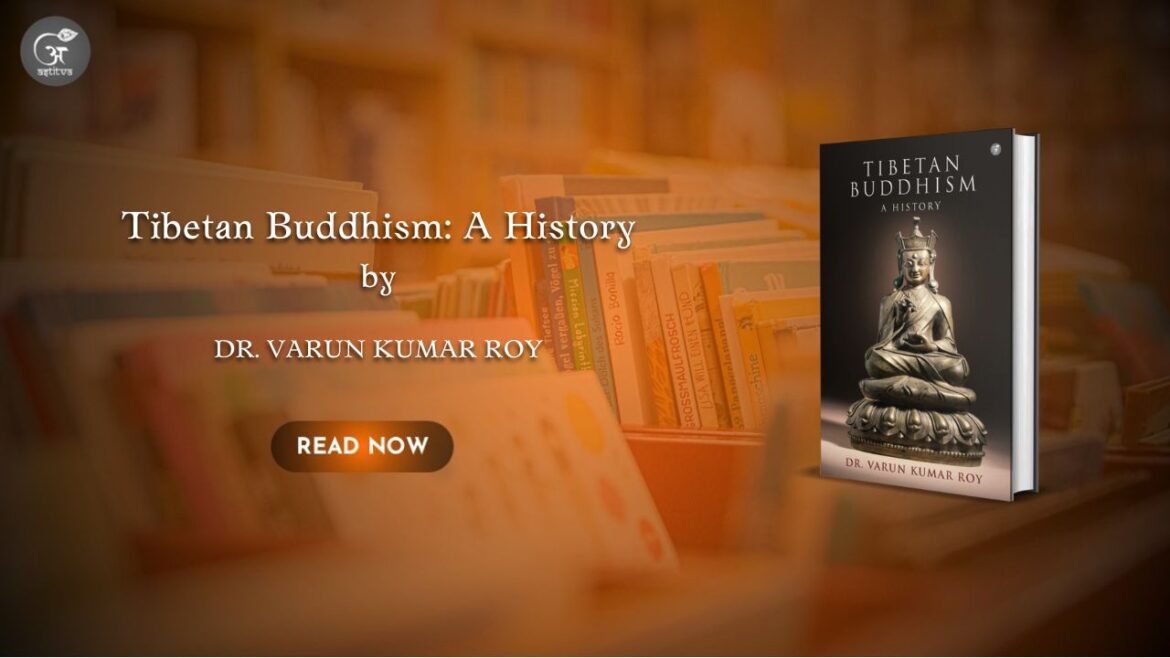
The release of Tibetan Buddhism: A History by Dr. Varun Kumar Roy marks a significant addition to the body of scholarly literature on Tibetan cultural and religious history. This meticulously researched volume brings to life the intricate journey of how Buddhism not only arrived in Tibet but became a defining element of Tibetan identity and civilization. Far from being a linear tale, the story of Tibetan Buddhism is one of nuanced transformation, rich with interwoven threads of spiritual fervor, political ambition, and cultural negotiation. Dr. Roy unpacks these threads with scholarly precision and narrative clarity, making the book both an academic achievement and an accessible historical exploration.
At the heart of the book lies an effort to move beyond oversimplified understandings of Buddhism’s role in Tibet. Rather than focusing solely on spiritual doctrine or monastic traditions, Tibetan Buddhism: A History takes a broader view—exploring the geopolitical and cultural currents that carried Buddhist ideas from India and Central Asia into the Tibetan plateau. Dr. Roy begins with the earliest interactions between Tibet and Buddhist regions, long before the formal adoption of the religion. Through ancient trade networks, regional diplomacy, and intercultural exchange, Buddhism gradually found a foothold in Tibetan society, setting the stage for a deeper transformation that would unfold over centuries.
The narrative pays careful attention to pivotal historical figures such as Songtsen Gampo, who played a crucial role in institutionalizing Buddhism in Tibet. But Dr. Roy goes beyond the well-known emperors and saints. He shines a light on the often-overlooked contributions of translators, travelers, monastic reformers, and foreign missionaries, all of whom had a hand in shaping the Tibetan Buddhist tradition. Their efforts in translating scriptures, codifying doctrines, and navigating cultural tensions are presented not as background detail, but as central to the story of a religion that was as dynamic as the land it took root in.
The book also explores the fusion of indigenous Tibetan beliefs with Buddhist principles, a process that gave rise to a distinctly Tibetan form of Buddhism. Dr. Roy deftly navigates the tensions and harmonies between these belief systems, illustrating how spiritual and ritualistic practices evolved in dialogue with the needs of Tibetan society and politics. His historical insights offer a compelling look at how religion can serve not only as a spiritual guide but also as a mechanism of social coherence and cultural resistance.
Dr. Varun Kumar Roy’s qualifications as an historian bring a depth of credibility to the work. As the Head of the Department of History at the University of North Bengal, Dr. Roy is recognized for his dedication to historical research and education. With three previous books and over twenty research articles published in respected journals, his scholarship reflects a career committed to uncovering nuanced truths and fostering intellectual growth. His role as a mentor and academic leader further underscores the depth of thought and responsibility that informs his writing.
In Tibetan Buddhism: A History, Dr. Roy’s prose is both authoritative and engaging. He balances the demands of rigorous academic documentation with a narrative style that invites readers to journey through the corridors of time. For students, scholars, and general readers interested in Tibet, Buddhism, or the broader dynamics of cultural transmission, this book is an essential resource.
This release is not just an academic milestone; it is a cultural offering—an invitation to better understand one of the most profound spiritual traditions through the lens of its historical formation. As debates around cultural preservation and religious identity gain urgency in today’s world, Dr. Roy’s book provides timely insights rooted in historical truth. Tibetan Buddhism: A History promises to be a cornerstone reference in the study of Tibetan culture and religious transformation for years to come.