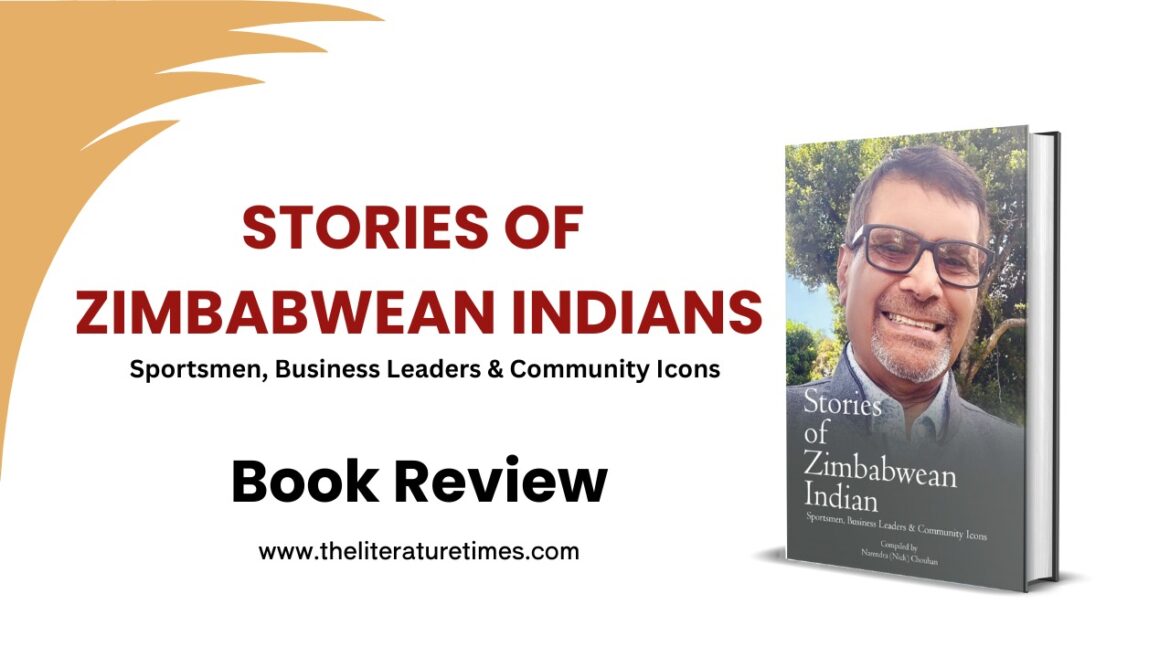
Narendra (Nick) Chouhan’s Stories of Zimbabwean Indian is less a book and more a living archive — a monumental act of remembrance that captures the voices, triumphs, and struggles of a community often overlooked in mainstream African historiography. Spanning nearly fifty chapters and richly illustrated with photographs and memorabilia, it chronicles the lives of sportsmen, business leaders, and community figures who shaped Zimbabwe’s Indian diaspora through the 20th century.
Chouhan’s project is ambitious in scope and heartfelt in execution. He brings together stories of individuals who built institutions, broke racial barriers, and cultivated a sense of belonging in a country negotiating its own postcolonial identity. His portraits of figures like Haroon Ismail, Justice Ahmed Ebrahim, the Gokal brothers, and Kantilal “Kanti” Lalla are deeply personal yet historically significant. Through these lives, the book reconstructs a forgotten world of Indian cricket clubs, family enterprises, temple communities, and everyday resilience in the face of colonial discrimination and economic uncertainty.
One of the most powerful stories is that of Haroon Ismail, a teenage cricket prodigy who in 1969 was named “Best Batsman” at the Rhodesian national school trials but was barred from team selection — and even from dining with his white teammates — due to racial segregation. Chouhan recounts the episode with admirable restraint, allowing the injustice to speak for itself. The result is a portrait of quiet defiance that encapsulates both the pain and the dignity of the Indian experience in colonial Rhodesia.
The book’s sports narratives are especially strong. From the 1963 Louis Mountbatten School cricket victory to the achievements of administrators like Maqbul Dudhia and Justice Ebrahim, Chouhan shows how cricket, hockey, and community leagues became spaces of resistance, pride, and identity formation. These chapters are packed with anecdotes, match statistics, and personal memories, revealing how the playing field doubled as a stage for social change.
Beyond sport, Chouhan celebrates entrepreneurial ingenuity and cultural life. The Ranchod family’s century-long business journey, or Keshavbhai Gopal’s rise from salesman to community leader, mirrors the broader story of Indian industriousness in Zimbabwe. Meanwhile, musicians, temple organizers, and social reformers emerge as cultural anchors who nurtured heritage across generations.
Stylistically, the book wears its heart on its sleeve. Chouhan writes not as a detached historian but as an insider, chronicling a world he inhabits and loves. His tone is warm, reverent, and occasionally elegiac. This intimacy is both the book’s greatest strength and its minor weakness. The reverence sometimes slips into hagiography — many subjects are “beloved,” “respected,” or “admired,” leaving little room for contradiction or critique. The result can feel more commemorative than analytical, more community chronicle than formal historiography.
Yet this emotional authenticity is what makes Stories of Zimbabwean Indian so moving. It does not claim academic detachment; it claims belonging. In a time when diaspora communities are dispersing and oral histories risk fading, Chouhan’s work functions as a cultural time capsule. The hundreds of names, faces, and episodes preserved here will be invaluable to future researchers of postcolonial sport, migration, and Indian-African identity.
Physically, the book is beautifully assembled. The inclusion of photographs, scorecards, and archival documents turns it into a tangible museum of collective memory. The layout mirrors the community’s layered, non-linear storytelling tradition — sprawling, digressive, but always human.
In the end, Chouhan achieves something rare: he transforms nostalgia into historical preservation. Stories of Zimbabwean Indian is not only a tribute to individuals but also a testament to endurance — to lives lived with integrity, ambition, and grace in a country that demanded all three in abundance.
For readers interested in diaspora studies, African-Indian history, or sports as a lens of social change, this book offers a treasure trove of material. For members of the Zimbabwean Indian community, it offers something even more precious: recognition, remembrance, and pride.
Narendra (Nick) Chouhan has not just written a book; he has built an archive — one that ensures his community’s stories will no longer remain footnotes, but stand proudly at the center of history.
Title: Stories of Zimbabwean Indian
Author: Narendra (Nick) Chouhan
Publisher: Evincepub Publishing