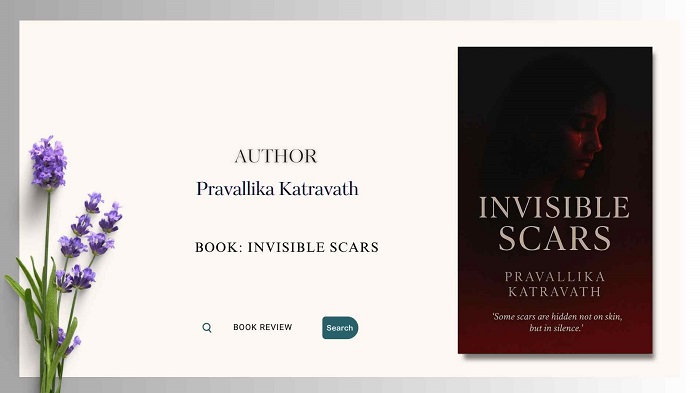
Invisible Scars by Pravallika Katravath is a tender, introspective work that avoids theatrics in favor of quiet truths. It does not shout its message from the rooftops; instead, it murmurs it softly, steadily, and with a sincerity that lingers long after the last page is turned. In a world overloaded with noise—self-help slogans, quick-fix promises, and relentless demands for productivity—this book stands apart by prioritizing vulnerability over instruction and empathy over prescription. Katravath’s writing acts less like a lecture and more like a conversation with someone who understands the weight of a pain you cannot name.
The book’s chief strength lies in its unwavering gentleness. Rather than framing healing as a triumphant, dramatic transformation, Invisible Scars recognizes that most healing happens in the quietest corners of our emotional lives. Katravath writes for the people who do not announce their suffering, the ones who swallow their tears, who feel forgotten or misunderstood despite their efforts to stay strong. This alone creates a distinct intimacy: the reader is immediately seen, acknowledged, and accepted without judgment. The text holds space for the reader’s vulnerability, allowing pain to exist without rushing toward solutions. This approach is both comforting and refreshing.
Stylistically, Katravath writes with warmth and clarity. Her language is simple but never simplistic. She favors direct, emotionally honest sentences that feel more like personal reflections than crafted prose, which amplifies the book’s sense of authenticity. There is a softness in her tone—gentle nudges, compassionate reminders, and a quiet insistence that healing is not a race. The pages move like slow breaths, reminding us of the value in pausing, in noticing, in being tender with ourselves. The work becomes less about storytelling and more about emotional resonance.
What makes Invisible Scars particularly meaningful is the author’s refusal to glamorize suffering. Pain here is neither romanticized nor dismissed; it is acknowledged as something real, weighty, and deserving of compassion. Katravath understands that invisible wounds can be every bit as debilitating as physical scars, if not more so, because they often go unseen and therefore unsupported. Her reflections encourage readers to accept their hurt without shame, to allow themselves to feel and grieve, and to recognize that emotional pain is not a personal failure. Reading the book feels like being given permission to finally sit with feelings long pushed aside.
There is also a strong sense of purpose guiding Katravath’s writing. Her work through Valkyrrie M.E.D.S. and her podcast, combined with her commitment to empowering women and survivors of emotional trauma, is deeply woven into the book’s emotional landscape. The compassion she extends to her audience is not performative—it is rooted in genuine understanding and lived advocacy. This authenticity strengthens the credibility of the book’s comforting tone. Readers familiar with emotional wounds, shame, self-doubt, or long-carried guilt will likely feel her sincerity in each passage.
One of the book’s most notable qualities is its ability to speak to universal experiences without generalizing them. While it specifically extends its hand to girls and women who have endured trauma or social judgment, its resonance expands far beyond that group. Anyone who has ever felt insufficient, unworthy, overlooked, or emotionally exhausted will find something of themselves in this work. The book’s compassion is expansive, not exclusive. It acknowledges individual struggles while affirming the shared humanity beneath them.
However, readers expecting structured self-help advice, psychological frameworks, or step-by-step healing methods may find the book’s format too soft, too meandering. Invisible Scars is not a manual; it is a companion. It does not tell the reader what to do but rather how to feel—seen, safe, and understood. In a literary landscape saturated with books that promise rapid transformation, Katravath’s refusal to offer quick solutions may initially feel unsatisfying to those seeking direct guidance. But this is ultimately the book’s philosophical point: healing does not follow straight lines or rigid instructions. It unfolds in quiet moments, small realizations, and gentle acts of self-forgiveness.
What the book may sacrifice in structure, it gains in emotional depth. Each reflection encourages introspection, asking the reader to examine the spaces within themselves where pain has been hidden or dismissed. These quiet moments accumulate into a sense of gradual restoration. The book does not push the reader forward; it walks beside them. There is something healing in that alone—someone choosing to stay, to speak softly, to remind you that you matter.
Perhaps the greatest contribution Invisible Scars makes is its reaffirmation of human fragility as something worthy of care, not judgment. Katravath writes with the belief that scars—whether emotional or psychological—are not signs of weakness but evidence of endurance. Her message is not one of forced positivity but of gentle resilience. You can heal. You deserve peace. Your scars do not define you. These are not empty affirmations; in her hands, they feel like truths offered with sincerity and grounded empathy.
Invisible Scars succeeds not by dazzling the reader but by comforting them. It is a quiet book for quiet pain, a small light for dark nights, and a reminder that even the wounds we never speak about are deserving of compassion. For those who have held themselves together for too long, this book offers something precious: permission to rest, to feel, and to heal at their own pace.