A Day in Your Writing Life
If we could peek into your typical writing day while creating Whispers of Kalatmak, what would we see—rituals, playlists, or favourite snacks?
Author: Well, writing has been my muse for a very long time. And as a writer, I have always liked to keep a proper schedule for my writing work. Since I also have a full-time job, I would usually dedicate the early mornings to writing. That’s a time when my productivity would be at its highest point. I would start my day with a warm cup of coffee and start writing while hearing the sweet chirpings of the birds in the background. Weekends were the busiest days, and I would spend long hours writing and editing stuff. More than anything, it was my favourite songs that kept me going. KK’s songs are my all-time favourites, and they were my biggest company on nights when I would be awake writing about Kalatmak.
First Spark
Do you remember the exact moment you knew you had to write this story, or was it a slow build over time?
Author: There was no exact time as such. I knew I wanted my debut novel to be something that would resonate with every woman, especially young women. But there were a lot of plots that were there, and I didn’t know which one to focus on. Once, I was reading an article about Bhangarh Fort and the abandoned town of Kuldhara. Those stories fascinated me, and I knew I wanted to use the concept of myth in my story. But I also wanted to make it sound unique. Hence, the story of Kalatmak. Also, if you see, I have made reference to the temple of exorcism located in Rajasthan, as well as the rituals followed there. All these concepts have been cumulatively used to give birth to the novel.
Building Atmosphere
The novel’s mood shifts from Mumbai’s bustle to Kalatmak’s eerie quiet. How did you use language or pacing to create that sense of contrast?
Author: The contrast was intentional. Mumbai, as a city, is very close to my heart as I have spent some beautiful years of my life there. Through my story, I wanted my readers to feel the fast-paced life in this bustling metropolis. The language there was faster, more descriptive, filled with sensory details, and quick transitions. The pacing mirrors the city’s heartbeat.
Kalatmak, on the other hand, is a village that has been abandoned by time itself. The people there are stuck in a loop, and life is almost like a necessary performance. Everything here slows down. The sentences become longer, almost sparse. I wanted my readers to feel the stillness, a kind of calm that haunts you.
Character Surprises
Did any character—major or minor—surprise you by developing in an unexpected way as you wrote?
Author: Jagat would be one character who surprised me the most. I mean, I never thought that Jagat would become this important to the plot. My readers will agree with me that Jagat is not a major character, but his influence is huge. His words, his persona, and his innocence all contributed to the story. I never thought of giving Jagat so much significance. But in the process of writing, he became almost like a shadow of Aarusha.
Influences & Inspirations
Which books, films, or folk legends influenced the tone or themes of this novel?
Author: I have always been an avid reader, and this whole idea of curse, myth, and the kind of stories that lie in the forgotten corners of history has always intrigued me. The sparks for ‘Whispers of Kalatmak’ came when I first read about Bhangarh Fort in Rajasthan and the eerie legends surrounding it. Thereafter, a friend of mine told me about Kuldhara, an abandoned village steeped in mystery. Those tales stirred something in me, and I wanted to write something about the power of folklore. One idea led to another, and slowly, Kalatmak began to take shape in my mind. What started as a curiosity about myths and curses grew into the world of my novel.
Emotional Core
Which scene or chapter was the most emotionally challenging for you to write, and why?
Author: One of the most challenging scenes was when I was depicting the story of Saanjh. It was like a lived experience. As an artist, you have to go through all the emotions equally. While the happy scenes did make me joyful, the tragic scenes were also part of this writing process. I was imagining myself as Saanjh and writing the scene. I must say this, but I spent a few sleepless nights while writing these final scenes.
Cultural Layers
You weave oral storytelling, traditional crafts, and local dialects into the narrative. How important was it to preserve those cultural details?
Author: Authenticity was very important to me while I was building Kalatmak. I wanted my readers to feel the dryness of the desert, the chill of the wind, the customs of the people there, and their everyday struggles. I wanted to depict an authentic village lifestyle. While I could not travel due to my work schedule, I dedicated long hours to online research. I read several blogs on the ecosystem in Rajasthan, the local food, and the struggles faced in the villages. Also, I read historical accounts of Rajasthan’s haunted sites like Bhangarh Fort and Kuldhara. One of my close friends belongs to Rajasthan, and she helped me a lot with topics related to dialects, cuisines, customs, etc. Her help played a very special role in giving authentic details of desert life. In the end, it was a blend of research, lived impressions, and imagination that helped me bring the setting to life.
Balancing Fact and Fiction
Did you base Kalatmak on a real village or combine elements from several places to create a fictional setting?
Author: The sparks for ‘Whispers of Kalatmak’ came when I first read about Bhangarh Fort in Rajasthan and the eerie legends surrounding it. Thereafter, a friend of mine told me about Kuldhara, an abandoned village steeped in mystery. Those tales stirred something in me, and I wanted to write something about the power of folklore. One idea led to another, and slowly, Kalatmak began to take shape in my mind. What started as a curiosity about myths and curses, grew into the world of my novel. Kalatmak is a fictional setting where I combined several elements to give shape to this village.
Lessons Learned
After finishing your debut, what is one lesson about writing—or about yourself—that you didn’t expect?
Author: The biggest lesson was patience, with the story and myself. Writing isn’t a linear journey. There were days I could not write a single word. My mind would just go blank. There were moments of silence and doubt. I have now learned to sit with those pauses rather than fight them. Whispers of Kalatmak shaped me as a writer and a person.
Advice for Aspiring Writers
What guidance would you offer someone who wants to tell a story rooted in folklore and personal discovery, as you did?
Author: As a new author myself, I want to tell all aspiring writers to believe in themselves. Don’t be hard on yourself and just trust the process. Write every day. And if you are trying to tell a story rooted in folklore, make sure not to lose your original voice in the process. It’s your story after all!
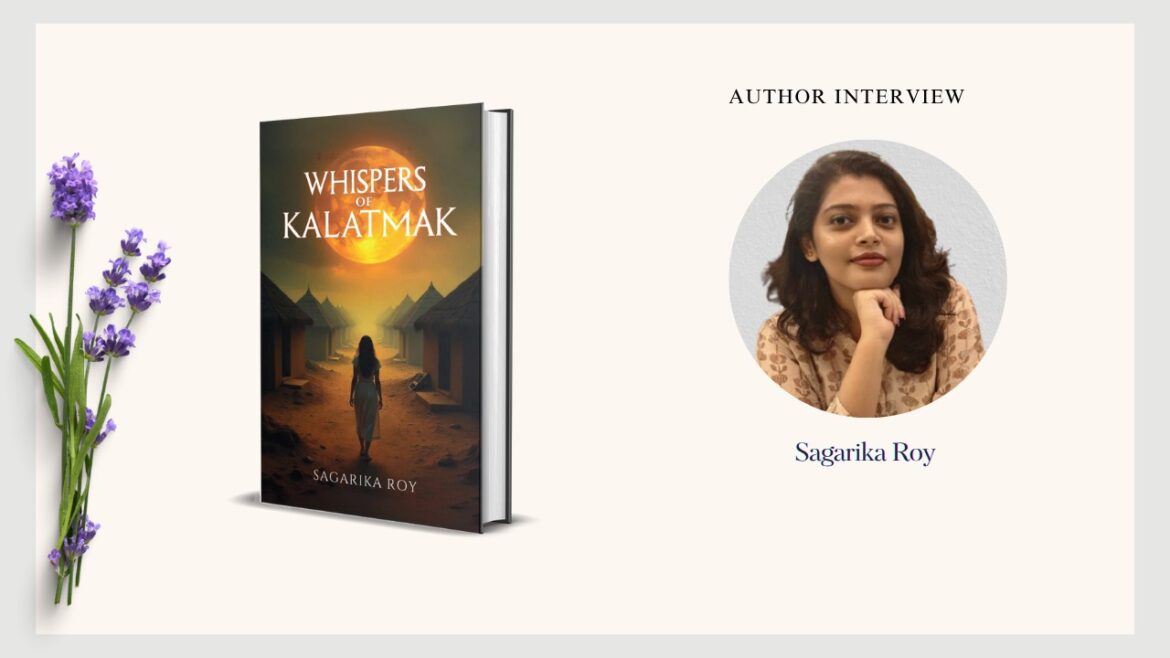
Book by Sagarika Roy: Whispers of Kalatmak
Publisher: Evincepub Publishing
Whispers of Kalatmak, Sagarika Roy, Author Interview, Indian Fiction, Folklore Stories, Myth Inspired Books, Writing Journey, Debut Novel, Rajasthan Folklore, Haunted Stories India, Book Lovers India, Creative Writing Process, Storytelling, Women Authors, Mystery Fiction, Literary Interview, Book Feature, Writer Inspiration, Fiction Writing, Novel Behind the Scenes