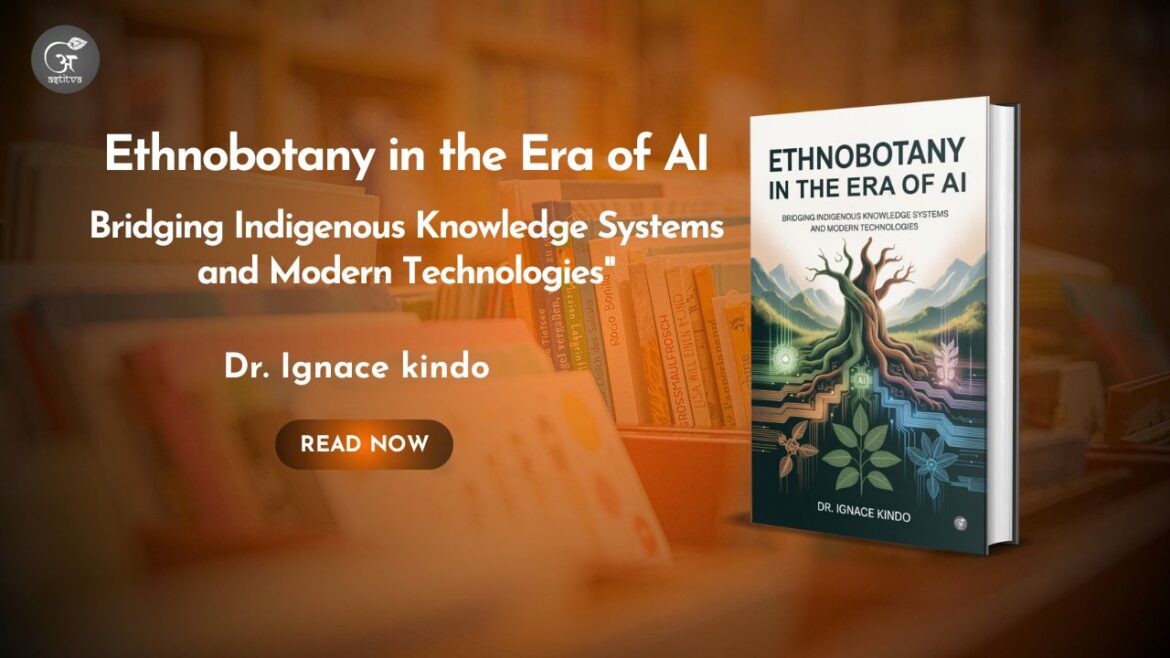
“Ethnobotany in the Era of AI: Bridging Indigenous Knowledge Systems and Modern Technologies,” authored by Dr. Ignace Kindo, emerges as a timely and thought-provoking contribution to the world of environmental scholarship. This powerful work brings together the age-old wisdom of indigenous communities and the rapidly evolving landscape of artificial intelligence, offering readers an insightful exploration of how tradition and technology can coexist, collaborate, and create meaningful pathways for the future.
The book is the result of a profound personal and academic journey—one that traverses dense forests, scientific frameworks, cultural landscapes, and digital frontiers. Dr. Kindo writes with deep sincerity, acknowledging both the privilege and responsibility of working at the intersection of community-rooted knowledge and cutting-edge innovation. His narrative invites readers to slow down and listen—to elders, to ecosystems, and to the lessons embedded in centuries-old oral traditions. At the same time, he examines the transformative potential of AI in democratizing information, improving conservation efforts, and enabling communities at the margins to participate in global conversations about sustainability and ecological stewardship.
Grounded in his extensive fieldwork in central India, the book highlights the sacred relationships indigenous communities share with their natural environments. Plants are not merely resources; they are companions, teachers, and living archives of culture. Dr. Kindo treats these perspectives with utmost respect, presenting them not as artifacts of the past but as essential guides for shaping a more sustainable and equitable future. His reflections underscore the tension between optimism and caution—recognizing that AI, while full of promise, also carries risks if used without ethical safeguards and ecological sensitivity.
The release of this book also shines a light on the author himself—Dr. Ignace Kindo, a distinguished botanist, researcher, and educator from Chhattisgarh. With a doctorate in Botany from St. Joseph’s College (Autonomous) Tiruchirappalli and years of experience in ethnobotany, medicinal plant research, and conservation biology, Dr. Kindo has carved a unique space in academia. His dedication to combining traditional tribal knowledge with modern science places him among the leading voices advocating for culturally anchored and scientifically rigorous approaches to plant studies.
Currently serving as a senior faculty member at Loyola College, Kunkuri, Dr. Kindo draws inspiration from the Jesuit values of holistic education, social justice, and care for creation. His work extends beyond classrooms and laboratories into the heart of communities, where he mentors young researchers, raises ecological awareness among students, and champions the rights and wisdom of indigenous groups. His portfolio includes numerous national and international publications, active participation in seminars and workshops, and ongoing contributions to biodiversity documentation and conservation.
“Ethnobotany in the Era of AI” is more than just a book; it is an invitation to rethink how we perceive knowledge, progress, and the natural world. It challenges readers to envision a future where artificial intelligence strengthens, rather than overshadows, the rich heritage of indigenous ecological wisdom. Through this work, Dr. Kindo aspires to contribute to the decolonization of scientific knowledge and to the restoration of dignity in indigenous plant science—ensuring that the voices of those who protect our forests and honor their languages continue to resonate through generations.
With its release, the book stands as a significant milestone for researchers, students, environmentalists, technologists, and anyone curious about the delicate balance between tradition and innovation. It reminds us that real progress begins by honoring the roots that ground us while courageously exploring the technologies that shape our tomorrow.