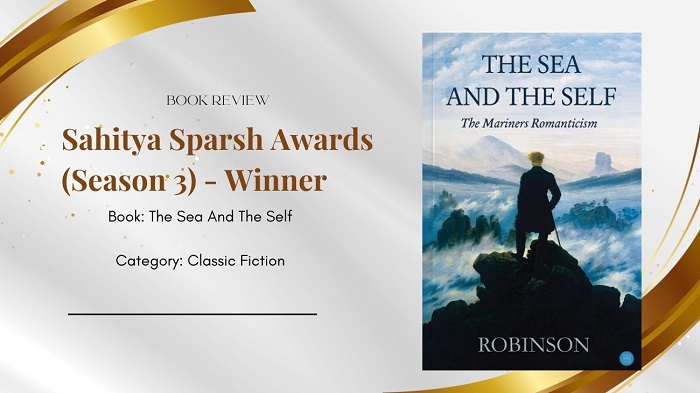
Classic fiction enthusiasts have a new treasure with The Sea and the Self by Robinson, winner of Sahitya Sparsh Awards – Season 3 in the classic fiction category. This novel is a lyrical exploration of memory, longing, and the human heart. At the center is Captain David Carter, a solitary seafarer whose life has been shaped by orphanhood, war, love, and the relentless passage of time. Robinson’s masterpiece is not just a journey across oceans but a voyage into the deepest recesses of the soul.
Exploring the Themes of The Sea and the Self
Memory and Longing
One of the most compelling aspects of The Sea and the Self is its exploration of memory. The novel delves into the fragmented recollections of Captain David Carter, showing how the past continues to influence present decisions. Robinson portrays memory as both a refuge and a prison, capturing the delicate tension between what we remember and what we forget.
The Fragility of the Human Heart
Robinson’s narrative also examines the fragile truths of human emotion. Captain Carter is a man weighed down by loss and longing, yet the novel portrays his vulnerabilities with tenderness. His encounters with Samira, a mysterious Egyptian artist, reveal the transformative power of connection and the subtle ways love reshapes the soul.
Captain David Carter: A Portrait of Solitude
A Life Shaped by War and Loss
Captain David Carter’s character embodies solitude and resilience. Orphaned at a young age, he navigates the turbulent waters of life with determination and melancholy. Robinson’s writing captures the emotional complexities of a man who commands a powerful ship yet remains tethered to his inner struggles.
The Quest for Meaning
Carter’s journey is both literal and philosophical. As he sails across vast oceans, he confronts questions of identity, purpose, and the lingering impact of past choices. Robinson uses the sea as a metaphor for the unconscious mind, suggesting that the human spirit, like the ocean, is deep, unpredictable, and endlessly vast.
Samira: The Enigmatic Anchor
Samira, the Egyptian artist, serves as a focal point in Carter’s drifting existence. She embodies mystery, beauty, and inspiration, offering the captain a chance at emotional renewal. Their relationship highlights the interplay between human connection and personal introspection, making the narrative as much about internal discovery as it is about external adventure.
Robinson’s Lyrical Prose and Philosophical Depth
Nature and the Soul
Robinson’s prose is richly textured and immersive, often blurring the line between the natural world and the human psyche. Descriptions of the sea are not merely scenic but symbolic, reflecting the rhythms of thought, emotion, and memory. Readers are drawn into a world where every wave, storm, and calm carries philosophical significance.
A Timeless Meditation
The Sea and the Self is a meditation on solitude, memory, love, and the passage of time. It asks profound questions: What remains when life takes everything but thought? How do human connections anchor us in an unpredictable world? The novel’s enduring appeal lies in its ability to combine classic fiction storytelling with deep psychological insight.
Why You Should Read The Sea and the Self
- Winner of Sahitya Sparsh Awards – Season 3 in Classic Fiction
- A beautifully written exploration of memory, love, and solitude
- Engaging character study of Captain David Carter and Samira
- Philosophical depth paired with gripping narrative
- Perfect for readers of literary fiction, psychological fiction, and seafaring adventures
Order now: https://www.amazon.in/dp/9371398922
Conclusion
The Sea and the Self by Robinson is a masterpiece that transcends conventional storytelling. Through lyrical prose, complex characters, and profound themes, it captures the essence of human emotion and the timeless allure of the sea. Whether you are a fan of classic fiction or a reader seeking introspective and psychological narratives, this Sahitya Sparsh Awards winner promises a memorable literary journey.