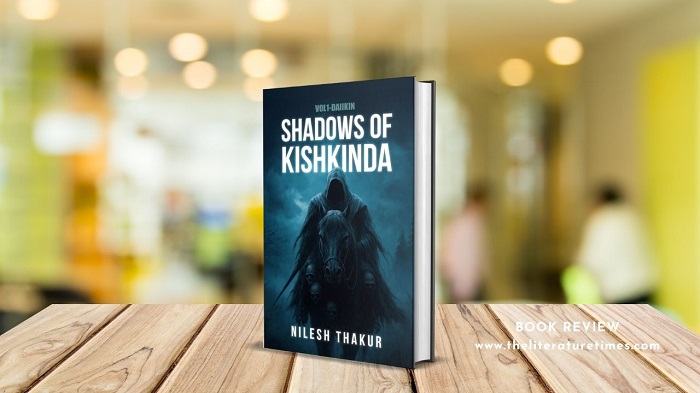
Shadows of Kishkinda: Vol. 1 – DAIIKIN by Nilesh Thakur is a powerful and emotionally charged opening to a dark fantasy saga that blends myth, mystery, and human vulnerability into a gripping narrative. From the very first pages, the novel establishes an atmosphere of unease and sorrow, pulling the reader into a world where loss is not just a memory but a living wound that refuses to heal.
At its heart, this is not merely a story about hunting a monster—it is a story about what it means to be hunted by one’s own past. The protagonist’s search for his vanished brother becomes the emotional backbone of the novel. What begins as a desperate quest for answers soon transforms into a journey through cursed lands, hidden histories, and terrors that wear human faces. The discovery that the creature responsible for the destruction of his family is still alive gives the story a haunting continuity, as if the past itself has refused to stay buried.
One of the strongest aspects of the book is its emotional weight. The author does not rely only on action or spectacle; instead, he allows grief, anger, fear, and doubt to shape the hero’s decisions. The inner conflict—his growing fear that the same darkness he is fighting may be awakening within him—adds a psychological depth that elevates the story beyond a simple good-versus-evil narrative. This “war for his soul” feels personal, intimate, and tragically human.
The supporting characters are equally compelling. The fierce friend brings strength and loyalty to the group, grounding the hero when his resolve begins to waver. The mysterious girl, who “fights like a shadow,” is especially intriguing—she adds both unpredictability and quiet intensity to the story, and her presence hints at deeper secrets within this world. Together, this trio forms a dynamic that keeps the narrative moving while also allowing space for emotional and moral tension.
The world-building in Shadows of Kishkinda is rich and atmospheric. The cursed lands, hidden truths, and nightmare-like figures are not just background elements; they feel like extensions of the story’s themes—places shaped by suffering, secrets, and forgotten sins. The mythic undertones are woven subtly into the narrative, giving the setting a timeless, almost legendary quality, while still keeping the story accessible and emotionally grounded.
Nilesh Thakur’s writing style is immersive and cinematic, with a strong sense of mood and imagery. He knows when to slow down and let emotions breathe, and when to tighten the pace as the hunt intensifies. The action sequences are tense and purposeful, but it is the quieter moments—of doubt, memory, and fear—that leave the deepest impression.
As the first volume in what promises to be a larger fantasy universe, DAIIKIN does an excellent job of setting the stage. It introduces a compelling central conflict, a wounded yet determined hero, and a world filled with both wonder and dread. More importantly, it leaves the reader with a strong emotional investment in what comes next.
Overall, Shadows of Kishkinda: Vol. 1 – DAIIKIN is a dark, emotionally resonant fantasy that explores loss, vengeance, and the fragile line between light and darkness within the human heart. It is a promising and impactful beginning to a new fantasy saga, and a must-read for those who enjoy stories where epic journeys are matched by deep inner struggles.