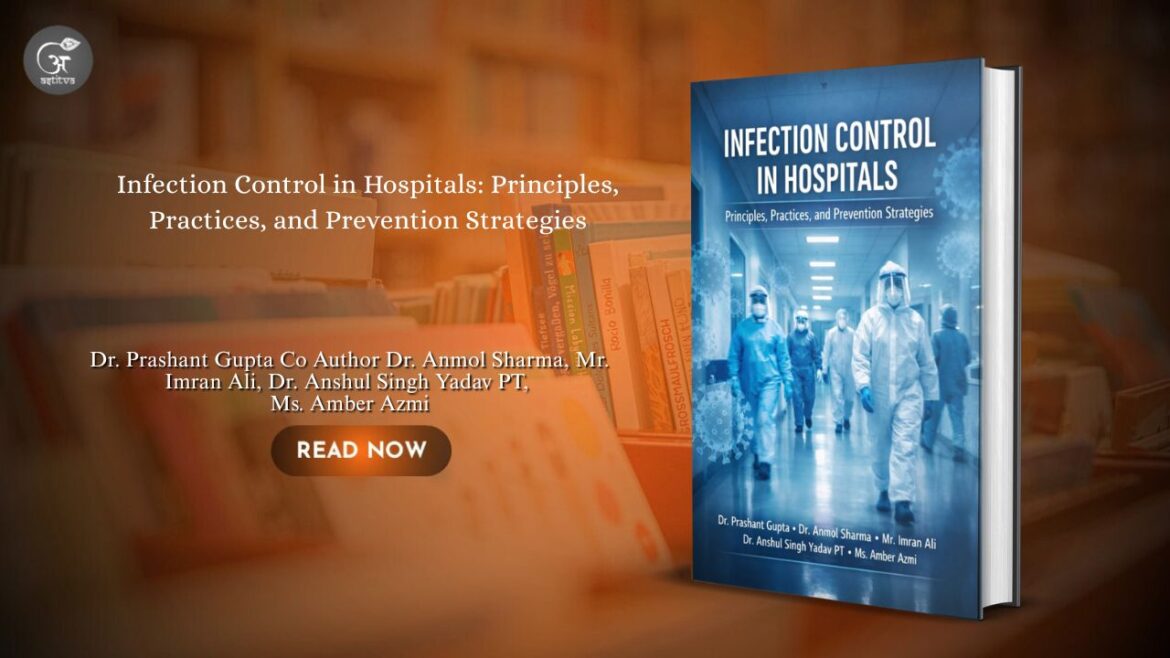
The field of healthcare is constantly evolving, yet one persistent challenge continues to impact patient safety worldwide—hospital-acquired infections. Addressing this critical issue, Infection Control in Hospitals: Principles, Practices, and Prevention Strategies by Dr. Prashant Gupta, along with co-authors Dr. Anmol Sharma, Mr. Imran Ali, Dr. Anshul Singh Yadav (PT), and Ms. Amber Azmi, emerges as a timely and essential contribution to modern medical literature. This comprehensive work is thoughtfully designed to equip healthcare professionals and students with the knowledge and practical tools needed to combat infections within clinical settings.
Despite significant advancements in medical science, healthcare-associated infections remain a major cause of morbidity, mortality, and increased healthcare costs. Recognizing this concern, the authors have meticulously compiled a resource that bridges the gap between theoretical understanding and real-world application. The book presents complex concepts in a clear and structured manner, making it highly accessible to readers from diverse healthcare backgrounds, including nursing, microbiology, medical laboratory technology, and allied health sciences.
The content of the book is both extensive and practical. It covers essential topics such as the epidemiology of hospital-acquired infections, the microbiology of infectious agents, sterilization and disinfection techniques, biomedical waste management, antimicrobial resistance, and outbreak investigation. One of the standout features of this work is its focused discussion on infection prevention strategies in critical hospital units, including intensive care units, operation theatres, neonatal intensive care units, and dialysis centers. This targeted approach enhances the book’s relevance for professionals working in high-risk environments.
Dr. Prashant Gupta, an accomplished academician and researcher associated with Bareilly International University, Bareilly, Uttar Pradesh, brings his rich experience in medical microbiology and allied health sciences to this publication. His research interests, particularly in antimicrobial resistance and infection control practices, are reflected in the depth and accuracy of the content. Supported by a dedicated team of co-authors, the book represents a collaborative effort grounded in academic excellence and practical insight.
Beyond its academic value, this book serves as a practical guide for implementing effective infection control measures in hospitals. It not only enhances the reader’s understanding but also encourages the adoption of standardized practices that can significantly improve patient outcomes. The emphasis on prevention strategies makes it especially valuable in today’s healthcare environment, where proactive measures are key to minimizing risks.
Infection Control in Hospitals: Principles, Practices, and Prevention Strategies is more than just a textbook; it is a vital resource for building safer healthcare systems. By combining scientific knowledge with practical application, the authors have created a guide that will benefit students, educators, and healthcare professionals alike. This release marks an important step toward strengthening infection control awareness and practices across the medical community.