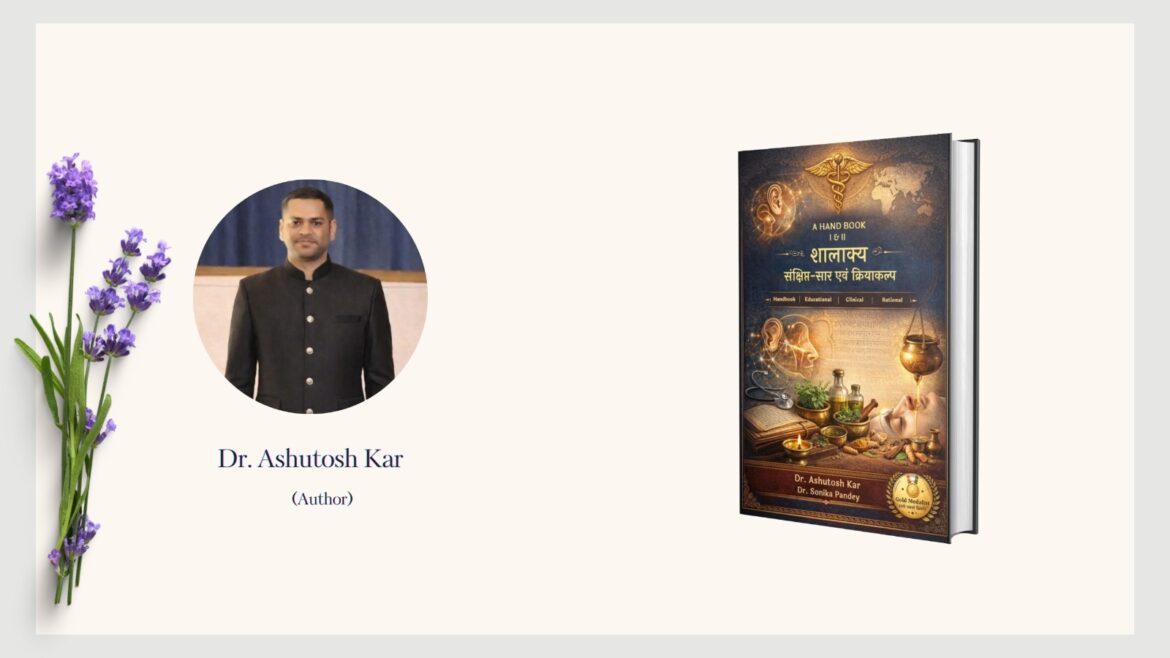
In the ever-evolving field of Ayurvedic education, the need for clarity, structure, and practical relevance has become more important than ever. Shalakya Samkshipta Saara evam Kriya Kalpa: A Hand Book by Dr. Ashutosh Kar and Dr. Sonika Pandey emerges as a thoughtfully designed academic companion that addresses this very need. Rooted in the classical foundations of Ayurveda yet aligned with the demands of modern learning, this book offers a simplified yet comprehensive approach to mastering Shalakya Tantra and Kriyakalpa.
Shalakya Tantra, one of the eight branches of Ayurveda, deals with diseases of the organs located above the clavicle—primarily the eyes, ears, nose, throat, and head. Traditionally considered a complex and detail-intensive subject, it often poses challenges for students trying to balance classical theory with clinical application. Recognizing this gap, the authors have crafted a guide that transforms dense textual material into structured, easy-to-understand content without compromising on depth or authenticity.
What sets this book apart is its student-centric approach. Every topic is presented in a crisp, point-wise format, allowing readers to grasp key concepts quickly and effectively. This method not only aids in better retention but also makes revision more efficient, especially during the high-pressure period of university examinations. Instead of overwhelming the reader with lengthy explanations, the authors focus on clarity and precision, ensuring that each concept is communicated with purpose.
At the same time, the book does not limit itself to being an exam-oriented manual. It goes a step further by integrating classical Ayurvedic principles with modern medical understanding. This comparative approach acts as a bridge between two systems of knowledge, enabling students to develop a more holistic perspective. By aligning Ayurvedic descriptions of diseases with their modern counterparts, the authors help readers contextualize traditional knowledge in contemporary clinical settings. This not only enhances comprehension but also prepares students to engage confidently in interdisciplinary environments.
The section on Kriyakalpa, which deals with specialized therapeutic procedures in Shalakya Tantra, is particularly noteworthy. These procedures, often intricate and technique-sensitive, require both theoretical understanding and practical insight. The authors present them in a manner that is both systematic and accessible, breaking down each step to ensure clarity. This structured presentation demystifies complex procedures and makes them approachable for learners at different stages of their academic journey.
Another significant strength of the book lies in its emphasis on practical clinical insights. While many academic texts remain confined to theoretical discussions, Shalakya Samkshipta Saara evam Kriya Kalpa: A Hand Book recognizes the importance of application. The inclusion of treatment protocols and real-world considerations adds immense value, especially for students transitioning from classroom learning to clinical practice. These insights not only reinforce theoretical knowledge but also build confidence in handling patient care scenarios.
The authors’ academic and professional backgrounds play a crucial role in shaping the quality of this work. Their understanding of both the challenges faced by students and the expectations of clinical practice is evident throughout the book. This dual perspective allows them to strike a balance between simplicity and substance, ensuring that the content remains both accessible and authoritative.
Language and presentation further enhance the usability of the book. The use of clear, concise Hindi makes it particularly beneficial for students who prefer learning in their native or familiar language. At the same time, the structured layout, logical sequencing of topics, and emphasis on key points make it a practical tool for quick reference. Whether used as a primary study resource or as a revision guide, the book adapts seamlessly to different learning needs.
In today’s academic environment, where time is limited and expectations are high, resources that offer both efficiency and depth are invaluable. This book responds to that demand by providing a focused and organized approach to a traditionally challenging subject. It respects the richness of Ayurvedic knowledge while presenting it in a format that aligns with contemporary educational practices.
Beyond its immediate utility for students, Shalakya Samkshipta Saara evam Kriya Kalpa: A Hand Book also holds relevance for practitioners seeking a quick refresher. The concise presentation of concepts and treatment protocols makes it a handy reference in clinical settings, where time and clarity are of the essence. This dual applicability—academic and practical—broadens the scope and impact of the book.
Ultimately, this work stands as a testament to the idea that traditional knowledge can be made accessible without losing its essence. By simplifying complex concepts, drawing meaningful connections with modern medicine, and emphasizing practical application, Dr. Ashutosh Kar and Dr. Sonika Pandey have created a resource that is both timely and enduring. It not only supports students in achieving academic success but also equips them with the understanding and confidence needed for real-world practice.
In a discipline where precision, clarity, and depth are essential, Shalakya Samkshipta Saara evam Kriya Kalpa: A Hand Book offers a balanced and effective approach. It invites readers to engage with Shalakya Tantra not as a daunting subject, but as a structured and meaningful field of study—one that can be mastered with the right guidance and perspective.