Title: Raaz Chhupaaye Rakhna Dilbar
Author: UMANG AGARWAL
ISBN: 9789373357829
Publisher: Evincepub Publishing
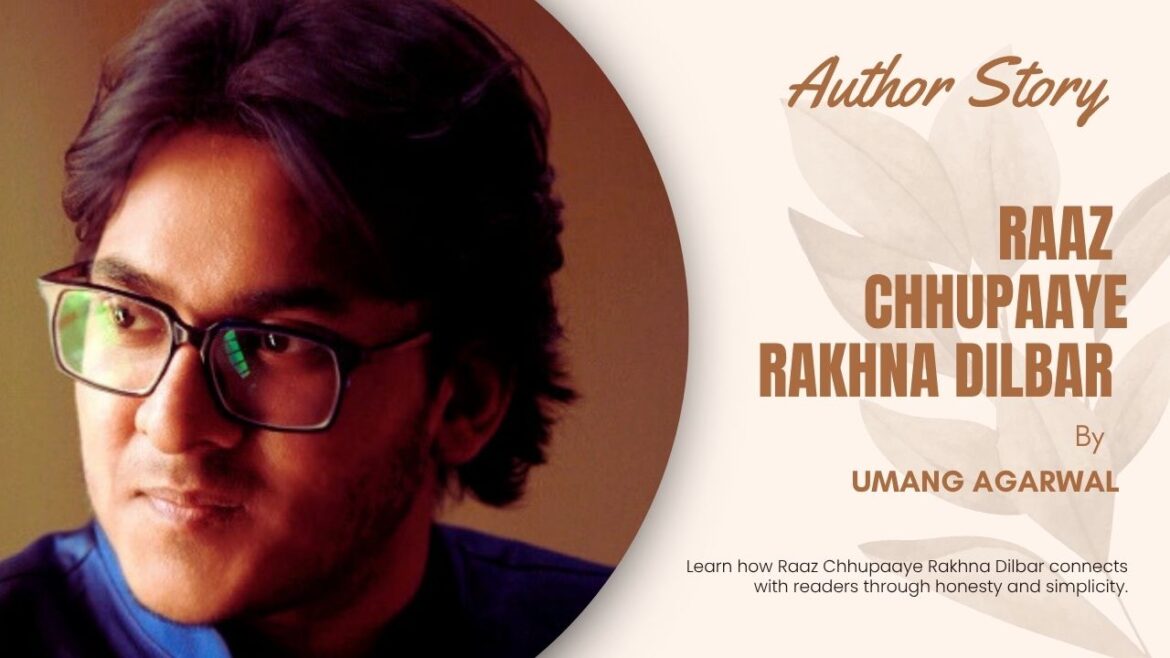
The story of Raaz Chhupaaye Rakhna Dilbar is not just about a young writer publishing his first poetry collection. It is about a creative mind slowly finding its identity in a world full of noise. Umang Agarwal, a 23-year-old artist from Kolkata, belongs to a generation that feels deeply but often struggles to express those feelings. What makes his journey different is that he did not let those emotions remain hidden. Instead, he chose to give them a form through poetry, music, and storytelling. Being a film and music director, composer, lyricist, and vocalist, his creative world is quite wide, and this diversity clearly shapes his writing. His poetry does not feel limited to pages. It feels visual, musical, and emotional at the same time, almost like scenes from a film playing quietly in the reader’s mind.
Unlike many writers who begin with a clear plan, Umang’s journey feels more organic and personal. His poems were not written to create a book at first. They were written to survive moments. Each line came from real situations where he felt overwhelmed, confused, or deeply moved. Over time, these scattered emotions turned into a collection. This makes his book feel less like a structured project and more like a diary of lived experiences. There is a rawness in his writing that stands out. He does not try to sound perfect or poetic in a traditional way. Instead, he focuses on being real. This honesty creates a strong connection with readers, especially young people who often feel that their emotions are too complicated to explain.
One of the most interesting aspects of Umang’s journey is how strongly cinema and music influence his writing. His poems carry a rhythm that feels like lyrics, and many of his ideas feel like scenes from a story. This is not surprising because of his background in film and music. He understands how emotions work not just in words but also in sound and visuals. This gives his poetry a unique texture. It is not just meant to be read quietly. It can be felt like a song or imagined like a scene. His decision to include a mood playlist and his debut song ‘Reshmi’ in the book is a clear sign that he sees art as a combined experience, not something limited to one medium.
Another layer that makes his story different is his approach towards language. In today’s time, language can often become a barrier, especially in poetry. But Umang tries to remove that barrier. He writes in Hindi and Urdu, while also providing transliteration so that readers from different backgrounds can connect with his work. This shows his understanding of his audience. He is not writing only for literary readers. He is writing for anyone who has ever felt love, pain, or confusion. His focus is on connection, not complexity. This simple approach makes his work more inclusive and relatable.
Umang’s journey also reflects a quiet confidence. He respects the legends who came before him, like Javed Akhtar and Gulzar, but he does not try to imitate them. Instead, he learns from them while building his own voice. There is a sense of patience in the way he has worked on this book. It was not rushed. It grew slowly with time, shaped by his personal growth. This patience is important because it shows that he values the process of creation more than quick success. He understands that meaningful writing takes time, and this understanding adds depth to his work.
In the end, what makes Umang Agarwal’s author story stand out is its simplicity and sincerity. There is no attempt to appear extraordinary. Instead, his strength lies in being real and relatable. Raaz Chhupaaye Rakhna Dilbar becomes more than just a poetry collection. It becomes a reflection of a young mind trying to understand life, love, and identity. His journey reminds us that sometimes the most powerful stories come from the quietest moments. As he continues to grow as an artist, his ability to blend emotions with different forms of art can make him a strong and unique voice in the creative world.
Review by Sameer Gudhate
For www.theliteraturetimes.com