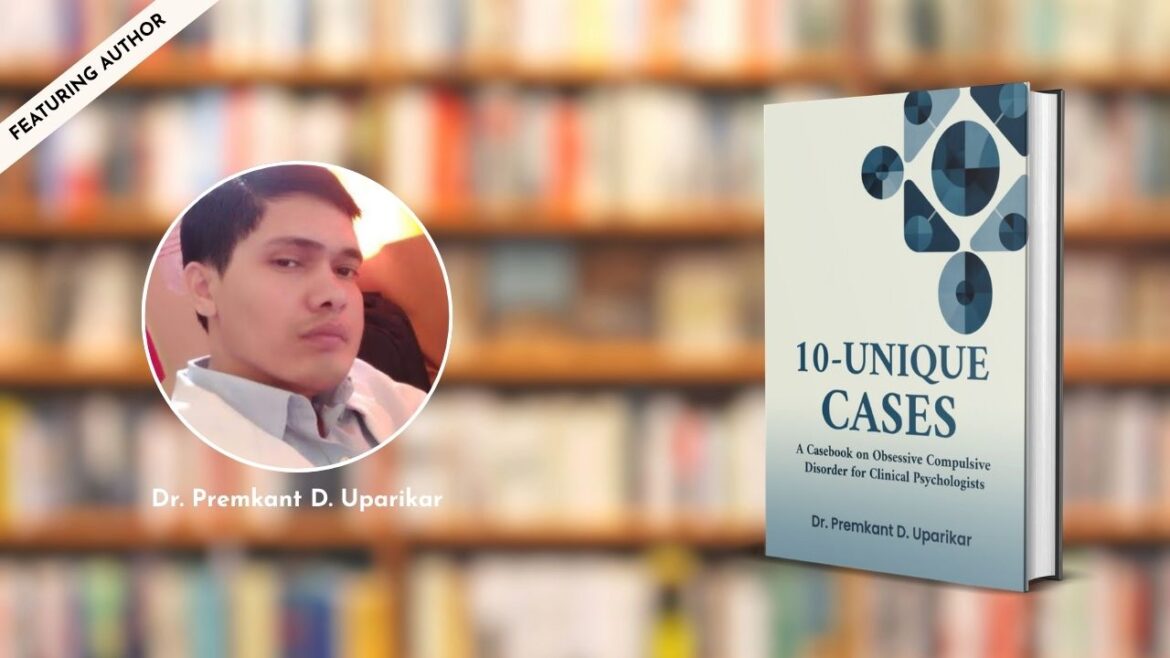
In the field of clinical psychology, few disorders challenge practitioners as consistently and as intricately as Obsessive–Compulsive Disorder. Though widely discussed, OCD remains one of the most heterogeneous and misunderstood conditions, often presenting in complex, subtle, and culturally nuanced ways that defy textbook descriptions. For the clinician who sits across from a struggling patient, the true test lies not merely in understanding diagnostic criteria but in interpreting the deeply personal logic of compulsions, fears, doubts, and rituals. It is within this practical, real-world landscape that 10 Unique Cases positions itself—an essential casebook crafted to illuminate the delicate interplay between theory and clinical reality.
This book is the result of years of careful observation, structured intervention, and ethical, reflective practice by Dr. Premkant D. Uparikar, an accomplished clinical psychologist and academic. Through ten meticulously constructed clinical cases, he brings readers into the consulting room, allowing them to witness the subtle details, evolving dynamics, and therapeutic challenges that define the assessment and treatment of OCD. Each chapter mirrors the actual workflow of clinical practice, beginning with nuanced case histories and extending through psychodiagnostic assessments, differential diagnoses, formulation-driven interventions, and long-term follow-ups.
The cases presented in this volume do not merely replicate standard examples; instead, they capture the genuine diversity of OCD as it appears in everyday clinical settings. Some cases highlight classic themes, while others delve into rare, atypical, or culturally influenced manifestations—areas where research literature is still evolving. These narratives open a window into the lived experiences of individuals for whom obsessions and compulsions are not abstract concepts but powerful forces shaping their decisions, relationships, routines, and internal worlds. For practicing clinicians and trainees alike, this level of detail is invaluable. It demonstrates how theoretical frameworks translate into therapeutic choices and how clinical reasoning adapts as new information emerges.
One of the defining elements of the book is its emphasis on formulation-based practice. Instead of relying solely on diagnostic labels, Dr. Premkant outlines how to build individualized case formulations rooted in cognitive-behavioral, behavioral, or integrative psychological models. By explaining the rationale behind each clinical decision, he encourages readers to think critically, evaluate alternatives, and approach every case with a blend of scientific rigor and human sensitivity. The inclusion of therapy goals, structured modules, treatment progress notes, and six-month follow-up assessments adds a layer of authenticity rarely found in traditional academic texts.
Behind this thorough, practice-oriented writing is the professional journey of Dr. Premkant himself. With more than eleven years of clinical and academic experience, he brings the combined perspective of a clinician, educator, and supervisor—roles that mutually reinforce each other. His tenure as the Head of the Department of Clinical Psychology at Amity University Chhattisgarh reflects his dedication to strengthening training, promoting ethical practice, and shaping the next generation of mental health professionals. Many of his students and trainees speak of his ability to break down complex concepts into accessible ideas, encouraging independent thinking while instilling a deep respect for scientific evidence.
As a Consultant Clinical Psychologist, his clinical strengths lie in working with OCD and related anxiety-spectrum conditions. His approach is grounded in evidence-based intervention yet informed by the individuality of each patient. This blend of structure and flexibility is woven throughout the book, illustrating how real-world psychotherapy often requires both knowledge and intuition. His commitment to ethical sensitivity—especially when dealing with vulnerable clinical populations—is reflected in the careful anonymization, responsible reporting, and transparent reflection found within the text.
For students and early-career professionals, 10 Unique Cases serves as more than a reference—it becomes a mentor in written form. The detailed explanations help demystify the decision-making process that often overwhelms trainees during their initial years of practice. For experienced psychologists, the book functions as a reflective tool, prompting deeper consideration of how formulations can be refined, how interventions can be adapted, and how clinical outcomes can be strengthened. And for educators, this casebook becomes a classroom companion, offering material that sparks discussion, analysis, and skill-building.
What makes this volume truly significant is its unwavering focus on bridging the gap between theoretical knowledge and actual clinical work. In many academic programs, students excel at understanding concepts but often struggle to apply them in unscripted, complex situations. By presenting cases that are layered, context-rich, and aligned with ethical guidelines, Dr. Premkant ensures that readers gain both clarity and confidence in handling challenging presentations of OCD.
The book also contributes to the wider clinical literature by documenting cases that go beyond commonly taught variations of the disorder. In doing so, it invites clinicians to remain curious, culturally aware, and open to the evolving nature of mental health practice. This is not merely a casebook but a commitment to raising the standard of psychological care—one case, one clinician, and one patient at a time.
10 Unique Cases stands as a valuable resource for anyone seeking to deepen their understanding of OCD through real clinical narratives. It showcases the depth of Dr. Premkant’s expertise, the authenticity of his clinical work, and his passion for shaping psychologically informed, ethically grounded professionals. Through this book, he offers not just knowledge but wisdom—rooted in experience, sharpened by reflection, and dedicated to helping clinicians truly understand the minds they strive to heal.