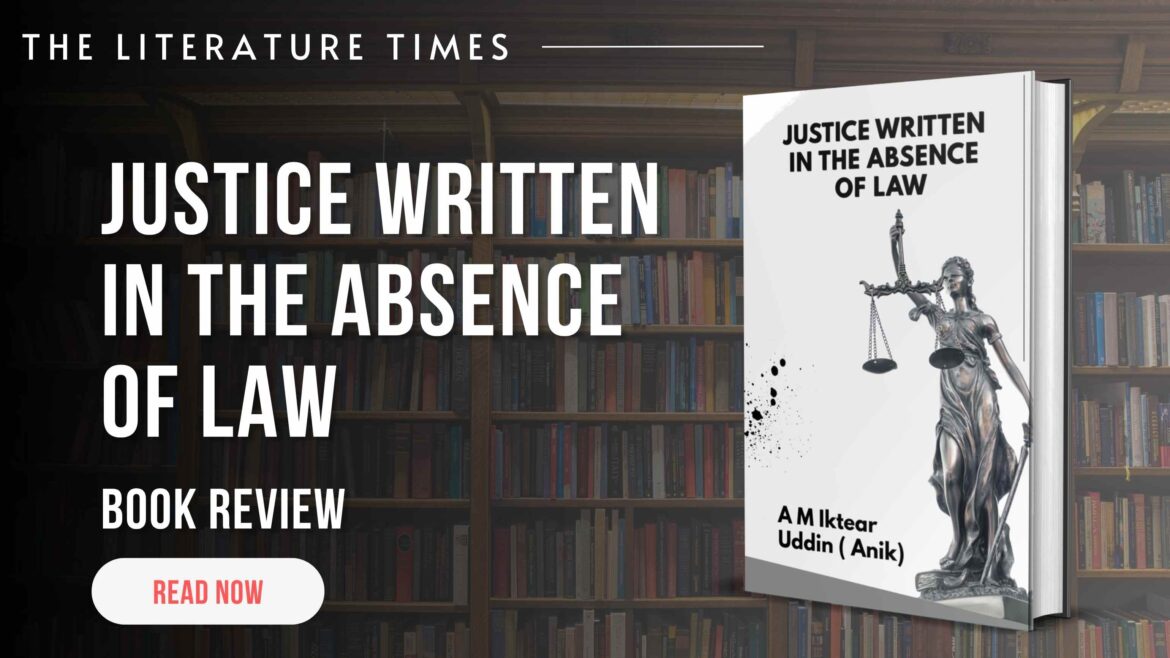
Book Review – Justice Written in the Absence of Law by A M Iktear Uddin (Anik)
Justice Written in the Absence of Law by A M Iktear Uddin (Anik) is a thoughtful and timely exploration of judicial review and the role courts play in protecting constitutional values when power begins to overstep its limits. Rather than treating constitutional law as a dry academic subject, the book presents it as something deeply connected to everyday society, politics, and the future of democracy itself.
One of the strongest aspects of the book is the way it balances history, philosophy, and present-day concerns without becoming difficult to follow. The author takes readers from the foundations of natural law and constitutional thinking to landmark developments such as Marbury v. Madison, while also showing how different countries shaped their own constitutional traditions over time. The discussions around India, South Africa, and post-war Europe add depth and make the book feel globally relevant instead of confined to one legal system.
What makes the work particularly engaging is its focus on modern challenges. The sections discussing artificial intelligence, digital surveillance, environmental responsibility, and welfare rights give the book a contemporary voice. The author raises important questions about how courts can respond to rapidly changing societies where technology and political authority often move faster than legal systems themselves.
The writing remains serious yet accessible. Even when dealing with complex constitutional debates like proportionality, separation of powers, or the counter-majoritarian difficulty, the explanations feel measured and understandable. The book does not try to present judicial review as flawless; instead, it openly reflects on both its strengths and its limitations. That balanced approach gives the work credibility.
Another notable feature is the author’s ability to connect legal institutions with broader human concerns. At its core, the book asks whether constitutional promises are genuinely being protected when governments face pressure, crises, or temptation to expand authority. That question gives the book a lasting relevance beyond legal scholarship alone.
Overall, Justice Written in the Absence of Law is an insightful and carefully argued work that will appeal not only to law students and academics but also to readers interested in democracy, governance, and constitutional accountability. It encourages readers to think critically about the relationship between law and power in a world that is becoming increasingly uncertain and interconnected.