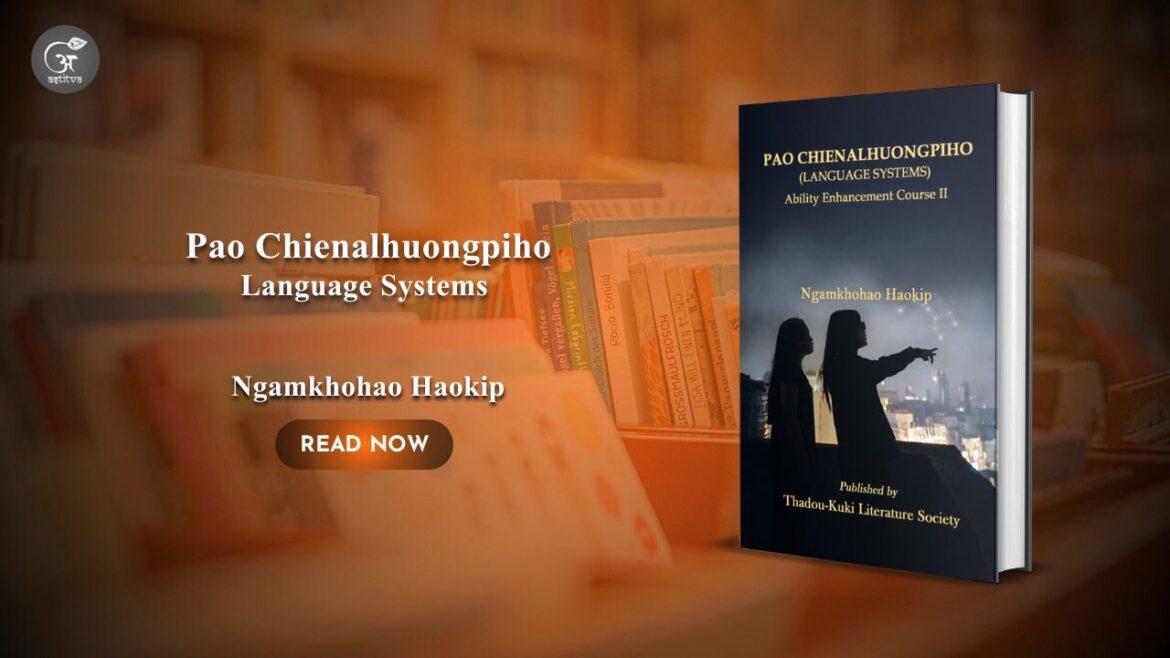
Language is more than a tool of communication—it is a living repository of culture, identity, history, and collective memory. Recognizing the importance of preserving and strengthening indigenous languages, Pao Chienalhuongpiho: Language Systems by Ngamkhohao Haokip emerges as a significant contribution to the study and development of the Thadou-Kuki language. Designed primarily for second-semester undergraduate students pursuing Thadou-Kuki as a Major Indian Language (MIL) under Manipur University and DM University, this pioneering work serves both academic and cultural purposes.
The Thadou-Kuki language possesses a rich linguistic heritage, expressed through diverse forms of speaking and writing. However, the availability of structured and contemporary learning resources has often been limited. Pao Chienalhuongpiho addresses this need by providing learners with a comprehensive and engaging approach to understanding the language. The book introduces new vocabulary, innovative sentence structures, and modern methods of presentation that make language learning both effective and enjoyable.
What makes this publication particularly noteworthy is its distinction as one of the first books of its kind in the Thadou-Kuki language. Rather than merely compiling grammatical rules or linguistic theories, the author presents the language as a dynamic and evolving system. The content has been carefully designed to help students develop a deeper understanding of linguistic structures while simultaneously encouraging practical usage. Through its accessible style and thoughtful organization, the book creates an environment where learners can appreciate not only the mechanics of the language but also its beauty and expressive potential.
Although developed primarily for university students, the book extends its relevance far beyond the classroom. Anyone interested in learning the Thadou-Kuki language, exploring its linguistic patterns, or understanding its cultural significance will find this work highly valuable. The author’s emphasis on clarity and innovation ensures that both beginners and experienced readers can engage with the material meaningfully. By making language learning approachable and interesting, the book contributes to the broader effort of preserving and promoting indigenous languages in an increasingly globalized world.
At a time when many regional and tribal languages face challenges related to documentation, transmission, and modernization, Pao Chienalhuongpiho stands as a testament to the importance of scholarly dedication and cultural stewardship. It not only supports academic learning but also strengthens the identity and pride of the Thadou-Kuki-speaking community.
The book reflects the lifelong passion and commitment of its author, Ngamkhohao Haokip. An educator with more than three decades of teaching experience, he has devoted much of his life to nurturing young minds and promoting the Thadou-Kuki language. His contributions extend beyond the classroom into the literary and cultural spheres, where he has authored numerous poems in the language and actively supported its development.
As a Life Member and the current Chairman of the Thadou-Kuki Literature Society, he has played a pivotal role in advancing literary activities and language preservation efforts within the community. His leadership and advocacy continue to inspire writers, educators, and language enthusiasts alike. Currently serving as the Principal of a school under the Ministry of Tribal Affairs, Government of India, he combines academic expertise with a deep commitment to cultural preservation.
Through Pao Chienalhuongpiho: Language Systems, Ngamkhohao Haokip offers more than a textbook; he presents a meaningful bridge between generations, ensuring that the richness of the Thadou-Kuki language continues to thrive, evolve, and inspire future learners.