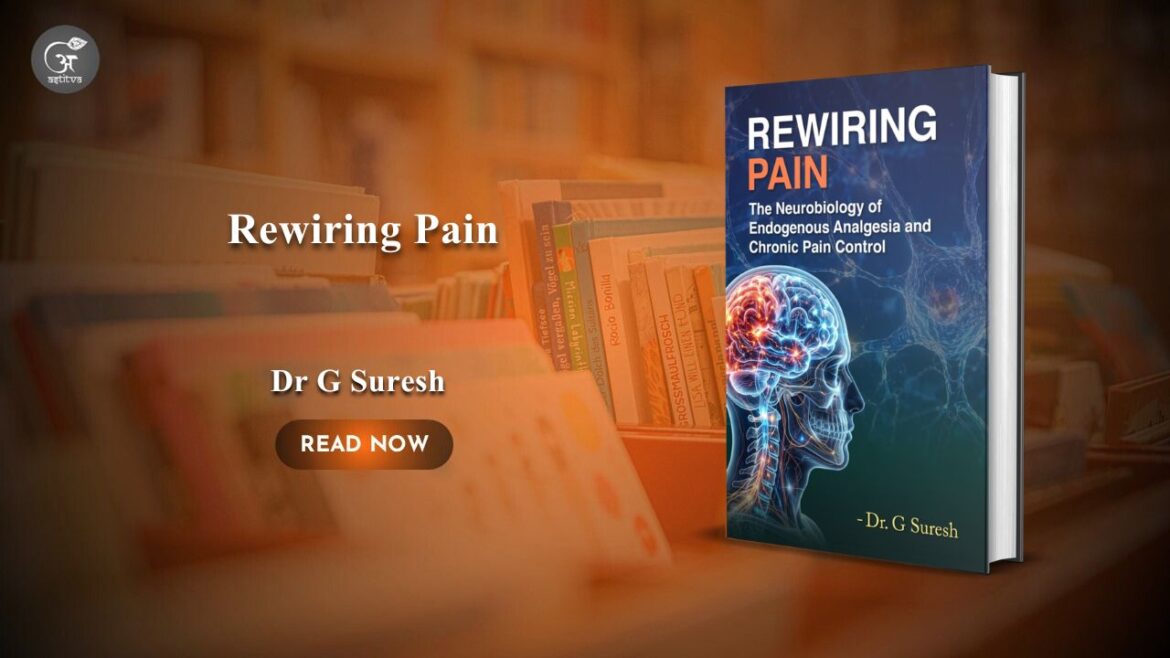
The medical community welcomes a groundbreaking contribution to pain science with the release of Rewiring Pain: The Neurobiology of Endogenous Analgesia and Chronic Pain Control by Dr. G. Suresh. This insightful and comprehensive work challenges traditional perceptions of pain and introduces readers to the rapidly evolving field of neuromodulation, offering a fresh perspective on how chronic pain can be understood, managed, and even transformed.
For decades, pain was primarily viewed as a direct consequence of tissue injury or structural damage. However, modern neuroscience has revealed that pain is far more complex. It is shaped by intricate interactions among the nervous system, spinal cord, brain, immune responses, emotions, and behavior. Rewiring Pain explores these advances in scientific understanding and presents a modern framework for addressing one of healthcare’s most challenging problems.
Written specifically for clinicians, pain specialists, orthopedic surgeons, rheumatologists, physiotherapists, rehabilitation experts, and healthcare professionals, the book serves as a bridge between advanced neuroscience and everyday clinical practice. Dr. G. Suresh skillfully translates sophisticated neurophysiological concepts into practical strategies that can improve patient outcomes and enhance quality of life.
A major strength of the book lies in its comprehensive examination of pain mechanisms. Readers are introduced to key concepts such as peripheral sensitization, central sensitization, descending inhibitory pathways, neuroplasticity, and the transition from acute to chronic pain. These foundational principles help explain why some patients continue to suffer even after tissue healing has occurred and why conventional approaches often fail to provide lasting relief.
Beyond theory, Rewiring Pain focuses heavily on practical applications. The book explores a wide range of neuromodulation techniques, including Transcutaneous Electrical Nerve Stimulation (TENS), spinal decompression therapy, laser therapy, shockwave therapy, regenerative interventions, and spinal cord stimulation. Emerging technologies that are likely to shape the future of pain medicine are also discussed, providing readers with valuable insights into the next generation of therapeutic approaches.
What makes this work particularly valuable is its evidence-based approach. Dr. Suresh combines current scientific research with extensive clinical experience, presenting treatment algorithms, case discussions, practical recommendations, and clinical pearls that practitioners can immediately apply in patient care. This combination of science and real-world experience makes the book both academically rigorous and clinically relevant.
The author emphasizes that chronic pain should not be viewed solely as a symptom to suppress but as a dynamic neurological process that can be influenced and retrained. This perspective represents a significant shift in pain medicine, encouraging clinicians to move beyond symptom management toward restoring function, resilience, and overall well-being.
The book also highlights the importance of integrating multiple disciplines in pain management. By recognizing the roles of inflammation, biomechanics, neuroplasticity, and psychosocial influences, Rewiring Pain advocates for a more holistic and patient-centered model of care. This approach aligns with the growing recognition that effective pain treatment requires addressing the whole person rather than focusing solely on structural abnormalities.
More than just a textbook, Rewiring Pain is a call to action for healthcare professionals to rethink traditional approaches and embrace innovation. It encourages clinicians to adopt a deeper understanding of the nervous system and apply modern therapeutic strategies that empower patients to reclaim their lives.
As chronic pain continues to affect millions worldwide, this timely publication arrives as an invaluable resource for medical professionals seeking to stay at the forefront of contemporary pain science. Through his expertise, vision, and commitment to patient care, Dr. G. Suresh has created a work that is poised to become an important reference in the fields of pain medicine, orthopedics, rehabilitation, and neuromodulation.