Name: Nishant Upadhyay
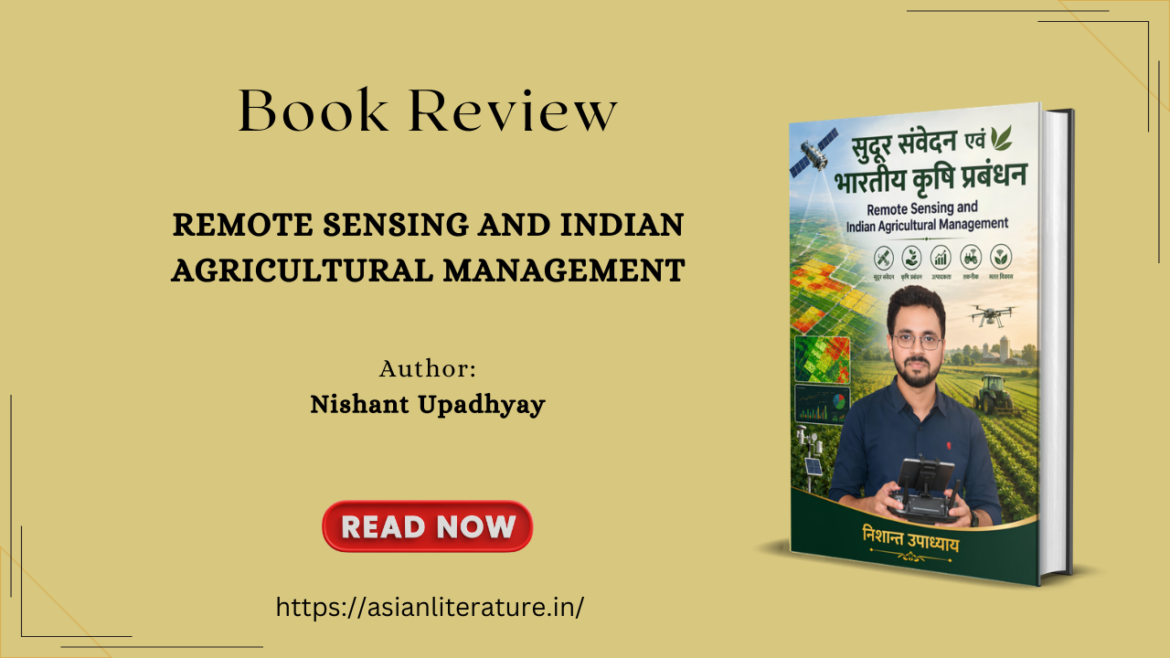
Title: Remote Sensing and Indian Agricultural Management
ISBN: 978-93-7900-007-1
Publisher: Inksight Publishers
About the Book:
In today’s scientific world, technology plays a very important role in managing the Earth and its limited natural resources. Remote Sensing has changed the traditional and time-consuming methods of collecting data in the fields of geography, agriculture, environmental science, and disaster management. It has become a multidisciplinary field that provides accurate and timely information for better planning and decision-making. Remote Sensing helps solve geological, vegetation, water resource, and environmental challenges at the national, regional, and local levels, making it an essential tool for sustainable development.
About the Author:
Nishant Upadhyay holds a Bachelor’s degree in Technical Education and a Master’s degree in Geography. He has a deep interest in academics and research. He is currently conducting research on the role of Remote Sensing and satellites in the development of modern agriculture. In recognition of the quality of his research, he has been awarded a Research Fellowship by the University Grants Commission (UGC). He is actively involved in research and academic writing. So far, he has published 12 research papers in national and international journals and has presented his work at 10 national and international seminars and conferences.
Nishant Upadhyay is an emerging researcher and author who is making valuable contributions to the field of geography, remote sensing, and modern agriculture. Through his book Remote Sensing and Indian Agricultural Management, he highlights how science and technology can help solve some of the biggest challenges faced by Indian agriculture. His work reflects a strong commitment to research, innovation, and sustainable development. With a Bachelor’s degree in Technical Education and a Master’s degree in Geography, Nishant Upadhyay has built a solid academic foundation. His interest in research has led him to explore the growing role of Remote Sensing and satellite technology in improving agricultural practices. At a time when climate change, water shortages, and land degradation are becoming major concerns, his work focuses on using modern technology to make farming more efficient and productive.
One of the most impressive aspects of Nishant Upadhyay’s career is his dedication to academic research. He is currently conducting advanced research on the use of Remote Sensing and satellite technology in agricultural development. His research has been recognised by the University Grants Commission (UGC), which awarded him a prestigious Research Fellowship. This achievement reflects the quality of his work and his potential as a young scholar. Apart from his research, Nishant has actively contributed to academic literature. He has published twelve research papers in national and international journals and has presented his findings at ten national and international seminars and conferences. These accomplishments demonstrate his commitment to expanding knowledge and sharing innovative ideas with the academic community.
In Remote Sensing and Indian Agricultural Management, Nishant Upadhyay explains how technology has transformed traditional methods of collecting information about land, crops, water resources, and the environment. He shows that Remote Sensing is no longer limited to scientific laboratories but has become an essential tool for agriculture, disaster management, environmental protection, and sustainable planning. One of the biggest strengths of Nishant’s writing is his ability to explain technical subjects in a simple and organised manner. Scientific topics often appear difficult to ordinary readers, but he presents them in a way that students, researchers, and interested readers can easily understand. His clear explanations make the book useful not only for academic study but also for anyone interested in learning about modern agricultural technology.
The author also emphasises the importance of sustainable development. He explains that natural resources such as land and water are limited and must be managed wisely. Through the use of satellite technology and Remote Sensing, better decisions can be made regarding farming, irrigation, crop monitoring, and environmental conservation. His work encourages readers to understand that technology should be used responsibly for the benefit of both people and nature. Nishant Upadhyay’s research reflects a forward-looking vision. He believes that scientific innovation can help improve food production while protecting the environment. His work encourages students and young researchers to explore new technologies and contribute to solving real-world problems through scientific knowledge.
As a young academician, Nishant represents a new generation of researchers who combine traditional geographical knowledge with modern technological tools. His enthusiasm for learning, research, and innovation is evident throughout his work. By focusing on practical applications of Remote Sensing, he contributes to building a stronger connection between scientific research and everyday agricultural practices. Overall, Nishant Upadhyay is a promising researcher, dedicated academician, and thoughtful author whose work supports the future of sustainable agriculture in India. Through his research and writing, he has demonstrated that technology can play a powerful role in improving farming, protecting natural resources, and supporting informed decision-making. Remote Sensing and Indian Agricultural Management reflects his commitment to education, innovation, and national development. As he continues his academic journey, his contributions are likely to inspire students, researchers, and professionals working towards a more sustainable and technologically advanced agricultural future.