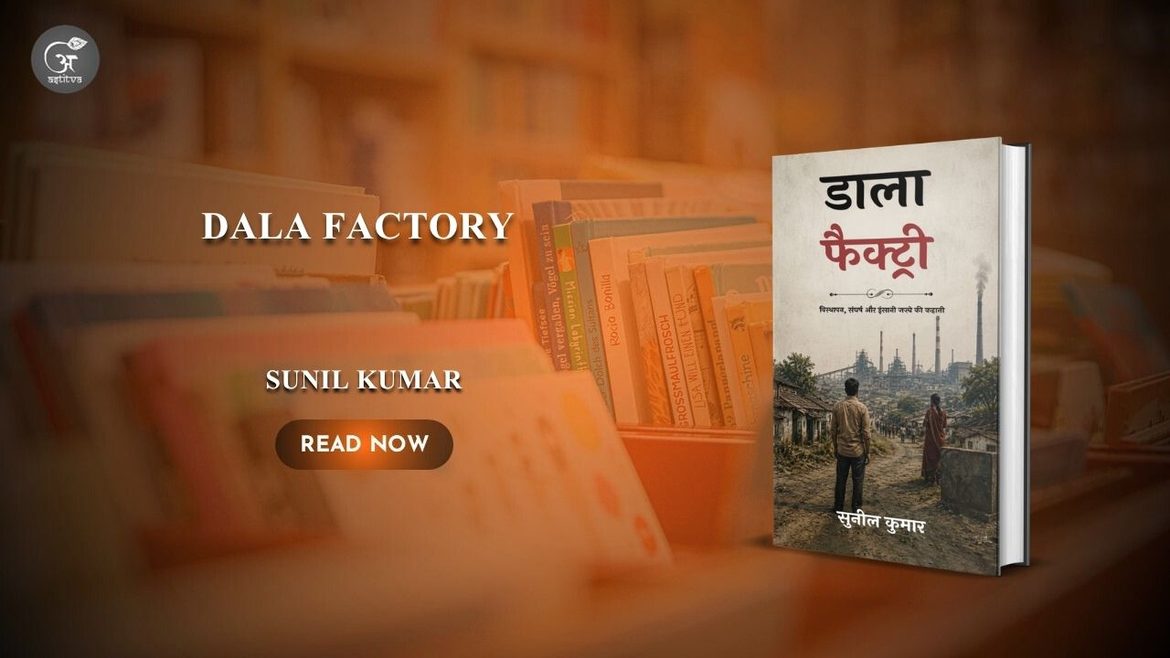
‘Dala Factory’ by Sunil Kumar is a poignant and thought-provoking story of displacement, struggle, loss, and the resilience of the human spirit. Set against the backdrop of a village that transforms into a city and eventually turns desolate, the book explores the lives of people caught in the complex realities of change and development.
At its heart, the story captures the pain of displacement—the loss of home, community, identity, and a familiar way of life. What was once a place filled with people, dreams, and activity gradually becomes deserted, turning into a haunting landscape where vultures gather. This transformation becomes a powerful metaphor for the devastation left behind when people and communities are uprooted.
The story follows Mohan, a determined man who refuses to surrender his rights. Along with his companions, he takes a stand against circumstances that threaten their lives and future. His struggle reflects the courage of ordinary people fighting for justice, dignity, and what rightfully belongs to them.
Alongside Mohan’s journey is Saraswati, who attempts to rebuild her broken and scattered life. Her character brings an intimate emotional dimension to the narrative, portraying the strength it takes to begin again after experiencing loss and upheaval.
What makes Dala Factory compelling is its human perspective on displacement. It goes beyond the physical loss of land or homes and explores the emotional and social consequences of being uprooted. Through its characters and setting, the novel raises important questions about development, ownership, identity, and the people who often bear its greatest cost.