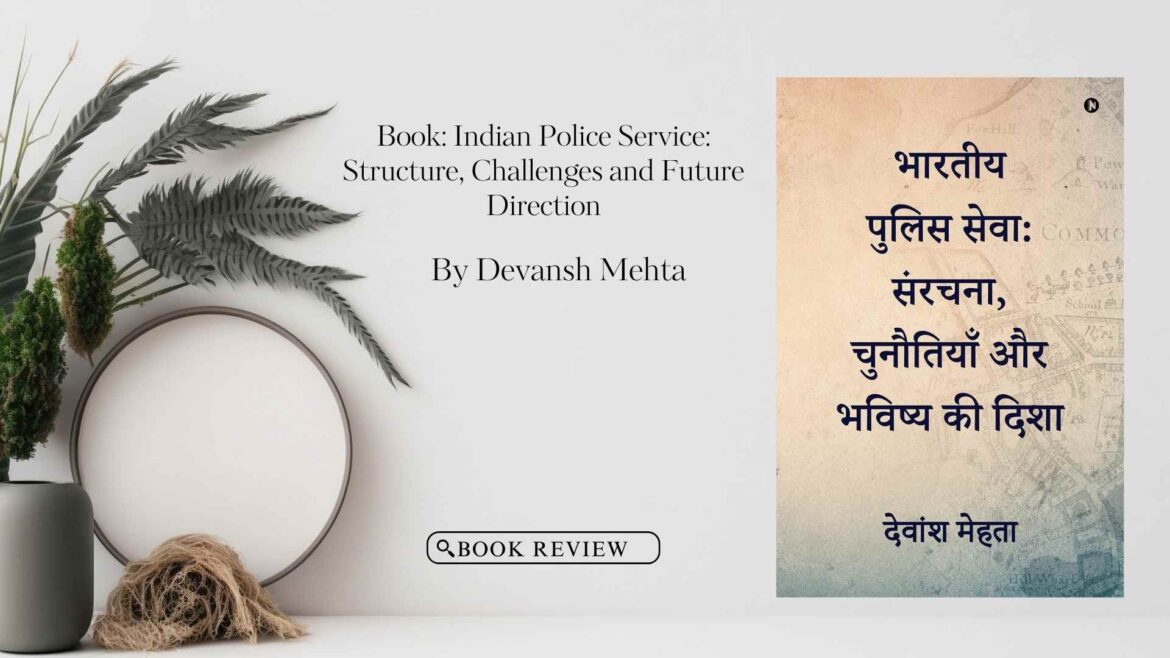
Indian Police Service: Structure, Challenges, and Future Direction by Devansh Mehta is a timely and informative exploration of one of the most critical institutions in India—the Indian Police Service (IPS). Serving as the backbone of the nation’s law enforcement, the IPS plays an essential role in ensuring national security, maintaining law and order, and fostering social stability. Mehta’s book is a comprehensive examination of the past, present, and future of the IPS, offering readers a clear understanding of the challenges it faces and the steps that can be taken to make it a more effective and progressive force in the future.
The book begins by delving into the historical evolution of the Indian Police Service. The author traces its roots back to the colonial period, where the police system was designed to serve the interests of the British Raj. Mehta makes it clear that the modern-day police system, although shaped by colonial practices, has gradually evolved to serve the post-independence needs of the Indian society. The book provides a detailed account of the organizational structure of the IPS, its hierarchical framework, and the wide-ranging responsibilities of its officers. From handling public safety to overseeing crime investigations, maintaining order, and upholding national security, the book highlights how critical the IPS is to the functioning of India as a nation.
While historical context is essential, Mehta’s book places significant emphasis on the challenges faced by the IPS in the present day. One of the most pressing issues discussed in the book is the need for police reforms. The Indian police system has long been criticized for its outdated practices, lack of accountability, and tendency towards authoritarianism. Mehta acknowledges these concerns and calls for systemic changes that would modernize the force and improve its efficiency. This includes better training for police officers, modernization of police infrastructure, and the introduction of new technologies to aid in crime-solving. The author stresses that in an era of rapidly advancing technology, the police force must be equipped with the tools and knowledge to handle contemporary challenges such as cybercrime, terrorism, and organized crime.
Another significant challenge highlighted in the book is the lack of public trust in law enforcement agencies. Mehta asserts that one of the fundamental factors undermining the effectiveness of the police is the absence of strong relationships with the communities they serve. He calls for a shift towards community policing, where police officers not only enforce the law but also work closely with local residents to address their concerns and improve public safety. This approach would foster a more collaborative relationship between the police and the public, enhancing the effectiveness of policing while also promoting transparency and accountability. Mehta makes a compelling case for the importance of building trust between the police and the public, arguing that this is key to ensuring that law enforcement is viewed as legitimate and fair in the eyes of the community.
In discussing the future of the IPS, Mehta offers a vision for an empowered and progressive police force that is equipped to handle the complex challenges of the 21st century. He stresses the importance of adopting modern technology to streamline police work and improve efficiency. From artificial intelligence to predictive policing, the integration of cutting-edge technologies can significantly enhance the ability of police officers to prevent crime, solve cases, and respond to emergencies. Mehta envisions a future where police officers are not only skilled in traditional law enforcement techniques but are also well-versed in using advanced tools to tackle emerging threats such as cybercrime and terrorism. He suggests that the police force must embrace technological advancements and provide its officers with continuous training to ensure they remain up-to-date with the latest developments in the field of law enforcement.
The author also explores the role of leadership within the IPS. He argues that the quality of leadership plays a crucial role in shaping the effectiveness of the police force. A well-led police department can inspire confidence among its officers, while also fostering a culture of professionalism, integrity, and accountability. Mehta highlights the need for reforms in the selection and training of police leaders, suggesting that officers with the right mix of leadership skills, strategic thinking, and emotional intelligence should be chosen to lead the force. Effective leadership, according to Mehta, is the cornerstone of a successful police force, as it ensures that officers are motivated, well-trained, and capable of handling the challenges they face.
One of the most innovative aspects of the book is its exploration of the role of police in the context of national security. In a country as diverse and vast as India, law enforcement is tasked with not only maintaining public safety but also addressing broader concerns such as terrorism, insurgency, and organized crime. Mehta takes a detailed look at the role of the police in combating these threats and explores the importance of coordination between different agencies, including the intelligence services, military, and other law enforcement bodies. The book stresses that an integrated approach to national security is essential, and that the police must be trained and equipped to handle these complex and multifaceted challenges.
Ultimately, Indian Police Service: Structure, Challenges, and Future Direction is a well-rounded and insightful book that offers readers a comprehensive understanding of the Indian Police Service. Mehta’s writing is clear, informative, and balanced, providing an objective analysis of the strengths and weaknesses of the police force. His vision for the future of the IPS—one that is technologically advanced, community-focused, and empowered to meet the challenges of modern policing—offers a hopeful and pragmatic blueprint for reform. The book is a must-read for anyone interested in law enforcement, public policy, or the future of policing in India, offering a thoughtful and forward-thinking approach to strengthening the Indian Police Service.