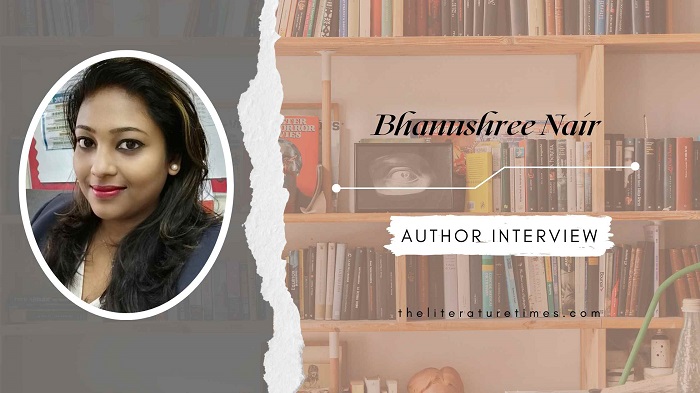
Bhanushree Nair is a writer, educator, and mother whose debut memoir When Devi Spoke draws from deep emotional truth and lived experience. With a background in education and a passion for healing, she explores trauma, resilience, and generational transformation, using storytelling as both a lifeline and a legacy of hope.
The Literature Times: What inspired you to write When Devi Spoke?
Bhanushree Nair: The inspiration came from a powerful, soul-stirring conversation I once had with Devi who is one of my closest friend and the person whose story shaped this memoir. We were simply discussing our personality differences, but the conversation unexpectedly went deeper. We started reflecting on how our past , especially our childhood experiences shaped the way we are showing up as adults. That was when it hit me: despite living different lives, we had such a similar emotional upbringing. And like so many others, we never paused to question how those early wounds were still influencing our present.
I realized that many things I disliked about myself weren’t really “me” instead they were survival responses to how I was raised, patterns passed down unknowingly through generations. I was tired of blaming myself without understanding the root. That conversation with Devi awakened something in me, the urge to unburden, to make sense of myself, and to write from a place of deep truth.
I wanted others to recognize that the emotional pain people carry as adults may not have started with them. When Devi Spoke became my way of beginning the healing process by writing honestly, tracing back the roots of emotional triggers, and acknowledging that awareness is the very first step toward healing. Writing this book was incredibly healing. It helped me understand, release, and reconnect with my inner self I had long abandoned.
The Literature Times: Was there a specific moment when Devi’s voice truly emerged for you?
Bhanushree Nair: Yes, absolutely. The moment Devi’s voice truly emerged was when we started talking about our upbringings. Both of us belonged to South Indian families with a strong cultural emphasis on obedience, silence, and suppression. We grew up with orthodox, overly strict parenting. It was almost eerie how alike our lives felt like we had lived in parallel worlds with different addresses but the same emotional script.
That realization helped us connect on a much deeper level. I could understand her pain, her fears, her silence because I had felt those very same things. It gave me emotional access to write her story with honesty and empathy. In many ways, Devi’s voice became a reflection of my own voice too, one that had remained quiet for far too long. The familiarity of our childhoods helped me write more truthfully, more fearlessly, and more compassionately. Her story gave me the courage to speak not only for her, but for the parts of me that were still healing.
The Literature Times: How did motherhood influence your healing journey?
Bhanushree Nair: Motherhood was an eye-opener for me, not in the poetic, picture-perfect way people often describe, but in a deeply confronting, transformative way. Everything that’s considered normal in a child’s development like tantrums, saying “no,” resisting schedules, not sleeping on time, felt like I was constantly diffusing a ticking bomb. I started noticing intense emotional reactions in myself: uncontrollable anger, outbursts, irritation at even the smallest things my child did that didn’t align with my expectations or comfort zone.
At first, I didn’t understand where it was coming from. So I started researching. I read countless articles online, books on parenting and child psychology, followed stories shared by vulnerable and honest mom influencers on Instagram, and began to name the feelings I was experiencing. After months of reflection, it became clear that it wasn’t my child who was triggering me. It was my own unresolved childhood trauma, surfacing through his innocence.
That was the turning point. I realized I had to unlearn everything I had absorbed from my own upbringing from authoritarian parenting to emotional neglect. I’m now in a process of relearning how to parent not just my son, but myself. It feels like I’m raising two toddlers: one who’s discovering the world for the first time, and one who’s finally learning what safety, patience, and love really feel like. It’s messy, overwhelming, and beautiful all at once but it’s also the most powerful step I’ve taken toward healing.
The Literature Times: What does “breaking generational patterns” mean to you personally?
Bhanushree Nair: Breaking generational patterns, for me, means choosing awareness over autopilot , choosing connection over control. I grew up in a South Indian home with strict, emotionally distant parenting, where fear was mistaken for respect and obedience was expected without question. For a long time, I believed that was normal until motherhood made me confront the emotional baggage I was unknowingly about to pass on.
My husband and I made a conscious vow never to raise our hands on our child, no matter what. It’s not an easy promise as we have to constantly remind ourselves each day why we made it especially every time my son pushes our buttons to an extend where I want to pull my hair out and scream my lungs out of uncontrollable anger or when our son is labeled “naughty” or wild, and when elders insist he needs to be hit “just once to fear you,” we hold firm. I don’t want a fearful child. I want a fearless one , the one who grows up with respect, not repressed pain.
Why should we expect robotic obedience from children? They’re not here to blindly follow commands; they’re here to be human, to explore, be expressive, be imperfect, and worthy of love. To break the pattern is to raise both my child and my inner child differently with empathy, freedom, and emotional safety. It’s hard, yes. But every gentle choice I make is a small rebellion against everything I was told I had to be and a step toward healing generations.
The Literature Times: Was it difficult revisiting painful memories while writing?
Bhanushree Nair: Yes, it was incredibly difficult. Writing When Devi Spoke meant reopening emotional wounds I had tucked away for years not just mine, but those of my friend whose story I was telling. Every chapter brought with it a wave of emotion, sometimes grief, sometimes anger, sometimes numbness. There were days I couldn’t continue writing without taking long pauses to cry, breathe, or simply sit with the weight of what was resurfacing.
What made it even more intense was how much of her story mirrored my own, our shared upbringing, the emotional neglect, the silence we learned to carry. Writing those memories down made them real again, but it also allowed me to finally feel them, instead of just storing them away.
As painful as it was, it was also liberating. With every memory I wrote, I took a step toward healing for myself, for my friend, and for every woman who’s been told to keep quiet and move on. Writing helped me grieve, understand, and release. It didn’t erase the past, but it transformed how I carry it.
The Literature Times: How do you practice self-compassion in your daily life now?
Bhanushree Nair: For me, self-compassion is a conscious, daily practice, not just a concept but an action. I journal my feelings often. When something triggers me, I pause and ask myself: What exactly caused this reaction? Was it the person, the situation, or an old wound from my childhood? This helps me understand whether I’m reacting from a place of fear, trauma, or an unresolved emotional pattern.
I’ve made it a habit to reflect before I respond. I’ve vowed to pause, breathe, and then choose my response instead of reacting impulsively especially in emotionally charged moments. I remind myself every day that I’m no longer a helpless child under the pressure of my parents’ expectations. I’m an adult now, and I have the power of choice.
I no longer blame my past, and I don’t blame those who raised me , as they did their best in raising their kids with what they only knew. But I take full responsibility for how I treat myself today. If I need rest, I rest. If I need space, I take it. I talk to myself, out loud sometimes to sort through my thoughts and bring myself back to center. Practicing self-compassion, for me, is choosing to treat myself with the kindness, clarity, and dignity I always deserved.
The Literature Times: What role did writing play in your emotional healing?
Bhanushree Nair: Writing much like reading has always been one of my closest companions. From a young age, I was known as a bit of a loner. I never really fit into groups or loud circles. But writing gave me something no one else could, a space to be completely, unapologetically myself. It became my only real outlet, the place where I could speak my heart without fear of judgment.
Over time, I realized journaling wasn’t just an emotional release, it was a form of therapy. It’s like holding up a mirror to your soul. On the surface, it may look like words on a page, but in reality, it’s where I unpacked years of silence, confusion, and emotional weight. Writing helped me trace the roots of my pain, name it, and begin to heal it.
I truly believe journaling is a must for anyone seeking clarity or healing. Writing When Devi Spoke allowed me to take everything I had carried inside, mine and my friend’s stories and finally give it space, voice, and validation. It was the most honest conversation I’ve ever had with myself, and it changed me.
The Literature Times: What advice would you give to women still afraid to speak their truth?
Bhanushree Nair: Speak — not for others first, but for yourself. It’s important for your own consciousness to hear your thoughts out loud. Whether through journaling, voice notes, or safe conversations, letting those thoughts take shape outside your mind brings emotional clarity and release. Holding it all in only adds to the weight you’re already carrying.
The emotional unburdening is essential. You deserve to feel light, safe, and heard even if it begins in the privacy of a notebook. For some, that release might come through journaling, for others through professional therapy, or a trusted friend. Whatever method feels safest to you, begin there.
The truth isn’t dangerous but the silence around it is. Speaking your truth is the first step toward reclaiming your power. You don’t have to say everything at once just enough to remind yourself that your voice matters.
The Literature Times: How do you hope this book impacts readers who have experienced silent suffering?
Bhanushree Nair: Your personality today, the way you react, love, fear, or withdraw is basically shaped by your childhood experiences and unresolved traumas. You’re not “just born this way.” You became this way, often as a survival response to things you didn’t know how to name or process back then.
But you can start unlearning. Start by identifying your triggers. Trace them back and ask yourself, Where did this really begin? Healing isn’t about blaming your past. It’s about understanding it, so you can stop unconsciously reliving it.
Because the truth is: the people who love you now, your partner, your children, your friends they don’t deserve to inherit your unhealed pain. They deserve the best version of you. And more than that, you deserve that version of you.
Your inner child needs to know every morning and every night that you are safe now. That it’s okay to feel, to rest, to express. The healing begins when you tell yourself, I’m allowed to be free and I am safe now.
Only when you love yourself truly, gently, consistently can you love anyone else in a way that’s whole and honest. Self-love isn’t selfish. It’s the beginning of everything.
The Literature Times: What stories are you most eager to tell next?
Bhanushree Nair: It’s surprising how many powerful, untold stories live quietly all around us. Every day, we cross paths with people like strangers, friends, even family and all we see are the two windows to their world: their eyes. But when you take a moment to truly talk to someone, to look beyond those windows and gently step into the rooms of their soul, you realize how much they carry, stories no one else may have ever heard, pain no one has ever witnessed, and resilience that never made it to words.
I want to tell those stories, the ones that live behind closed emotional doors. Real-life narratives of people who may not have a platform, but whose experiences are profound and deeply human. Sometimes, all a person needs is someone to listen, to witness their truth without interruption. And if I can be that listening ear, and help bring those voices forward through my writing, then I feel like I’m doing something meaningful.
My next stories will be rooted in everyday lives, but they’ll hold universal truths, stories that help us heal, reflect, or simply pause and say, “I see you.”