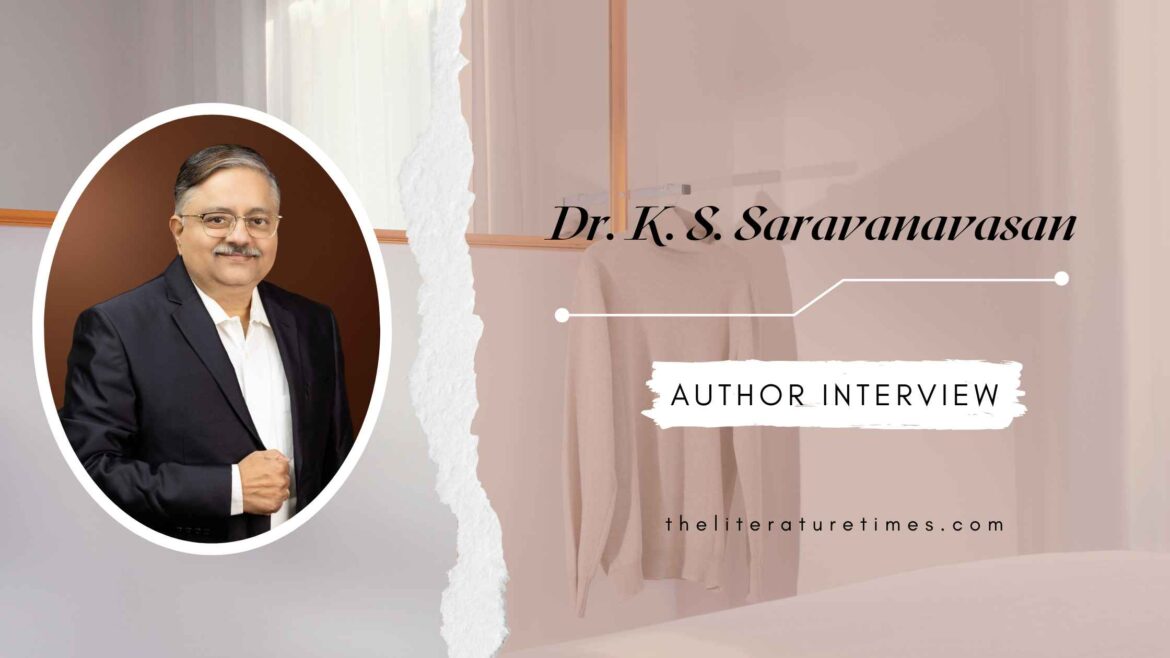
Dr. K. S. Saravanavasan is a globally recognized transformational thought leader with over three decades of leadership experience dedicated to unlocking human potential. Blending neuroscience, behavioural science, and consciousness studies, he helps individuals and leaders move from survival-driven living to purpose-led excellence. As the founder of Happy Leading and the creator of proprietary frameworks such as MetaMorShift® and the Excellence Disruption Framework (EDF), Dr. Saravanavasan’s work centers on a powerful belief: when happiness fuels performance, excellence becomes sustainable. Through his writing, coaching, and leadership interventions, he invites people to conduct the symphony within and lead with clarity, compassion, and conscious mastery.
The Literature Times: What inspired the concept of TAAL – Symphony of Mind, and what does the word “TAAL” personally represent to you?
Dr. K . S. Saravanavasan: TAAL was born from a lifelong observation that most people are not broken or incapable — they are simply out of rhythm with themselves. Across decades of leadership and transformation work, I saw that burnout, dissatisfaction, and inner conflict often arise not from external failure, but from internal misalignment.
The word TAAL represents rhythm — the invisible structure that gives meaning to sound, movement, and life. To me, it signifies the inner timing of a human being — when thoughts, emotions, awareness, and action begin to move together rather than collide.
“The mind is not meant to be silenced or controlled — it is meant to be conducted.”
When awareness becomes the conductor, chaos turns into coherence, effort turns into flow, and life begins to feel whole again. That realization became TAAL: Symphony of Mind.
Top of Form
Bottom of Form
The Literature Times: You describe transformation as beginning with a quiet inner friction rather than dramatic change. How can readers learn to recognize this subtle signal in their own lives?
Dr. K . S. Saravanavasan:Transformation rarely announces itself loudly. It begins as a quiet inner friction — a subtle discomfort between who you are becoming and how you are currently living. It often appears as emotional fatigue, restlessness, or the persistent sense that something meaningful is missing, even when life looks successful on the surface.
The gateway to recognizing this signal is self-awareness. Not analysis or judgment, but conscious observation. In TAAL, I invite readers to notice where energy drains, where reactions repeat, and where fulfillment fades.
“Self-awareness turns discomfort into information. That is where mastery begins.”
When we stop suppressing this friction and start listening to it, awareness naturally leads to clarity — and clarity leads to conscious change.
The Literature Times: The book introduces four inner states—Victim, Adjusting, Adapting, and Leading. Which state do most people get stuck in, and why?
Dr. K . S. Saravanavasan: People don’t truly get stuck in a particular inner state — they get stuck in not knowing where they are. The real challenge is not the Victim, Adjusting, or Adapting state itself, but the absence of self-awareness about occupying it.
Without awareness, people normalize their current state. Adjustment feels like maturity, endurance feels like strength, and compromise feels like wisdom. Over time, unconscious living creates stagnation — not because the state is limiting, but because movement has stopped.
“People don’t get stuck in a state of mind — they get stuck in not knowing where they are.”
Once awareness is built, movement becomes natural. People evolve not through force, but through clarity.
The Literature Times: How does TAAL differ from traditional self-help or motivational books in its approach to personal growth?
Dr. K . S. Saravanavasan: TAAL is not a motivational book — motivation fades. It is also not prescriptive self-help that tells people what they should become. TAAL functions as a mirror and a map.
Instead of fixing people, it helps them understand their current inner rhythm and why they are there. Growth, in TAAL, is not about becoming someone new — it’s about returning to alignment with who you already are.
“TAAL is not about fixing yourself. It’s about realigning with who you already are.”
From that alignment, change becomes sustainable rather than exhausting.
The Literature Times: You integrate neuroscience, behavioural science, and consciousness. How do these disciplines work together to create lasting transformation?
Dr. K . S. Saravanavasan: Neuroscience explains how patterns form in the brain. Behavioural science shows how those patterns shape habits and performance. Consciousness determines whether we remain trapped in those patterns or transcend them.
Lasting transformation happens when awareness interrupts autopilot behaviour and conscious choice reshapes neural pathways.
“Awareness interrupts behaviour. Conscious choice rewires the brain.”
TAAL integrates these disciplines so change is not forced intellectually, but embodied emotionally and neurologically.
The Literature Times: Can you share a real-life story where the TAAL framework led to a profound shift in leadership or personal excellence?
Dr. K . S. Saravanavasan: ’I have worked with leaders who appeared highly successful but were internally depleted. One senior executive realized through TAAL that he was operating from constant adjustment — managing expectations while suppressing his own values.
As awareness grew, he began setting honest boundaries and leading with clarity rather than control. His stress reduced, engagement increased, and performance improved.
The shift wasn’t dramatic — it was rhythmic. That is the power of awareness-led transformation.
The Literature Times: What role does happiness play in high performance, and why do you believe it is often misunderstood in leadership contexts?
Dr. K . S. Saravanavasan: Happiness is often mistaken for comfort or complacency. In reality, happiness is alignment — when effort, meaning, and awareness move together.
Aligned individuals don’t burn out easily. Creativity flows. Resilience strengthens. Performance becomes sustainable.
“Happiness is not a reward for performance — it is the rhythm that sustains it.”
In leadership, happiness is not soft; it is strategic.
The Literature Times: How do your proprietary frameworks, MetaMorShift® and the Excellence Disruption Framework, complement the ideas presented in this book?
Dr. K . S. Saravanavasan: MetaMorShift® focuses on identity-level transitions — how people move beyond limitation. The Excellence Disruption Framework challenges outdated systems that prioritize output over human experience.
TAAL forms the foundation beneath both. Without awareness, frameworks fail. With awareness, they transform.
TAAL teaches people to recognize their inner rhythm before changing the outer structure.
The Literature Times: Who is this book for—emerging leaders, seasoned professionals, or anyone seeking inner mastery?
Dr. K . S. Saravanavasan: TAAL is for anyone who feels they are managing life well, yet sensing something deeper calling within. It speaks to emerging leaders, seasoned professionals, students, and individuals in transition.
If you are successful yet restless, capable yet uncertain, disciplined yet disconnected — this book was written for you.
The Literature Times: If readers take away just one practice or mindset shift from TAAL – Symphony of Mind, what do you hope it will be?
Dr. K . S. Saravanavasan: I hope readers learn to pause and listen — to treat awareness as a daily discipline rather than an abstract idea.
When you stop reacting and start observing, life changes rhythm. And when awareness becomes habitual, mastery follows naturally.
“When awareness becomes habitual, mastery follows naturally.”
That is the essence of TAAL.