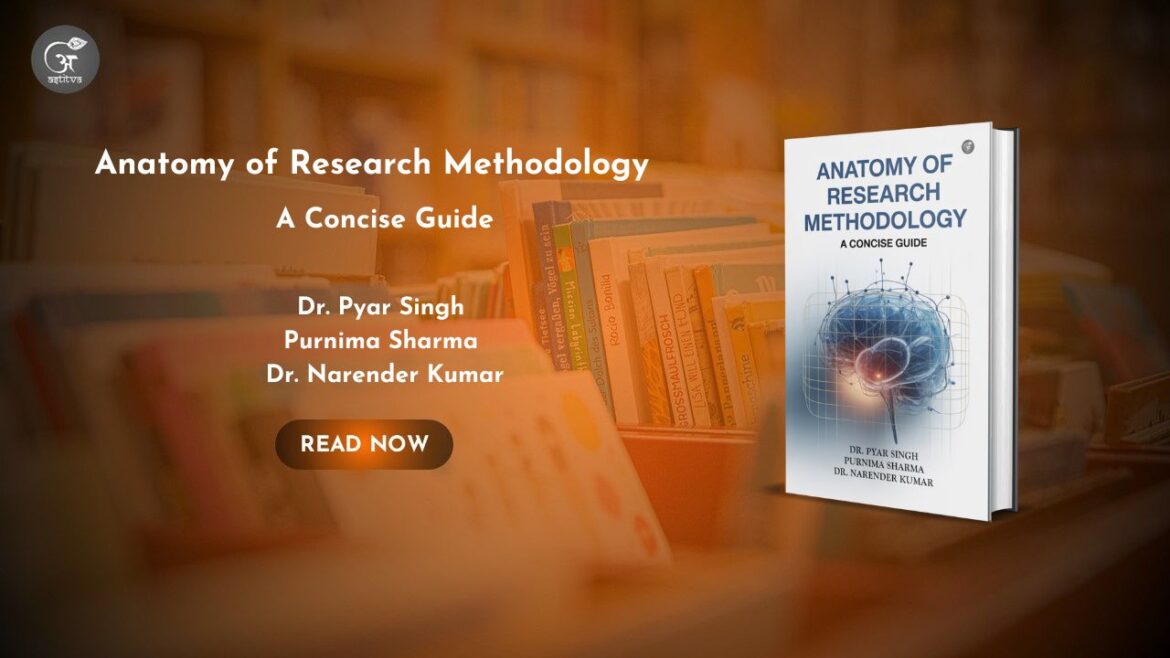
The book “Anatomy of Research Methodology: A Concise Guide” by Dr. Pyar Singh, Purnima Sharma, and Dr. Narender Kumar has been officially released, offering a comprehensive yet concise resource for students, researchers, and academicians embarking on their journey in research. This book is designed to serve as a guiding companion for beginners in the research field, Ph.D. research scholars, and students preparing for UGC NET and SET examinations.
Written in clear, accessible language, the book simplifies complex research concepts, making them easier to understand for readers across disciplines. It provides a thorough understanding of the essential components of research methodology, including research design, data collection, literature review, data analysis, research writing, and key terminologies. By combining clarity with depth, the authors have ensured that readers can grasp the fundamentals of research quickly while also developing the skills needed to produce high-quality academic work.
What sets “Anatomy of Research Methodology: A Concise Guide” apart is its focus on practicality and precision. Rather than overwhelming readers with theoretical jargon, the authors have emphasized concise explanations supported by relatable examples. This approach not only enhances comprehension but also encourages readers to apply their learning effectively in their own research projects. The book is particularly useful for Ph.D. scholars aiming to strengthen their methodological understanding and for postgraduate students across disciplines seeking a solid foundation in research practices.
Dr. Pyar Singh, one of the co-authors, brings decades of academic, research, and media experience to the work. Currently serving as the Head of the School of Media & Mass Communication at Shimla University, Dr. Singh has an illustrious career that spans print, radio, television, and digital media. His scholarly contributions include numerous books, articles, and research papers in national and international journals. Recognized with several prestigious honors such as the Shaan-e-Himachal State Award, National Faculty Award, and the International Research Excellence Lifetime Achievement Award 2025, Dr. Singh continues to inspire students and researchers through his commitment to education and knowledge dissemination.
Co-author Purnima Sharma, a promising young researcher in the field of Botany, adds a scientific and analytical dimension to the book. A recipient of the DST-INSPIRE and Swami Vivekanand scholarships, she has earned her degrees from Himachal Pradesh University and Panjab University and is currently pursuing her Ph.D. in Plant Sciences at the Central University of Himachal Pradesh. Her extensive research experience, along with her qualifications such as CSIR-UGC NET and GATE, enriches the book with a methodological rigor that is both practical and academically robust.
The third co-author, Dr. Narender Kumar, brings more than fifteen years of teaching experience and a strong academic background to the work. With over twenty-five research papers published in national and international journals and more than forty-five papers presented at academic conferences, his scholarly expertise significantly enhances the depth of the book. His experience across reputed universities such as Kurukshetra University, Venkateshwara Open University, and APG Shimla University has provided him with valuable insights into research pedagogy and student learning needs.
Together, the authors have created a work that bridges the gap between theoretical knowledge and practical application in research. The book’s approachable tone, structured layout, and real-world relevance make it an essential addition to the shelves of any aspiring researcher. It not only equips readers with methodological knowledge but also encourages them to think critically, design sound studies, and communicate their findings effectively.
The authors express hope that “Anatomy of Research Methodology: A Concise Guide” will be warmly received by readers, research scholars, and students from diverse fields. They also welcome constructive feedback and suggestions to further enhance the quality and utility of future editions. This publication marks an important contribution to the growing body of academic literature aimed at strengthening research literacy and fostering a culture of inquiry and innovation among students and scholars alike.