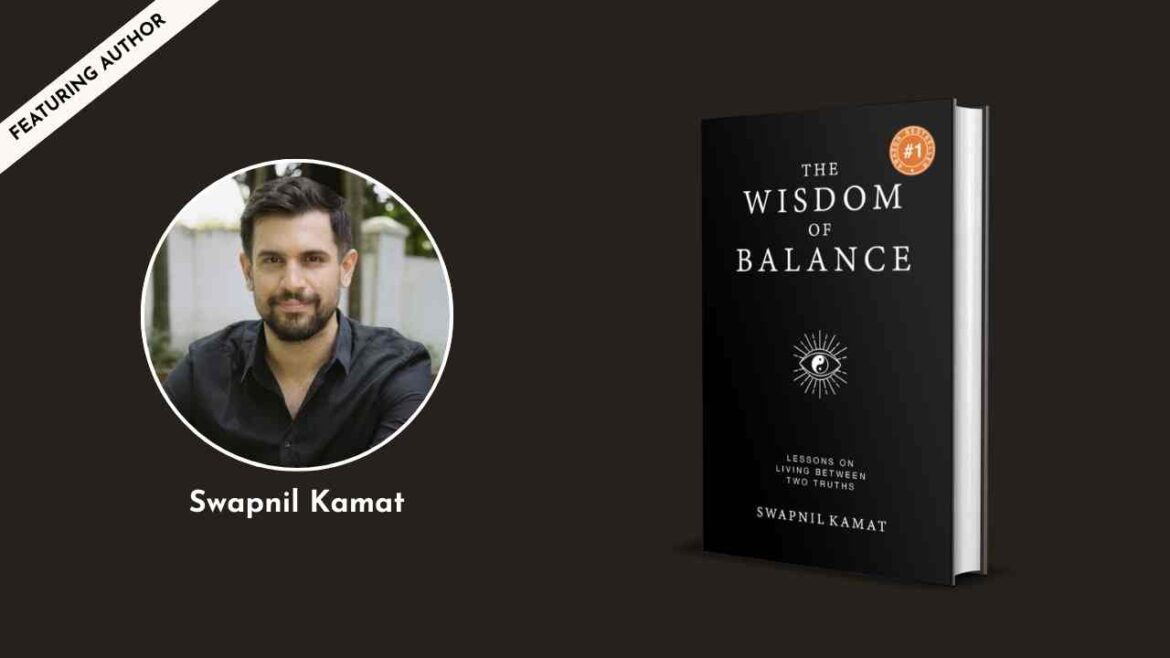
Author Bio: Swapnil Kamat is an entrepreneur, writer, and teacher whose work sits at the intersection of business, wisdom, and modern living. He is the co-founder of RANX, a digital media company that creates shows, podcasts, and content IP in partnership with brands around the world.
Earlier, he bootstrapped Work Better Training into one of India’s largest corporate learning firms, which was later acquired by upGrad. Through years of training thousands of professionals—from first-time employees to senior CXOs—he has developed a deep, practical understanding of how people think, choose, communicate, and change. His writing is shaped by these lived interactions and real-world insights.
The Wisdom of Balance is his attempt to decode the tensions that shape modern life—work and rest, ambition and peace, progress and presence—and to offer simple ways to live wiser, steadier, and happier.
He lives in Goa with his family, building RANX, writing books, and enjoying a life he genuinely loves—while, like everyone else, trying to live with a little more balance.
The Literature Times: Author, welcome to The Literature Times. Congratulations on the publication
of your book! What feedback do you get from your readers? Please share your thoughts on this
book.
Author:The most common feedback I receive is that the book feels calm, honest, and relatable. Many readers tell me they don’t feel “preached to” while reading it — instead, they feel understood. This book was never meant to give answers; it was meant to offer lenses. If it helps people think a little more clearly and live a little more gently, it has done its job.
The Literature Times: What motivates you to become a writer?
Author: Writing allows me to say what often remains unsaid in everyday life. There are thoughts, emotions, and contradictions that we all live with but rarely articulate. Writing gives them form and helps me do a deep dive into subjects that I feel are useful to my own life.
The Literature Times: What are your favourite writing topics? Please tell us a little bit about your literary interests.
Author: I like writing about everyday philosophy that people can easily understand and use. I’m also interested in writing about personal development and career success, especially in ways that feel practical, grounded, and relevant to real life.
The Literature Times: We were hoping you might tell us about some of the authors that have influenced you and who you read!
Author: I read books in the non-fiction genre. My current favourite authors include Jim Collins, Rolf Dobelli, Morgan Housel, and Alex Hormozi.
The Literature Times: The title is unique and appealing; how did you come up with them? Please tell us the story behind it.
Author: The title emerged naturally from the central idea of the book. Life constantly pulls us toward extremes — work or rest, ambition or peace, logic or emotion.The Wisdom of Balance reflects the belief that wisdom lies in holding opposites together, not eliminating one for the other.
The Literature Times: What are your achievements so far? Tell us something about your writing
career.
Author: The book was No.1 on Amazon Kindle in the Happiness, Stress Management and Personal Development sections in India. I was extremely happy about that. I’ve written columns for many leading newspapers and magazines through the years and thought it was time to put my thoughts in book format.I try to make my writing as simple as possible and in smaller chapters that make it easy to consume.
The Literature Times: What is your current goal in writing a career? How do you see your future in writing?
Author: Writing is a hobby for me – and I do it to help me learn about the different subjects I’m interested in. So I have no concrete goal as such.
The Literature Times: Do you have any other novels in the works? Please keep us updated on your future endeavours.
Author: The Wisdom of Balance is the 1st of 3 books in The Wisdom trilogy I plan on writing. I’m excited to start work on my next project – The Wisdom of Why.
The Literature Times: How do you view Indian writing in the twenty-first century? What changes do you see in today’s writing style? Do you feel it has changed by the time?
Author: I don’t think I’ve read enough Indian writers to have a view on the same.
The Literature Times: How simple/difficult was it for you to publish your book? What message do you want to send to aspiring authors?
Author: I think publishing books has become a lot easier with the traditional and self publishing platforms. My message to aspiring authors is to take the plunge. Don’t put too much pressure on yourself to create the perfect book. Just start and take your dream project to completion.