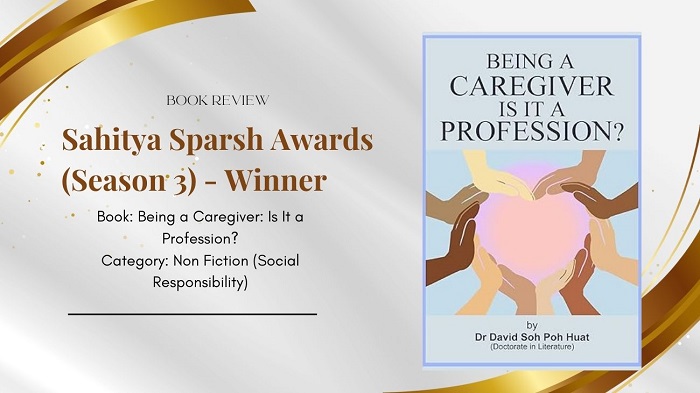
In today’s rapidly ageing world, the role of caregiving has become both a necessity and a profound act of service. Winner of Sahitya Sparsh Awards – Season 3 with category Non Fiction (Social Responsibility), David Soh Poh Huat explores this subject powerfully in his book Being a Caregiver: Is It a Profession? Order now: https://www.amazon.com/Being-Caregiver-Profession-David-Huat-ebook/dp/B0DR4C1NJK. The book highlights why every individual, young or old, must learn the value and skills of caregiving as part of our shared responsibility toward the sick and the elderly. It also reminds us that caregiving is rooted in unconditional love, even as it evolves into a recognised profession.
Understanding the Essence of Caregiving
Caregiving is often viewed through the lens of duty, compassion and emotional resilience. It is a practice that transcends cultural and geographical boundaries because caring for one another is inherently human. At its heart, caregiving is about offering physical, emotional and sometimes even financial support to someone who is vulnerable, ill or elderly.
While society continues to debate whether caregiving is a trained profession or an inborn trait, one thing is clear. Caregiving is indispensable. With global populations ageing faster than ever before, the demand for caregivers has grown significantly. Families, communities and governments are now facing the reality that caregiving skills are no longer optional but essential.
Caregiving as a Social Responsibility
A Call to Every Individual
David Soh Poh Huat emphasises that caregiving is not only for those who choose it as a career path. It is a responsibility that each person may have to undertake at some point in life. Whether caring for an ageing parent, a sick partner or a disabled relative, caregiving is becoming an integral part of modern living.
Learning to care with empathy, patience and respect supports not only the individual receiving care but also strengthens community bonds. In an era where families are becoming smaller and life expectancy is increasing, caregiving is emerging as a core component of social responsibility.
Unconditional Care for the Vulnerable
One of the key themes in David’s work is unconditional caregiving. This means providing care without expecting anything in return, driven purely by love and compassion. Such caregiving uplifts the emotional well-being of the sick or elderly and nurtures a sense of purpose for the caregiver.
However, unconditional care does not imply that caregivers must ignore their own needs. Instead, it reminds society to acknowledge the emotional labour caregivers perform and to ensure support systems are in place for their well-being.
Is Caregiving a Profession?
The Professionalisation of Caregiving
As the demand for caregivers grows, caregiving is increasingly recognised as a formal profession. Caregivers today receive training in medical support, communication, emergency response, nutrition and psychological understanding. Professional caregivers may work in nursing homes, hospitals, assisted living centres or as home care assistants. This training ensures quality care and promotes career advancement in caregiving fields.
The professionalisation of caregiving has many benefits. It offers employment opportunities, encourages skill development and ensures that caregiving standards remain high. It also gives caregivers the respect they deserve as essential contributors to society.
Love or Renumeration: What Drives Caregivers?
Caregiver as a Profession for those embarking as a Career, we as individuals or organisation need to ask ourselves is it for the unconditional love in giving or the renumeration. This question lies at the heart of the caregiving identity.
Passionate caregivers often enter the field because they feel a calling to help others. Their motivation stems from empathy and a desire to make a meaningful difference. On the other hand, caregiving as a paid profession acknowledges the time, effort and patience required to provide effective care. It validates the caregiver’s work and allows them to sustain a living.
The ideal balance lies in combining both perspectives. A caregiver should be fairly compensated, but compassion should remain at the core of the service. When caregivers work with both skill and heart, their impact becomes truly transformative.
Essential Skills Every Caregiver Should Learn
Emotional Intelligence
Understanding the emotional needs of the person under care is crucial. A caregiver must be empathetic, patient and attentive to subtle emotional cues.
Practical Health Care Skills
Basic medical knowledge such as monitoring vital signs, assisting with mobility and managing medications can greatly improve the quality of care.
Communication Skills
Clear communication with patients, families and healthcare professionals ensures consistency and safety in caregiving routines.
Self Care and Stress Management
Caregivers often face emotional exhaustion. Learning to manage stress and seek support helps maintain balance and avoid burnout.
Conclusion: Caregiving as a Lifelong Value
Caregiving is far more than a profession. It is a value, a responsibility and a human necessity. David Soh Poh Huat’s award winning work reminds us that caregiving belongs to everyone. In embracing caregiving as both a career and a personal duty, we strengthen our families, communities and society as a whole.
As the world continues to age, caregiving will remain one of the most essential contributions anyone can make. Whether guided by love, professionalism or both, caregiving shapes a compassionate future for all.