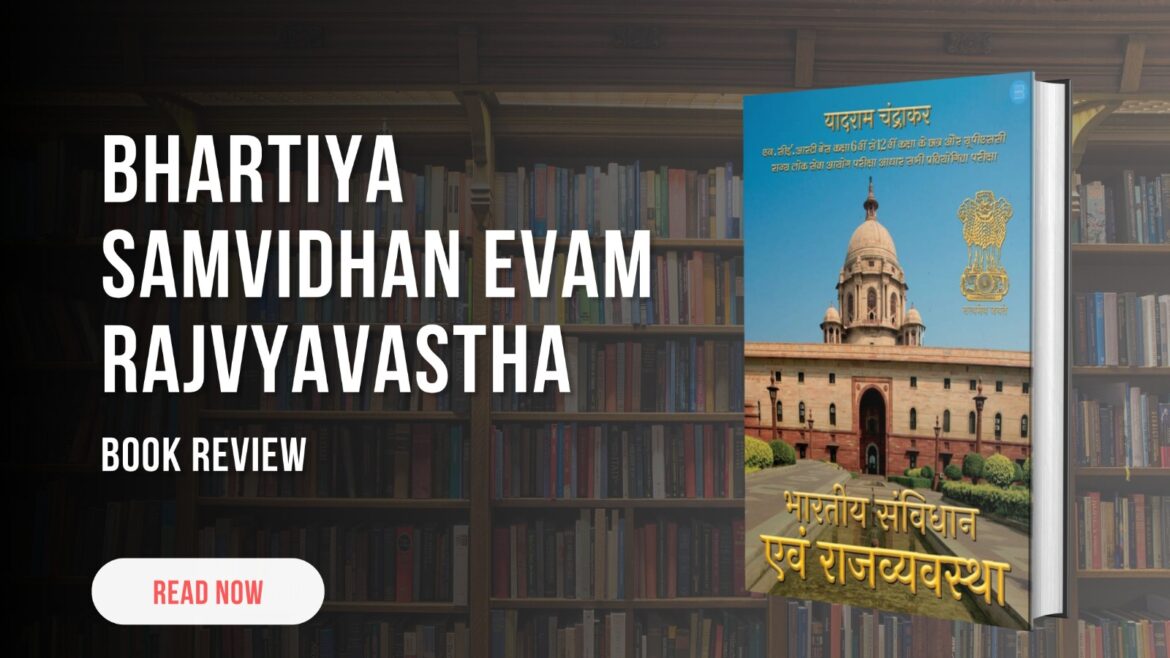
“Bhartiya Samvidhan Evam Rajvyavastha” by Yadram Chandrakar is a meticulously crafted guide that offers an in-depth exploration of the Indian Constitution and the governance framework of India. This book stands out for its clarity, structure, and practical approach, making it an indispensable resource for law students, advocates, and anyone seeking a comprehensive understanding of India’s constitutional and legal system. Chandrakar’s expertise as an educator and writer is evident throughout the text, as he presents complex legal and constitutional concepts in a manner that is both accessible and engaging.
The book begins with a detailed overview of the Indian Constitution, tracing its historical development, underlying philosophy, and the objectives it seeks to achieve. Chandrakar succeeds in breaking down the Constitution’s intricacies without oversimplifying them. Each article and provision is explained with practical examples, highlighting its relevance in contemporary legal practice and governance. This approach ensures that readers not only memorize constitutional provisions but also understand their application in real-world scenarios. By linking theory with practice, the book bridges the gap between academic study and professional legal work, which is particularly valuable for law students preparing for exams or advocates beginning their careers.
One of the book’s strongest aspects is its treatment of the three pillars of governance: the executive, the legislature, and the judiciary. Chandrakar provides a detailed analysis of their functions, powers, and limitations, as well as the intricate system of checks and balances that ensures accountability within the Indian democratic framework. The sections on the President, Prime Minister, Parliament, and the state machinery are thorough, combining constitutional provisions with practical insights drawn from real-life case studies and judicial interpretations. This not only helps students grasp the theoretical underpinnings of governance but also equips them with knowledge of how these institutions operate in practice.
The judiciary, as the guardian of the Constitution, receives special attention in the book. Chandrakar explains the structure of the Indian judiciary, the jurisdiction of various courts, and the principles of judicial review, ensuring readers appreciate the role of courts in upholding constitutional values. The discussions on landmark judgments are presented in a manner that highlights their significance, impact, and continuing relevance, allowing readers to see the evolution of constitutional law in India. This analytical approach encourages critical thinking, enabling students and practitioners to engage with legal issues more effectively.
Another commendable feature of the book is its focus on the interplay between constitutional provisions and criminal law. Chandrakar demonstrates how fundamental rights, directive principles, and various articles of the Constitution influence legal procedures and criminal jurisprudence. This practical orientation is particularly beneficial for advocates who need to apply constitutional knowledge in litigation and legal practice. By connecting constitutional theory with legal practice, the book serves not just as a reference text but also as a guide for building professional competence in law.
Chandrakar’s writing style is both clear and engaging. He avoids unnecessary legal jargon, making the book accessible to students, citizens, and readers who may not have a formal legal background but are interested in understanding India’s constitutional framework. The explanations are precise, well-structured, and supported by examples and case studies, which enhance comprehension. This balance between depth and clarity is a key strength of the book, ensuring that readers are neither overwhelmed by technicalities nor deprived of critical information.
The book also pays attention to the evolving nature of the Constitution and governance. Chandrakar discusses recent amendments, landmark cases, and contemporary challenges, such as the balance between fundamental rights and state authority, the scope of judicial activism, and the dynamics of federalism in India. This modern perspective ensures that readers gain a holistic understanding of not only the historical and theoretical aspects of the Constitution but also its practical and contemporary relevance. The inclusion of comparative references and illustrative examples further enriches the reader’s comprehension and engagement.
For law students, advocates, and aspirants preparing for competitive examinations like UPSC and state PSCs, “Bhartiya Samvidhan Evam Rajvyavastha” is an invaluable resource. Its practical insights, structured presentation, and comprehensive coverage make it a “bible” for understanding Indian law and governance. The book encourages readers to develop analytical skills, think critically about constitutional issues, and appreciate the interconnectedness of law, governance, and society. It is not merely a textbook but a guide that fosters a deeper appreciation of the constitutional principles that form the foundation of Indian democracy.
Yadram Chandrakar’s extensive experience as an educator is reflected in the pedagogical quality of the book. The content is organized logically, progressing from fundamental concepts to detailed analyses, ensuring that readers build a strong conceptual foundation before tackling complex issues. The book is also well-suited for self-study, offering clarity and guidance that enable students to navigate constitutional law independently while developing the confidence to apply their knowledge in academic, professional, and civic contexts.
In conclusion, “Bhartiya Samvidhan Evam Rajvyavastha” is a remarkable contribution to legal literature, combining scholarly depth with practical relevance. Chandrakar’s ability to explain complex constitutional and governance issues in a clear, accessible manner makes the book essential for law students, practitioners, and anyone interested in understanding the Indian legal and political system. Its comprehensive coverage, practical orientation, and thoughtful presentation establish it as a definitive guide to the Indian Constitution, ensuring that readers come away not only with knowledge but also with insight into how India’s legal and governance structures function in practice. This book is truly a cornerstone for those seeking to master the intricacies of Indian constitutional law and governance.