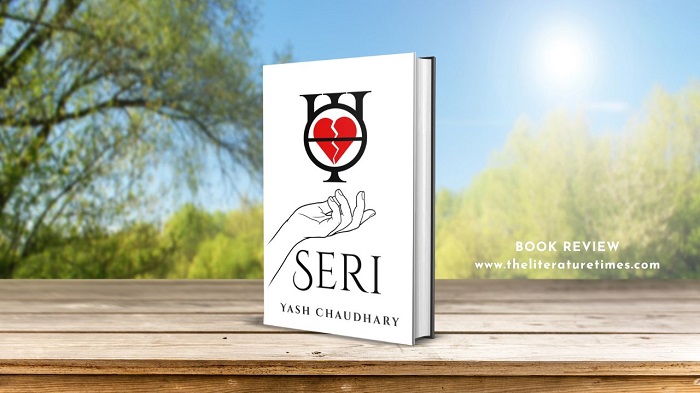
Yash Chaudhary’s Seri positions itself within the expanding landscape of introspective literature, but it stands out due to its delicate emotional architecture and poetic undertones. At its core, the book is a meditation on the heart’s internal battles—its capacity to feel, to break, to forget, and to heal. While many contemporary writers attempt to explore human emotion through complex narratives, Chaudhary takes an alternative route: he centers the heart as the protagonist and the emotional journey as the plot.
From a critical standpoint, the book offers both strengths and limitations that shape its impact on readers. One of its most notable strengths is the clarity of emotional intention. Chaudhary enters the narrative with a strong understanding of the universal nature of emotions. He builds the narrative around the concept of a heart struggling against its own turmoil—its memories of pain overshadowing memories of love. This creates a philosophical foundation that carries the reader through the text. The introduction of the word Seri as a symbol of comfort and awakening adds a thematic coherence that guides the narrative’s progression.
The choice to keep the book centered around emotion rather than external events is bold. It requires readers to shift from expecting plot to embracing introspection. For some, this becomes the book’s greatest strength. Chaudhary’s minimalistic storytelling encourages readers to reflect deeply on their own emotional experiences. For others, especially those accustomed to plot-driven literature, the book may feel slow or lacking in narrative advancement.
Stylistically, Chaudhary writes with fluidity and lyricism. His prose is soft yet vivid, meant to be felt more than analyzed. The sentences are crafted with intention, almost resembling meditative reflections rather than traditional storytelling. This stylistic choice works effectively in conveying the emotional states he aims to highlight. He avoids excessive ornamentation while maintaining poetic resonance—a balance that many writers struggle to achieve.
However, this same stylistic consistency sometimes becomes a limitation. The tone remains uniformly reflective throughout the book, with little tonal variation. While this creates a cohesive emotional atmosphere, it can also risk monotony for readers who crave dynamic shifts in voice or intensity. The reflective style, though beautiful, may feel repetitive in certain portions of the book.
Critically, one of the most intriguing aspects of Seri is its thematic symbolism. The word itself—Seri—functions as a spiritual motif. It becomes the emotional anchor of the text, symbolizing reassurance, healing, and inner truth. This gives the book a metaphysical layer that elevates it beyond personal reflection. Seri becomes the embodiment of universal human yearning: the desire to feel seen, understood, and comforted. Chaudhary’s decision to center the book around this single word is admirable, though the narrative could have benefited from deeper exploration of its origin or emotional history.
Another critical observation lies in the author’s portrayal of emotional identity. He presents the heart as a dynamic entity constantly shaped by experiences. While this conceptualization is compelling, some readers may desire more concrete grounding—characters, scenes, or situations that anchor these emotions to lived events. The abstract nature of the narrative can make it feel distant at times, though this may be intentional, aligning with the book’s philosophical tone.
One area where the book excels critically is its accessibility. Despite its emotional depth and philosophical leanings, Seri remains readable and relatable. The language is simple yet evocative, making it approachable for readers across backgrounds. Chaudhary avoids intellectual elitism, grounding his ideas in universally understood human experiences.
The author’s background as a civil engineer adds an interesting layer to the critique. Readers may expect structured thinking and clarity from someone with a technical profession, and Chaudhary delivers precisely that—though in a different form. His writing exhibits a quiet structural elegance. There is a sense of compositional order even amidst emotional chaos, which becomes one of the book’s subtle strengths.
Critically, Seri can be seen as a book that bridges emotional expression and philosophical reflection. It does not attempt to be a traditional novel, nor does it try to fit neatly into conventional genres. Instead, it offers a meditative space—a literary pause where readers can confront their own emotional truths.
In summary, Seri is a beautifully crafted emotional exploration with a unique voice. Its strengths lie in its introspection, symbolism, and poetic prose. Its limitations stem from its abstract nature and tonal uniformity. Yet, these elements together make it a distinctive work, one that invites readers not to consume a storyline but to embark on an inward journey. As a piece of emotional literature, Seri succeeds in creating an intimate, reflective, and quietly powerful reading experience.