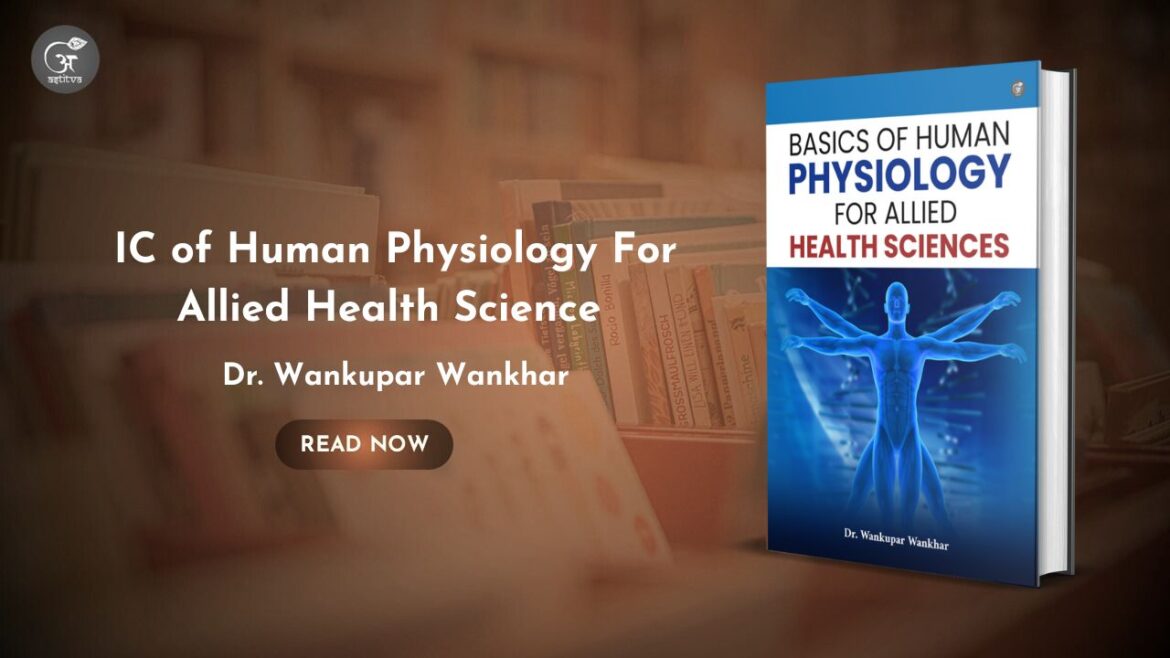
In the realm of healthcare and medical education, understanding the complexities of human physiology is paramount. For allied health science students, mastering the normal functioning of the body and its systems forms the cornerstone of effective clinical practice. Dr. Wankupar Wankhar’s latest book, IC of Human Physiology For Allied Health Science, provides an invaluable resource for students and professionals in the field of healthcare, offering a clear and comprehensive study of the body’s systems and organs, along with their interaction and regulation.
This book is designed to serve as an essential guide for those studying allied health sciences, providing an in-depth exploration of physiological processes, from cellular functions to complex body systems. Dr. Wankhar takes the reader through the fundamentals of physiology, with a particular emphasis on the nervous and endocrine systems, which regulate and coordinate essential functions such as movement, digestion, and breathing through nerve impulses and hormones.
At the heart of this work is a thorough examination of the body’s building blocks: the cells. From there, Dr. Wankhar expands into the various processes that sustain life, including movement, digestion, breathing, and waste elimination. With this foundational knowledge, students and practitioners can better understand how disruptions in these functions—due to disease or stress—can impact the body.
In this book, Dr. Wankhar highlights the importance of a solid understanding of human physiology for allied health professionals. The clear focus is on equipping healthcare providers with the knowledge needed to assess health conditions, identify abnormalities, and make sound clinical decisions that ultimately ensure quality care for patients. By fostering a strong physiological foundation, this book offers allied health science students and professionals the tools they need to navigate the complexities of patient care.
Dr. Wankupar Wankhar brings a wealth of knowledge and expertise to the book, having studied and researched the effects of stress on physiology for several years. As a Professor and Dean In-Charge at The Assam Kaziranga University, Dr. Wankhar has made significant contributions to the field of stress physiology. His research, particularly in the areas of anxiety, depression, and the impact of stressors on the nervous system, offers a unique perspective that enriches the text. The book draws from his extensive research on the role of serotonin receptors in neurotransmission, shedding light on how environmental and physiological stressors influence human health at cellular and systemic levels.
In addition to his work on stress physiology, Dr. Wankhar has delved into natural product research, studying how medicinal plants can counteract oxidative stress and protect neural tissue. His exploration of the effects of aspartame on brain function and memory impairment further underscores his commitment to understanding and addressing the health challenges posed by modern lifestyles.
Dr. Wankhar’s academic journey and groundbreaking research have resulted in 34 peer-reviewed articles published in esteemed national and international journals. This body of work has not only deepened the scientific community’s understanding of stress physiology but also helped bridge the gap between traditional knowledge and modern scientific methodologies. His book, IC of Human Physiology For Allied Health Science, reflects his continued commitment to advancing both medical education and research.
This book is not just a textbook—it is a critical tool for the next generation of healthcare providers. With its clear explanations, practical insights, and Dr. Wankhar’s unparalleled expertise, it is poised to become an indispensable reference for allied health science students and professionals seeking a deeper understanding of the physiological principles that underpin human health.