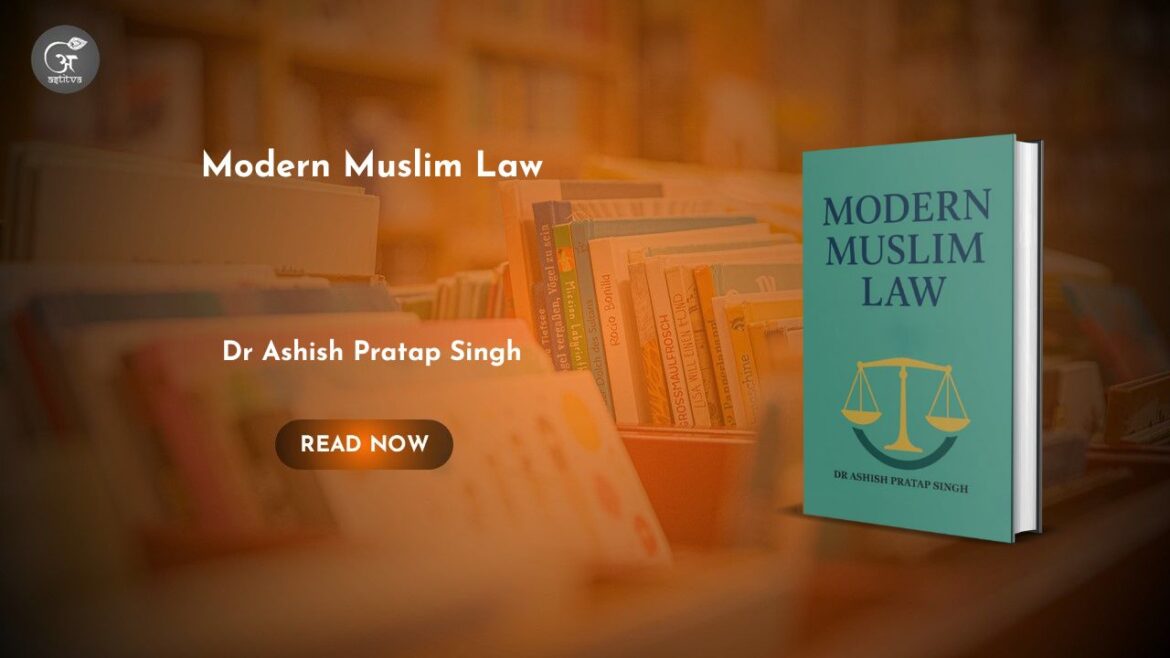
In a rapidly evolving legal landscape, the relationship between traditional jurisprudence and modern constitutional principles often raises profound questions. Modern Muslim Law, authored by Dr. Ashish Pratap Singh, offers an in-depth exploration of these questions by presenting a comprehensive study of the principles, evolution, and present-day relevance of Muslim personal law within modern legal systems.
The book stands out as a scholarly yet accessible analysis of how classical Islamic doctrines interact with the contemporary socio-legal environment. It delves into key aspects such as marriage, divorce, inheritance, maintenance, guardianship, and property rights, explaining not only their origins in Islamic jurisprudence but also their transformation and adaptation through judicial interpretation and legislative reform.
What makes Modern Muslim Law particularly relevant is its balanced perspective. It does not merely restate traditional concepts but critically examines them in light of current social realities and constitutional mandates. The author skillfully connects the historical foundations of Sharia-based laws with their modern implications, helping readers understand how Muslim law functions as both a moral and legal framework in a pluralistic society.
Through meticulous research and clarity of thought, Dr. Singh provides readers—especially law students, academicians, and practitioners—with a practical understanding of Muslim personal law as it operates in courts today. The book’s analytical approach encourages readers to view Islamic law not as a static system but as a dynamic and evolving legal tradition, capable of harmonizing faith with justice and modernity.
Each chapter is structured to offer both conceptual depth and practical insight. The author discusses the evolution of Muslim law from its classical juristic foundations, its codification during colonial and post-colonial times, and its continuing relevance in the constitutional framework of modern India and beyond. By drawing on recent judicial precedents, Modern Muslim Law highlights the progressive role of the judiciary in interpreting personal laws in harmony with constitutional values like equality, dignity, and social justice.
Beyond its legal focus, the book also touches upon the ethical and social dimensions of Muslim law. It demonstrates that at its core, the law seeks to maintain harmony in human relationships, protect individual rights, and ensure justice in matters of personal and family life. This holistic treatment of the subject makes the work not only a legal reference but also a reflection on law as a living moral institution.
About the Author:
Dr. Ashish Pratap Singh is a respected academician in the field of law, holding an LL.M. and a Ph.D. With over 11 years of teaching experience, he has contributed extensively to legal education and research. Known for his analytical acumen and ethical outlook, Dr. Singh has guided numerous students in understanding the philosophical and practical aspects of law. His areas of expertise span constitutional law, personal laws, and jurisprudence.
Through Modern Muslim Law, Dr. Singh continues his mission to bridge tradition with contemporary thought, offering a well-researched, authoritative, and insightful contribution to the study of Islamic jurisprudence. The book stands as an essential resource for anyone seeking to understand how faith-based legal principles can coexist and evolve within modern democratic societies.