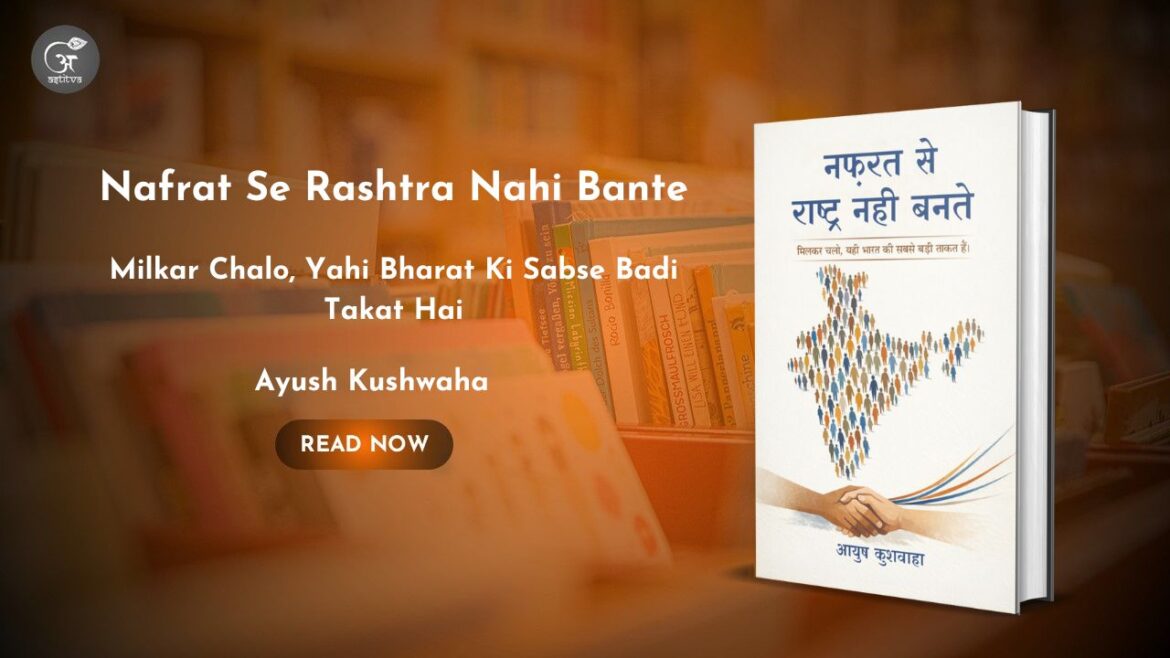
Book Release: Nafrat Se Rashtra Nahi Bante: Milkar Chalo, Yahi Bharat Ki Sabse Badi Takat Hai:by Ayush Kushwaha
“Nafrat Se Rashtra Nahi Bante”: A Powerful Call for Unity in a Divided Time
India today stands at a crucial crossroads. The nation is moving forward with remarkable achievements in technology, space exploration, education, and the energy of its young minds. Yet alongside this progress runs a disturbing undercurrent—hatred spread in the name of religion and caste. Addressing this pressing reality is Ayush Kushwaha’s compelling new book, “Nafrat Se Rashtra Nahi Bante”, with the evocative subtitle “Milkar Chalo, Yahi Bharat Ki Sabse Badi Takat Hai.”
This book is not merely a commentary on politics or society; it is a heartfelt appeal to the conscience of the nation. Kushwaha argues that hatred, when exploited by politics, is converted into votes; when absorbed by society, it turns into conflict; and when normalized by a nation, it results in stagnation and decline. Through clear reasoning and emotional clarity, the book delivers a singular, powerful message: India’s greatest strength lies in walking together.
Nafrat Se Rashtra Nahi Bante reminds readers that India is not defined by religion or caste, but by its diversity, culture, and unity. The author warns that persistent suspicion among communities will only push the country backward. Vote-bank politics, he argues, benefits political leaders but damages the nation’s social fabric. The common citizen must recognize that hatred does not bring progress—development does.
One of the book’s strongest assertions is that real power does not rest with politicians, but with united citizens. When people stand together, no leader can mislead the nation or push it in the wrong direction. The book envisions a future where people of all religions and castes move forward collectively, making India worthy of its aspiration to become a global moral and intellectual leader. Rather than attempting to change systems overnight, the book focuses on changing mindsets—because transforming one individual’s thinking can eventually transform society.
In the About the Author section, Ayush Kushwaha reveals the emotional core behind the book. He describes a sense of heartbreak—not over broken land, but over broken hearts, fractured thinking, and fading humanity. When religion became a political weapon, caste became a dividing wall, and those who spread hatred were praised while those who questioned were silenced, silence itself felt like a crime.
Importantly, the author clarifies that this book is not against any religion or caste. It stands firmly against a mindset that asks about identity before recognizing humanity. Kushwaha reminds readers that before anything else, we are Indians. Hatred may give people a loud voice, but it offers no direction. Humanity may be quiet, but it builds strong nations.
Written not in anger but born out of pain, this book reflects the anguish of an India where brother is made to fear brother. Kushwaha believes that if even one reader steps back from hatred, moves forward in thought, and declares, “I cannot be divided,” then the book has succeeded.
Because the truth remains eternal:
Nations are not built by hatred.
Walking together is India’s greatest strength.
— Ayush Kushwaha