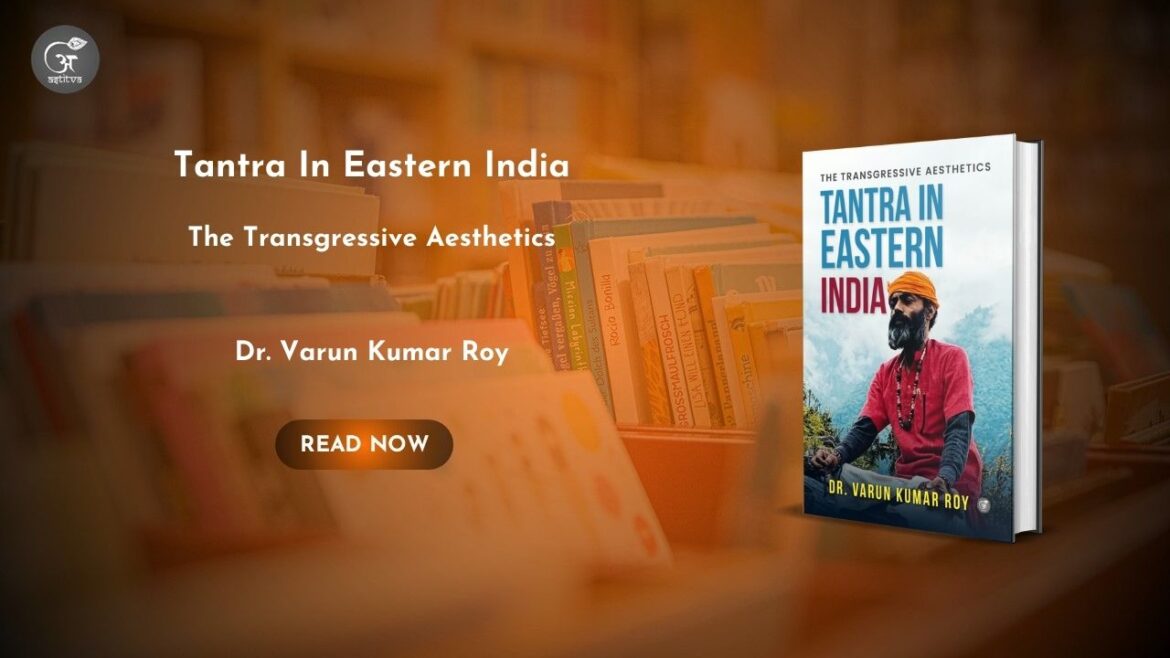
Tantra In Eastern India: The Transgressive Aesthetics by Dr. Varun Kumar Roy arrives as a significant scholarly intervention in the study of Tantra, offering a deeply textured and context-sensitive understanding of one of South Asia’s most misunderstood spiritual and cultural traditions. Moving decisively beyond reductive popular stereotypes, the book presents Tantra not as a monolithic or sensationalized system, but as a historically dynamic, regionally diverse, and intellectually rigorous field of practice and thought.
Rooted in careful historical analysis, the work traces the evolution of Tantra across eastern India through multiple lineages, periods, and socio-political environments. Dr. Roy insists that Tantra can only be meaningfully understood when examined within its specific historical contexts—shaped by power structures, caste relations, gender hierarchies, and local ecologies. Rather than treating Tantra as a static doctrine, the book foregrounds its adaptability, showing how ritual transgression, goddess worship, yogic discipline, and energy practices took distinct forms across elite Sanskritic traditions and vernacular, localized cults.
A central contribution of the book lies in its exploration of Tantra’s rejection of rigid body–spirit dualism. Embodiment is presented as a legitimate and disciplined path to liberation, where ritual, meditation, and yoga converge in ethically framed initiatory systems. In doing so, the study critically addresses the disproportionate emphasis on sexuality in popular and neo-esoteric representations of Tantra, situating such elements within broader symbolic, ethical, and ritual frameworks rather than as isolated techniques divorced from tradition.
The book also places Tantra in a global comparative perspective, identifying resonances with other esoteric and mystical traditions such as Sufi practices of energy refinement, Daoist internal alchemy, shamanic trance systems, and Christian mysticism. These parallels reveal shared human quests for inner transformation while firmly resisting universalist readings. Dr. Roy emphasizes that South Asian Tantra remains distinct through its Śakti-centered cosmology, pilgrimage networks, and ritual landscapes, demanding culturally grounded interpretations.
A rigorous and critically engaged gender analysis runs throughout the work. While Tantra historically elevates feminine power through goddesses, yoginīs, and symbolic centrality of Śakti, the book does not romanticize this elevation. Instead, it exposes the tensions between ideological reverence and lived patriarchal constraints that often-marginalized women practitioners. By recovering silenced voices and interrogating male-dominated narratives, the study advocates a more inclusive and ethically responsible scholarship that recognizes both female agency and historical limitations.
Methodologically, the book addresses the inherent challenges of studying Tantra—its symbolic language, fragmentary sources, and regional variations—by advancing an interdisciplinary approach. Philological analysis is complemented by ethnography, digital archival work, and ethical collaboration with practitioners, ensuring scholarly rigor without cultural appropriation. This methodological openness allows the book to move beyond Orientalist legacies and simplistic binaries of text versus practice.
Authored by Dr. Varun Kumar Roy, Head of the Department of History at the University of North Bengal, the book reflects the depth and maturity of a seasoned historian at the forefront of regional and thematic historical scholarship. With five books and over twenty-five research articles in national and international journals, Dr. Roy brings to this work a rare combination of academic leadership, editorial experience, and sustained research engagement. His commitment to mentoring young historians and strengthening research cultures is evident in the clarity, balance, and ethical sensitivity of the volume.
By synthesizing history, practice, critical theory, and comparative insight, Tantra In Eastern India: The Transgressive Aesthetics repositions Tantra studies as a vital field for examining consciousness, power, gender, and liberation. The book not only deepens academic understanding but also sets a forward-looking agenda, calling for feminist rereadings, attention to underrepresented lineages, and ecological perspectives. It stands as an essential contribution for scholars, students, and serious readers seeking a nuanced, responsible, and transformative engagement with Tantra.