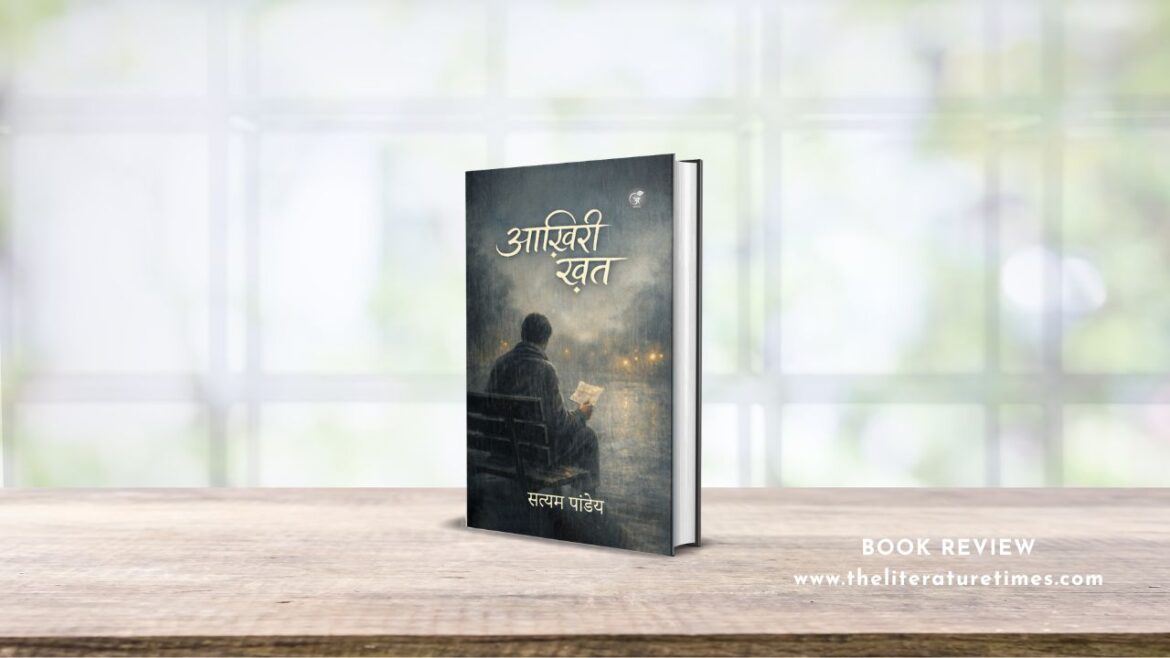
Aakhri Khat is an emotionally intense and deeply reflective novel that explores the fragile boundary between life and despair, hope and surrender, silence and expression. True to its title—The Last Letter—the book feels like a confession written from the deepest corners of the human heart, addressed not to one person, but to life itself.
The novel unfolds in a quiet, unhurried manner, allowing emotions to breathe and settle. Set against the spiritually charged backdrop of Rishikesh, with the Ganga flowing endlessly beneath bridges crowded with strangers, the story draws a powerful contrast between the outer calm of the world and the inner turbulence of its characters. This contrast becomes one of the novel’s greatest strengths.
At the heart of Aakhri Khat lies the idea of unspoken pain. The characters are not loud sufferers; they are silent ones. They go about their lives appearing functional, composed, and ordinary—yet inside them exists a heaviness that words often fail to capture. The author portrays this emotional exhaustion with remarkable sensitivity, reminding readers that the most intense battles are often invisible.
The female protagonist, Ritu, is introduced at a moment where life feels paused rather than lived. Her silence is not empty—it is crowded with unanswered questions, emotional fatigue, and a longing for peace. She does not seek attention, sympathy, or dramatic resolution. Instead, she seeks stillness. Through Ritu, the novel explores how modern individuals often carry pain alone, convincing themselves that being “strong” means being silent.
One of the most moving aspects of the book is how ordinary encounters become life-altering. A simple tea stall conversation turns philosophical, almost spiritual. The tea seller’s words are not preachy; they are lived truths. His presence reflects the novel’s underlying message—that wisdom often comes from people who have suffered quietly and learned to live with their scars rather than erase them.
The narrative gains emotional depth with the entry of Raghav, a character shaped by loss, responsibility, and suppressed grief. Raghav’s life is a stark portrayal of how society burdens certain individuals with early maturity and endless expectations. Having lost his father young and later his mother, Raghav grows up believing that survival is his only duty. His pain is not dramatic; it is chronic. It has settled into his bones.
What makes Aakhri Khat especially impactful is its honest treatment of mental health and suicidal thoughts. The novel does not sensationalize suffering, nor does it reduce it to moral lessons. Instead, it presents a hard truth: people who stand at the edge often do not want to die—they want relief. They want rest. They want the noise inside their heads to stop.
The scenes near the river are particularly powerful. The Ganga becomes both a witness and a metaphor—flowing endlessly, carrying stories, pain, prayers, and unanswered letters. Conversations about people who jump into the river are chilling, not because they are graphic, but because they are disturbingly real. The author handles these moments with restraint and responsibility, ensuring that empathy remains at the center.
Ritu’s role in Raghav’s life is not that of a savior in a traditional sense. She does not fix him. She does not promise miracles. She simply stays. And in a world where people often look away from pain, her decision to stay becomes revolutionary. The novel beautifully conveys that sometimes, presence is more powerful than advice.
Stylistically, Satyam Pandey’s writing is minimal yet poetic. The language flows like inner monologue—quiet, thoughtful, and deeply human. Metaphors of night and day, darkness and light, letters and silence recur throughout the narrative, reinforcing the idea that every unsent emotion is a letter waiting to be read.
The title Aakhri Khat is symbolic on multiple levels. It can be read as a farewell letter, a suicide note, or a final emotional confession. But as the story progresses, it becomes clear that the “last letter” is not about ending life—it is about writing one last reason to live. One last insistence. One last pause before surrender.
Ultimately, Aakhri Khat is a novel about choosing to breathe one more day. It does not offer grand solutions or artificial optimism. Instead, it offers understanding. It tells readers that pain does not make them weak, silence does not make them invisible, and staying alive—especially on the hardest days—is an act of quiet courage.
This book will deeply resonate with readers who appreciate emotionally driven fiction, psychological depth, and stories rooted in real human experiences. Aakhri Khat is not just read—it is felt.