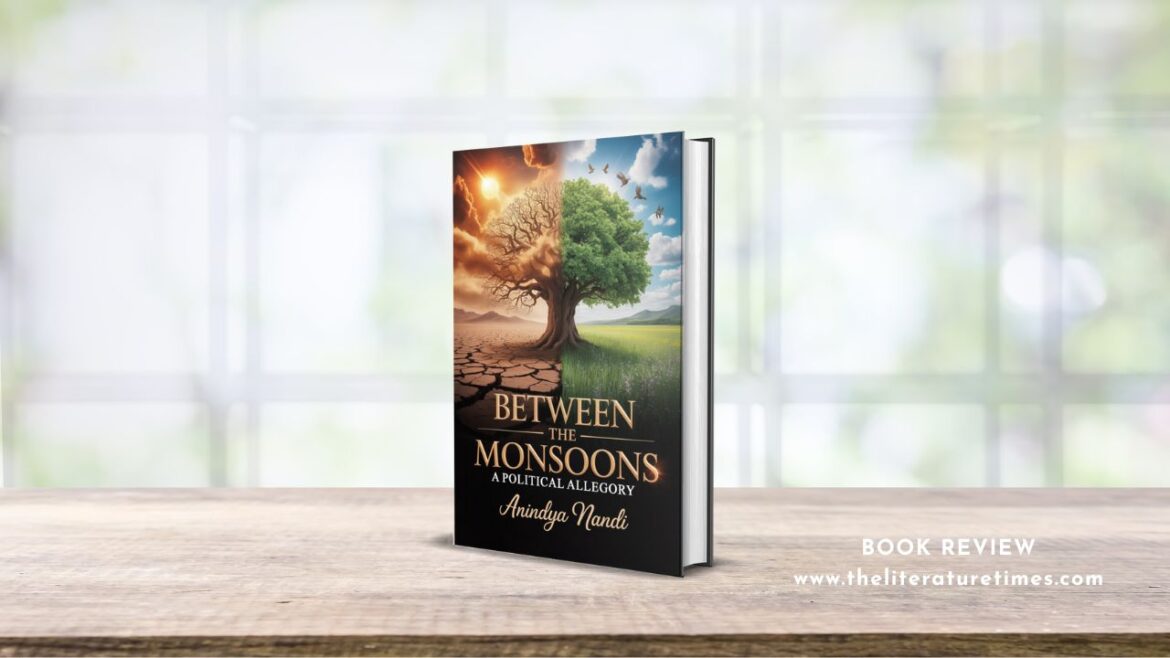
Between the Monsoons is a deeply reflective and intellectually engaging political allegory that examines the slow erosion of balance, moderation, and dialogue in modern society. Set in the fictional town of Samatvapura, the novel uses climate, seasons, and everyday life as metaphors to explore how extremes—political, ideological, and emotional—begin to dominate when the middle path disappears. The “death of spring” in the narrative is not merely a climatic change but a powerful symbol of the loss of patience, gradual transition, and mutual understanding in public life.
At the heart of the story is Rajesh Kumar Roy, a history teacher whose quiet observations anchor the novel in lived reality. Rajesh is not a revolutionary, nor a political leader; he represents the ordinary, thinking citizen who values reason, nuance, and coexistence. Through his experiences, the reader witnesses how polarization seeps into schools, marketplaces, friendships, and even family conversations. This grounded perspective makes the book especially effective—politics is not shown as abstract ideology but as a force that reshapes daily human relationships.
One of the most striking elements of the book is its symbolism. The banyan tree at the center of Samatvapura, once a space of shade, conversation, and collective life, becomes a recurring image of what society has lost. As competing ideologies claim, repaint, or weaponize shared spaces, the tree stands as a reminder of an older rhythm—one that allowed diversity to coexist without demanding uniformity. Anindya Nandi’s use of such imagery adds depth and emotional resonance to the narrative.
What truly distinguishes Between the Monsoons is its refusal to glorify any single political position. The novel critiques the failures of long-standing governance, the dangers of authoritarian certainty, and the seductive appeal of radical alternatives with equal honesty. Instead of offering easy answers, it introduces the concept of Equidynamism—a philosophy rooted in balance, restraint, and stability. This idea, inspired by ancient wisdom yet framed for contemporary times, urges readers to rethink progress not as constant upheaval but as sustainable equilibrium.
The prose is calm, measured, and thoughtful, mirroring the very values the book seeks to defend. Rather than relying on dramatic twists, the novel builds its impact through observation, reflection, and moral questioning. It challenges readers to sit with discomfort, to accept complexity, and to recognize that loud certainty often replaces quiet wisdom in divided societies.
Ultimately, Between the Monsoons is both a mirror and a meditation. It reflects the anxieties of a world caught between competing extremes while gently reminding us that renewal is still possible. The book does not promise immediate solutions, but it offers something more enduring: hope rooted in balance, dialogue, and the courage to protect the middle ground. It is a timely, relevant, and important read for anyone concerned about the future of democratic values, social harmony, and thoughtful citizenship.