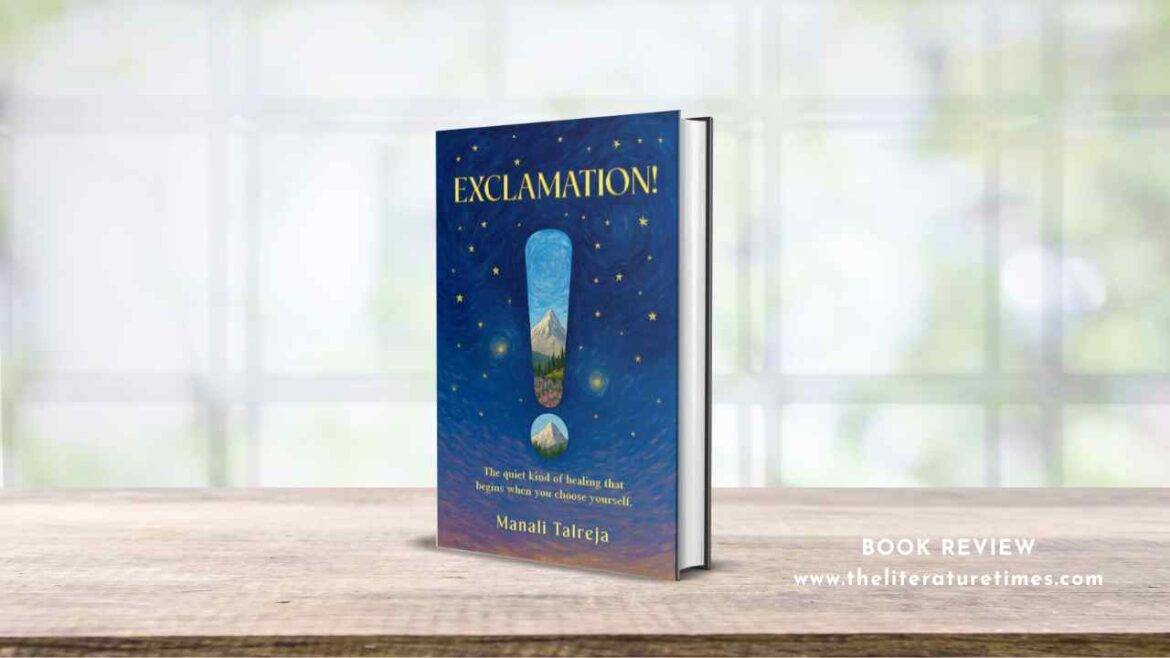
EXCLAMATION! is not a book you read in one sitting to finish; it is a book you return to, pause with, and slowly absorb. Written by Manali Talreja, this deeply introspective work explores healing, self-worth, boundaries, and the quiet courage it takes to choose oneself in a world that constantly demands more. True to its title, the book is not a full stop but a pause—an ongoing conversation between the reader and their inner self.
At its core, EXCLAMATION! is about gentle healing. Manali does not present herself as an expert or a guide who has it all figured out. Instead, she writes as a fellow traveler—someone who has stumbled, questioned, broken, rebuilt, and is still learning. This honesty is the book’s greatest strength. From the very beginning, the author makes it clear that this is not about fixing the reader, because the reader is not broken. It is about remembering one’s worth, especially in moments when it feels forgotten.
The book is structured in parts that mirror the emotional journey of self-awareness. Part One begins with questioning existence, validation, and the unseen growth that happens in silence. The opening chapter, “Existence,” sets the tone beautifully by challenging the idea that growth only matters when it is visible or acknowledged. The metaphor of a seed growing in darkness is powerful and relatable, especially for readers who feel unseen despite their inner struggles. These chapters gently invite readers to honor their quiet progress without seeking constant external approval.
As the book moves forward, it delves into people-pleasing, guilt, and the inability to rest—patterns many readers will immediately recognize in themselves. In “Healing Is My Responsibility,” Manali addresses how childhood conditioning, unspoken expectations, and survival-mode living shape our adult behavior. Her reflections on restlessness, overworking, and the constant need to prove oneself are particularly striking. Rather than blaming circumstances or people, she acknowledges a hard truth with compassion: what happened may not have been our fault, but healing is now our responsibility.
One of the most impactful sections of the book is “You Are Not Too Much.” Here, Manali dismantles the labels often placed on emotionally expressive people—“too sensitive,” “too dramatic,” or “too intense.” She reframes empathy not as a weakness but as a fullness of heart that often goes unprotected. This chapter will resonate deeply with readers who have spent years shrinking themselves to maintain peace or to avoid being a burden to others.
The narrative becomes especially powerful in “When the Walls Close In,” where the author shares her personal experience of burnout, impostor syndrome, and physical collapse after achieving professional success. Her account of becoming a Chartered Accountant yet feeling hollow and undeserving is raw and unsettlingly real. This section highlights how unchecked self-pressure and internalized criticism can manifest in the body. It serves as an important reminder that achievement without self-compassion can be deeply damaging.
As the book progresses, it gently guides readers toward reclaiming themselves. Chapters on boundaries, saying no, guilt, and reparenting oneself are handled with sensitivity and realism. Manali does not romanticize healing; she acknowledges that choosing yourself often comes with discomfort, guilt, and fear of abandonment. However, she also emphasizes that these feelings are part of the process—not signs that one is doing something wrong.
What makes EXCLAMATION! stand out is its interactive and reflective nature. The author frequently invites readers to pause, look into the mirror, write promises to themselves, and sit with their emotions. These exercises are simple but meaningful, encouraging readers to actively engage rather than passively consume the words.
The writing style is conversational, poetic, and emotionally intuitive. At times, it reads like a letter from a close friend—one who listens without judgment and speaks with kindness. While the language is simple, the emotions it carries are profound. The repetition, pauses, and questions are intentional, mirroring the rhythm of inner dialogue and self-reflection.
EXCLAMATION! is not about dramatic transformation or overnight change. It is about small shifts, quiet bravery, and learning to offer oneself the same compassion given to others. This book will especially resonate with readers who feel emotionally exhausted, unseen, or stuck in cycles of overgiving. It reassures them that choosing themselves is not selfish—it is necessary.
In conclusion, EXCLAMATION! is a tender, thoughtful, and deeply human book. It does not claim to have all the answers, but it asks the right questions. It leaves the reader not with closure, but with space—to breathe, to heal, and to continue becoming. Like its title suggests, it is not an ending, but a meaningful pause filled with hope.