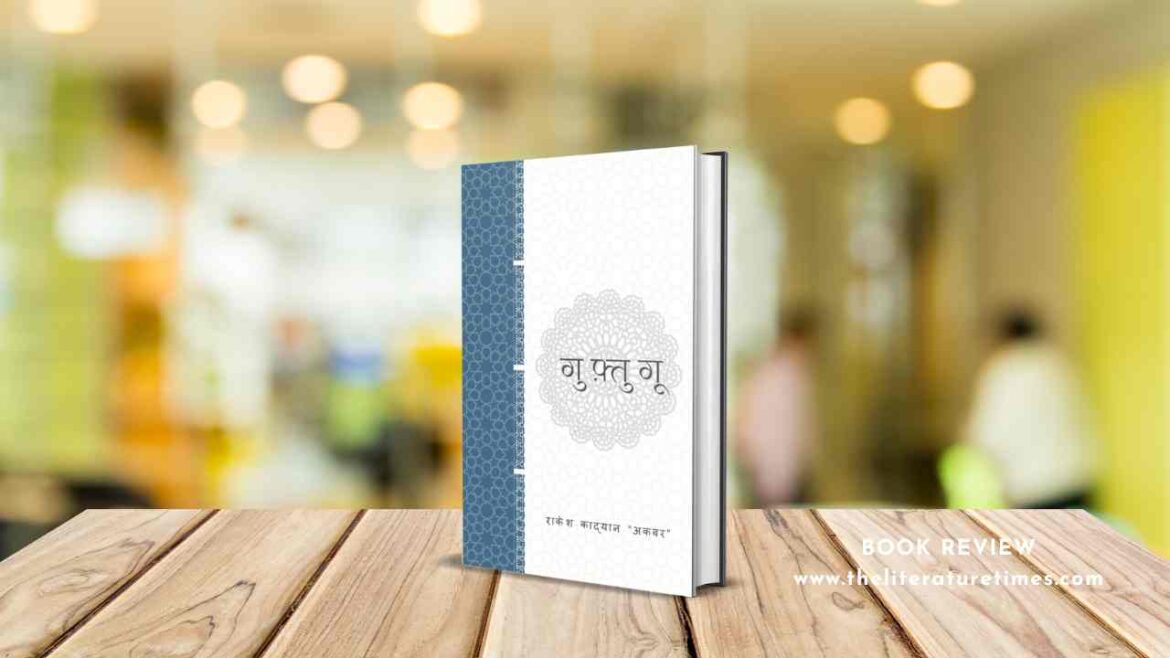
Guftugoo is not merely a collection of poems; it is an ongoing conversation—between the poet and his inner self, between love and loss, between society and conscience, and between silence and expression. Rakesh Kadyan, who writes under the pen name ‘Akbar,’ presents a deeply sensitive and emotionally layered poetic work that resonates with honesty, vulnerability, and thoughtful introspection.
The very title Guftugoo (conversation) sets the tone for the book. Each poem feels like a dialogue—sometimes whispered, sometimes cried aloud—where emotions are neither exaggerated nor concealed. The poet allows his feelings to exist in their raw form, making the reader a participant rather than a distant observer.
At the heart of the collection lies love, but not the romanticized, ideal version often found in poetry. Akbar’s love is fragile, uncertain, and deeply human. Poems such as “Baqi Hai,” “Achha Nahi Lagta,” “Pagal Dil,” and “Uska Door Jana” explore longing, emotional distance, and the pain of unfulfilled relationships. The poet does not portray himself as a heroic lover; instead, he embraces vulnerability, confusion, and acceptance. This emotional honesty becomes the book’s greatest strength.
What distinguishes Guftugoo is the poet’s ability to transform personal pain into universal experience. Readers may not share the poet’s exact circumstances, but they will recognize the emotions—waiting, hoping, letting go, forgiving, and enduring silence. Poems like “Jaane Diya” and “Ghaafil” beautifully reflect maturity, where love evolves into understanding rather than possession. Letting go here is not weakness; it is wisdom.
Beyond romance and personal loss, Guftugoo expands into social and philosophical reflection. Poems such as “Kab Tak Main Poochun,” “Deshbhakti aur Rashtravad,” and “Yoddha” reveal Akbar as a socially aware poet who questions violence, politics, nationalism, and the moral responsibilities of individuals. He raises questions rather than offering solutions, encouraging readers to reflect instead of react. This balance between emotion and intellect adds depth to the collection.
From a stylistic perspective, the poetry flows effortlessly between Hindi and Urdu, creating a lyrical texture that feels natural rather than forced. The poet’s diction is simple yet evocative. His use of traditional symbols—moon, lamp, river, stone, mirror, night, and journey—feels fresh because they are grounded in lived experience. These symbols serve emotion rather than decoration.
The poetic forms vary, including free verse, lyrical poetry, and ghazal-inspired structures. Rhythm and musicality remain consistent throughout the book, making the poems equally suitable for silent reading and recitation. The accessibility of language ensures that the book appeals not only to seasoned poetry readers but also to those new to contemporary poetry.
One of the most admirable aspects of Guftugoo is the poet’s self-awareness. Akbar does not hesitate to acknowledge his flaws, doubts, and emotional limitations. Poems like “Main Patthar Hoon” and “Bad-Dua-e-Khud-Aagahi” reflect deep introspection and self-critique. The poet repeatedly questions his own identity, strength, and emotional resilience, which lends authenticity to the work.
Emotionally, the book moves through multiple shades—tenderness, despair, anger, hope, resignation, and quiet strength. Yet it never feels chaotic. There is a sense of continuity, as if the reader is accompanying the poet on a journey of emotional evolution. By the end of the collection, one feels not closure, but acceptance—a calm understanding that life’s conversations often remain unfinished.
In conclusion, Guftugoo is a sincere, soul-searching poetic work that speaks softly yet powerfully. It is a book for readers who value emotional truth over ornamental language, reflection over rhetoric, and questions over declarations. Rakesh Kadyan ‘Akbar’ establishes himself as a poet who listens deeply—to his heart, to society, and to the silences in between.
Guftugoo is not meant to be read once. It is meant to be revisited—each time revealing a new meaning, a new emotion, and a new conversation.