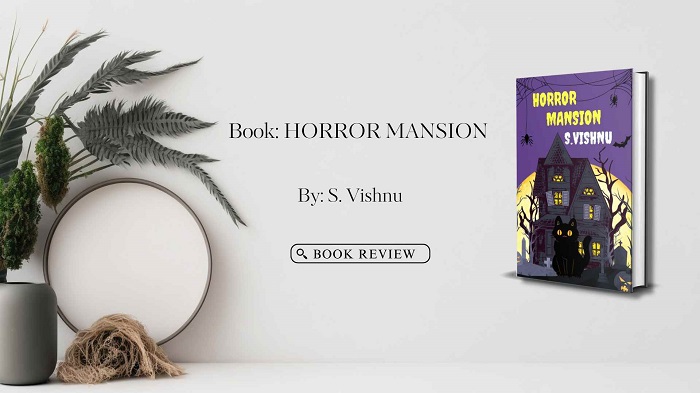
Horror Mansion by S. Vishnu is a gripping and imaginative tale that seamlessly blends elements of horror, suspense, and human emotion. What makes this book particularly remarkable is that it has been penned by a thirteen-year-old author from Madurai, Tamil Nadu, a young talent with a mature sense of storytelling and a vivid creative vision. The narrative centers around the Davis family, who move into a new home, unaware that their dream house conceals sinister secrets and supernatural dangers. As the plot unfolds, Vishnu crafts an atmosphere of fear and mystery that keeps readers hooked from beginning to end.
The novel opens with a sense of innocent excitement as the Davis family settles into their new mansion. However, the tone quickly shifts when inexplicable events begin to occur. Strange noises, flickering lights, and eerie presences disturb the peace of the household. Through these scenes, the author effectively builds tension without resorting to excessive gore or sensationalism. Instead, the horror emerges from psychological unease the unknown lurking just out of sight and this makes the experience more immersive. The writing displays an impressive grasp of pacing, with moments of calm interspersed with sudden shocks, mirroring the rhythm of a well-made thriller.
What sets Horror Mansion apart from many conventional horror stories is its emotional core. Beneath the terrifying façade lies a story about family unity, courage, and the strength that love provides in times of fear. The Davis family members are not mere victims but real individuals who react to danger with believable emotions, fear, confusion, hope, and determination. Their struggle against the dark forces in the mansion becomes symbolic of the broader human struggle against unseen challenges in life. In this way, Vishnu uses horror as a lens through which to explore resilience and togetherness.
The descriptive quality of the writing is another strong point. Vishnu’s imagery is vivid yet accessible. He describes the haunted mansion with meticulous detail the creaking doors, cold drafts, and dimly lit corridors that seem to whisper secrets of their own. Readers can almost feel the chill in the air or sense the stillness before something dreadful happens. His language is simple but effective, proving that good storytelling relies more on emotional truth and atmosphere than on complexity of vocabulary. For a writer of his age, this control over tone and imagery is exceptional.
The pacing of the novel deserves particular mention. The narrative does not rush toward its conclusion; rather, it allows suspense to develop organically. Vishnu’s ability to sustain curiosity and tension throughout reflects both patience and discipline. The climax, when it arrives, is both thrilling and satisfying, tying together the mysterious threads woven throughout the story. The final scenes leave a lingering sense of awe and reflection, reminding readers that horror and beauty can coexist within the same story.
Beyond the scares and suspense, Horror Mansion also hints at a philosophical dimension. Through the Davis family’s ordeal, the story suggests that evil is not always external, it can also exist in fear, doubt, or the human mind’s darker corners. Confronting that evil, therefore, becomes an act of self-discovery. This deeper layer gives the book substance beyond its entertainment value and shows that Vishnu’s storytelling instinct already includes moral and emotional awareness.
The author’s voice is fresh, sincere, and unpretentious. There is an honesty in the narration that comes from genuine enthusiasm and imagination. It is clear that Vishnu enjoys the worlds he creates, and that joy transfers to the reader. At the same time, his writing reflects careful observation of how people react to fear and uncertainty. The dialogue flows naturally, and the interactions between family members convey warmth and familiarity, making the reader care about their fate.
One of the most striking aspects of this book is the balance between horror and hope. While the story contains genuinely chilling moments, it never becomes overwhelmingly dark. The courage and unity of the Davis family act as light within the darkness. The ending reinforces this harmony by suggesting that even in the face of terrifying experiences, compassion and faith can prevail. Such maturity of thought is rare, especially in writers so young, and it adds emotional richness to the narrative.
Horror Mansion is both promising and inspiring. It showcases the talent of a young writer who already understands how to engage readers emotionally and intellectually. Vishnu’s command over structure, mood, and pacing indicates potential for even greater achievements in the future. The book also serves as a reminder that creativity knows no age and that passion for storytelling can produce extraordinary results when nurtured with curiosity and discipline.
In conclusion, Horror Mansion is not just a horror story, it is an exploration of fear, family, and the indomitable human spirit. It entertains, surprises, and touches the heart, leaving readers with the satisfying sense that they have witnessed the birth of a promising voice in contemporary Indian fiction. S. Vishnu’s ability to blend supernatural tension with emotional warmth makes this book a memorable and commendable read for both young and adult audiences who appreciate stories where terror meets tenderness.