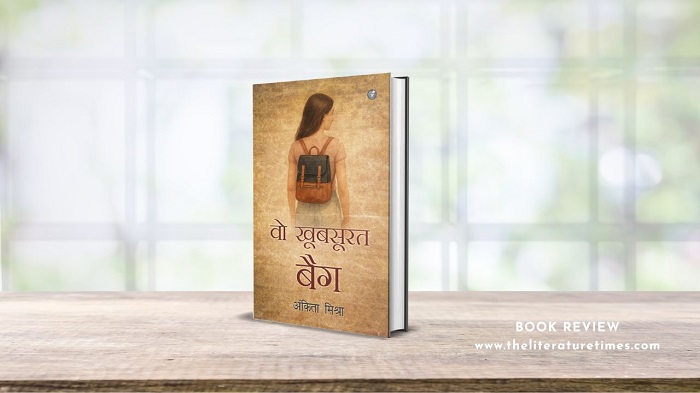
“Wo Khubsurat Bag” by Ankita Mishra is a captivating and atmospheric story that blends beauty, mystery, and psychological intrigue with remarkable finesse. At first glance, the book appears to revolve around something as simple and delicate as a beautiful bag—a charming object that instantly draws the reader in. But as the story unfolds, Ankita Mishra masterfully turns this charm into a source of suspense, gradually transforming the bag from a symbol of allure to an object of fear. This shift is executed with such subtlety that the reader hardly notices when admiration turns into unease, making the experience even more immersive. The bag remains at the center of the narrative, not just as a prop but as a character in itself, holding secrets that shape the story’s emotional landscape.
The way Ankita constructs curiosity is one of the book’s major strengths. She ensures that at every point, the reader is compelled to know more—what makes the bag so special, why its presence begins to disturb, and how its charm slowly mutates into something terrifying. This sense of gradual revelation keeps the narrative tight and gripping, making the story suitable for readers who enjoy psychological twists without overly complex structures. The transition between beauty and horror is handled with great restraint, proving the author’s ability to extract impact from simplicity.
Ankita Mishra’s storytelling reflects a natural gift—one she has nurtured since childhood. The simplicity of her prose is one of her signature strengths. She does not rely on heavy descriptions or complicated metaphors; instead, she crafts scenes that are vivid, relatable, and emotionally engaging. Her background in writing stories in her mother tongue perhaps contributes to the purity and honesty that flow through her narrative style. Whether she is writing novels, scripts, biopics, or poems, Ankita’s stories always carry an undercurrent of authenticity—something readers can sense even in a tale filled with mystery.
In “Wo Khubsurat Bag,” her skill lies not only in building suspense but also in allowing emotions to ripen slowly. The fear does not shock the reader—it creeps in quietly, much like real anxiety does in life. The transformation of the bag from beautiful to terrifying mirrors the unpredictability of human emotions, making the story far deeper than it initially appears. The relatable simplicity of her writing enhances the psychological depth, making the experience both enjoyable and thought-provoking.
Another noteworthy aspect is Ankita’s ability to maintain the reader’s engagement from start to finish. A story centered around a single object could easily become monotonous, but here the opposite happens. The bag becomes a vessel for unraveling mysteries, exploring human reactions, and diving into emotional complexities. Readers will find themselves oscillating between curiosity, admiration, and fear—an emotional rhythm that keeps the book exhilarating throughout.
Overall, “Wo Khubsurat Bag” is a beautifully crafted tale that proves how ordinary objects can hold extraordinary stories. Ankita Mishra delivers a narrative that is simple yet powerful, familiar yet haunting, and emotionally resonant without being overwhelming. This book is a testament to her skill as a storyteller, and it promises to stay with readers long after they turn the final page.