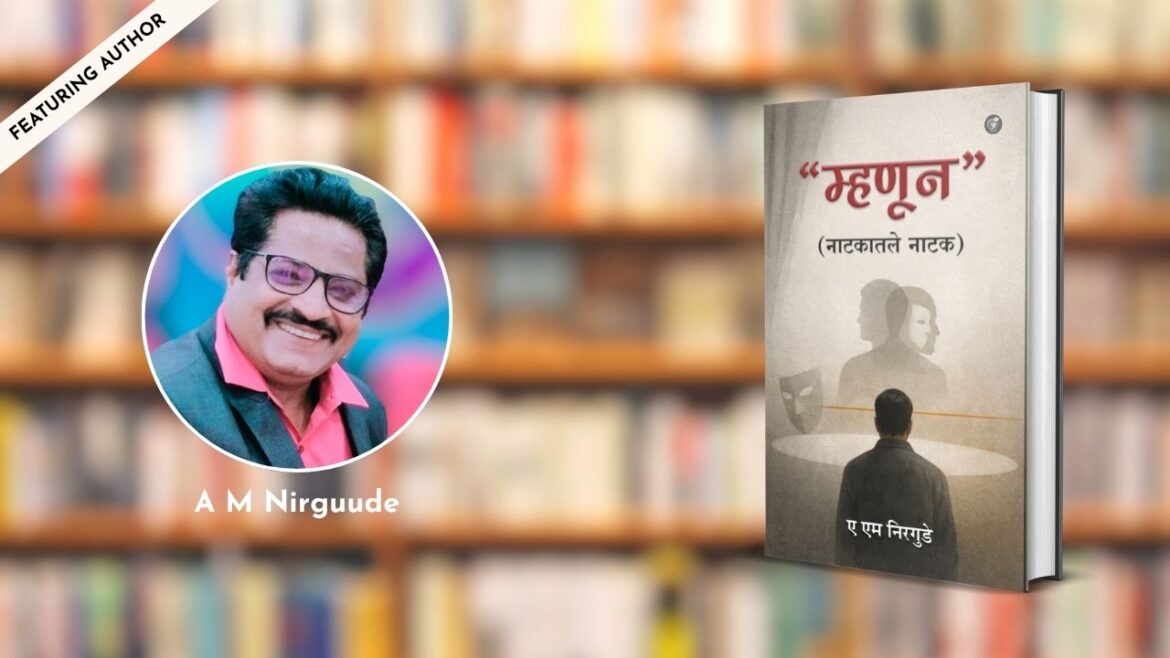
Some stories are born not from imagination, but from the quiet corners of a writer’s heart—corners shaped by years of observing people, witnessing their silent struggles, and listening to unspoken voices that society often refuses to hear. A M Nirguude’s Mhanun (Natakatale Natak) emerges from such a place of empathy, introspection, and moral urgency. It is more than a drama; it is a mirror held up to the collective conscience of society, urging us to rethink how we treat those who are different, vulnerable, or simply less privileged.
At the center of this powerful narrative stands an ID boy—a child whose dreams are as bright as any other, but whose journey is weighed down by labels, limitations, and the world’s harsh judgments. Through his eyes, readers witness the daily battle of wanting a better life, dreaming of dignity, craving affection, and hoping for a future he can proudly call his own. His family stands firmly beside him, supporting him with love and sacrifice, but society responds with the same indifference and cruelty that countless real-life individuals face. His desires are simple, human, and pure, yet his path is filled with barriers placed not by fate, but by people.
Nirguude writes the boy’s struggles without exaggeration or manipulation. Instead, he offers raw honesty—moments of courage, moments of despair, and the heartbreaking truth of a life pushed repeatedly to the edges. The most painful question in the book is not whether the boy achieves what he wants; it is whether he ever truly gets the chance to be treated as a human being deserving of respect, affection, and dignity. When the story culminates in his tragic suicide, the reader is left with a deep ache, not merely for his death, but for the collective failure that led him there. The question why becomes much larger than the story—it becomes a question posed to society, to systems, and to every individual who has ever ignored the quiet suffering of someone standing at the margins.
Mhanun is written in Marathi, but its essence transcends language. It is a drama that every progressive thinker must confront, because it compels us to acknowledge the uncomfortable truths we often glance away from. Nirguude does not offer convenient conclusions or sanitized emotions. He pushes readers to reflect, to question, and perhaps even to transform the lens through which they view difference, disability, and humanity.
The emotional depth and social sensitivity in Mhanun take on a richer meaning when we look at the mind behind it. A M Nirguude is not a full-time writer hidden away in a quiet office or a literary retreat. He is an engineer with over 30 years of professional experience, spending most of his career working on-site—surrounded by the bustle of real life, the chaos of construction, the voices of workers, and the restless rhythm of everyday survival. Yet, even in this fast-paced environment, his inner world remained vibrant, observant, and deeply thoughtful.
For Nirguude, writing is not a profession—it is an intrinsic part of who he is. In solitude, his mind begins speaking to itself; in silence, characters form; in reflection, stories are born. His imagination is not detached from reality but deeply rooted in the human experiences he has witnessed over the years. It is this authenticity that makes his storytelling powerful and relatable. Whether he writes fiction, biography, or social drama, his words carry emotional honesty and thematic relevance.
His literary journey is impressive. With more than 100 short stories published across various platforms, he has proven his ability to capture complex human emotions with simplicity and clarity. His previously published works—Zatpat Karodpati Part 1, Chukleli Gita (a biography of the legendary singer Gita Dutt), and Instant Millionaire, the English version of his Marathi book—reflect the versatility of his craft. From documenting real lives to exploring human ambition and now addressing social stigma, Nirguude’s writing continues to evolve with depth and authenticity.
Mhanun stands apart because it deals not with glamour or success, but with the raw truth of human struggle. It challenges the reader not merely to sympathize but to introspect. The ID boy at the heart of the story becomes symbolic of all individuals whose identities are overshadowed by stigma. Through this narrative, Nirguude brings forth a pressing social question: Do we truly give every human being the right to live with dignity, love, and aspiration? The tragedy in the story is not the boy’s weakness but society’s failure to embrace him with compassion.
Nirguude’s ability to translate such a sensitive theme into an engaging drama comes from his deep understanding of human behavior. Years of observing real people in real situations have shaped his narrative voice into one that is empathetic yet brutally honest. He does not write for entertainment alone; he writes to provoke thought, to stir emotion, and to make readers confront the realities they often overlook.
As an author, he believes that stories must challenge the reader as much as they comfort them. Mhanun is one such challenge—a literary call to action urging society to expand its empathy, reassess its prejudices, and recognize the humanity in every individual. It is not merely a drama to be read; it is a social message that demands to be understood, discussed, and remembered.
In bringing this story to life, A M Nirguude affirms the true purpose of literature—not just to narrate events, but to illuminate truths. And Mhanun does exactly that, leaving readers with a profound sense of responsibility and a deeper awareness of the silent battles fought by those whom society fails to acknowledge.