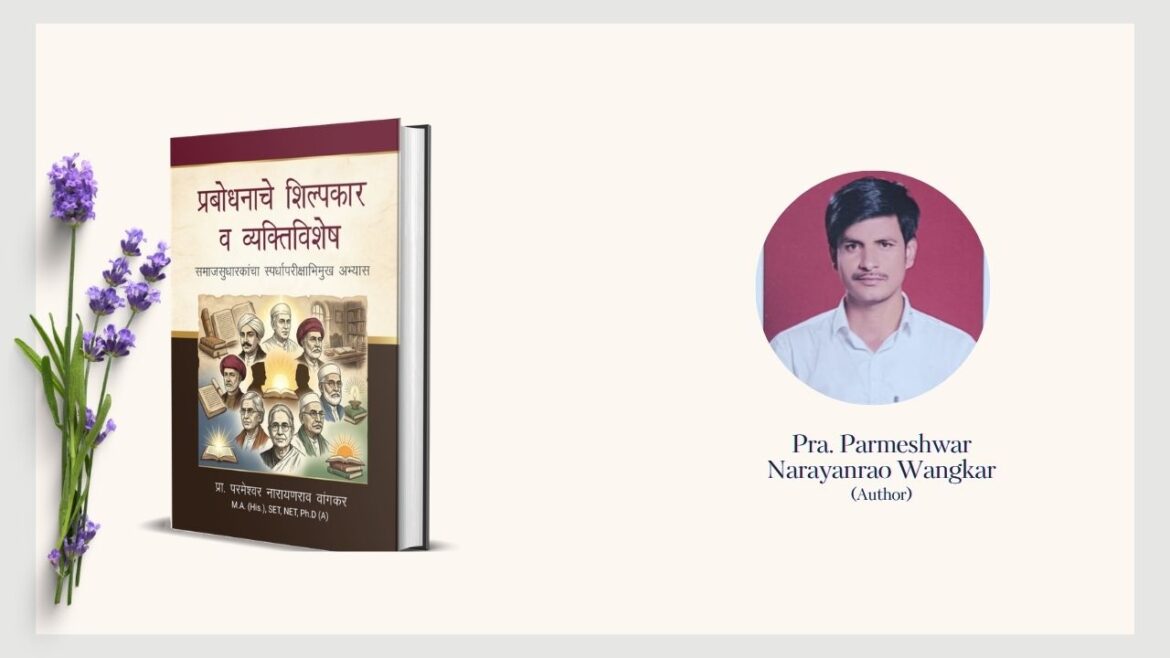
Pra. Parmeshwar Narayanrao Wangkar emerges as a dedicated academician and educator whose work reflects a deep commitment to the study and dissemination of India’s rich tradition of social reform. His book, Prabodhnaache Shilpakar Va Vyaktivishesh: Samajsudharkaancha Spardhaparikshabhimukh Abhyas, stands as a significant contribution for students and readers seeking a structured and insightful understanding of India’s social enlightenment movement, particularly from the perspective of competitive examinations.
With a strong academic background and a profound interest in history, Pra. Wangkar has devoted several years to teaching and guiding aspirants preparing for prestigious examinations such as MPSC and UPSC. His experience of over eight years in the field of competitive exam coaching has enabled him to understand the precise needs of students. This practical exposure is clearly reflected in his writing style, which is both scholarly and accessible, ensuring that complex historical and social concepts are presented in a simple and exam-oriented manner.
The author’s work focuses on the lives, ideologies, and contributions of some of India’s most influential social reformers, including Mahatma Jyotirao Phule, Savitribai Phule, Rajarshi Shahu Maharaj, Maharshi Dhondo Keshav Karve, Maharshi Vitthal Ramji Shinde, Dr. Babasaheb Ambedkar, and Gopal Ganesh Agarkar. Through careful analysis and structured presentation, he highlights how these visionaries challenged deep-rooted social evils such as caste discrimination, gender inequality, and superstition, paving the way for a more just and progressive society.
Pra. Wangkar’s approach goes beyond mere biographical narration. He emphasizes the philosophical thoughts, reformist ideologies, and the long-lasting impact of these leaders on Indian society. By presenting key events, movements, and contributions in a concise yet comprehensive manner, he ensures that readers not only gain knowledge but also develop a deeper appreciation for the legacy of social reform in India. His inclusion of additional notable personalities further enriches the content, offering a broader perspective on nation-building and social transformation.
What sets the author apart is his clear focus on the needs of competitive exam aspirants. Every aspect of the book—from its structured layout to its simplified language—has been designed to facilitate quick understanding and effective revision. His objective is not only to inform but also to empower students to confidently tackle questions related to social reform movements and the Indian Renaissance in various examinations.
Through this work, Pra. Parmeshwar Narayanrao Wangkar successfully bridges the gap between academic scholarship and practical exam preparation. His dedication to educating the next generation and preserving the legacy of India’s social reformers is both commendable and inspiring. This book is not just a study resource but a meaningful tribute to the architects of enlightenment who shaped modern India.