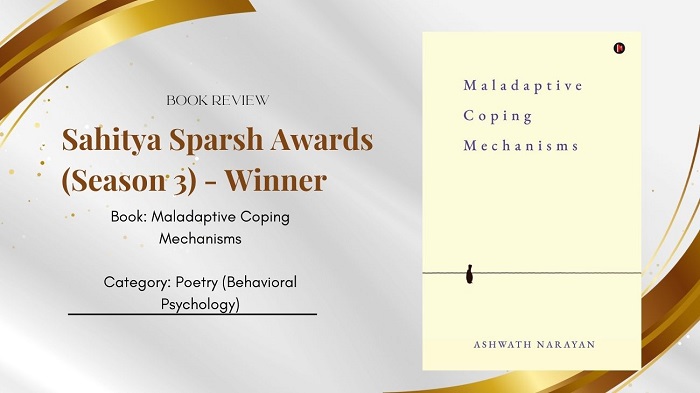
Maladaptive Coping Mechanisms by Ashwath Narayan is an award winning poetry collection that dives into the psychological aftermath of childhood trauma, sexual assault, and narcissistic abuse. Winner of Sahitya Sparsh Awards – Season 3 in the category Poetry Behavioral Psychology, the book blends raw emotion with introspective storytelling. Written from an adult perspective, it examines how early life wounds shape personality, mental health, and identity long into adulthood. The collection is both haunting and insightful, giving readers a vivid portrayal of dissociation, depression, and the desperate attempts to survive unbearable pain.
A Journey Into the Psychology of Survival
Maladaptive Coping Mechanisms by Ashwath Narayan stands out because it does not shy away from the darkest corners of the human mind. Instead, it brings them into the light. Through powerful poems, the author reveals the subtle and not so subtle ways trauma persists. Each piece unfolds like a memory fragment, a moment of confrontation, or a glimpse into the psyche of someone carrying lifelong emotional scars.
Understanding the Roots of Maladaptive Behaviors
The title itself is grounded in behavioral psychology. Maladaptive coping mechanisms refer to survival strategies formed in dangerous or abusive environments that later become harmful. The book addresses this concept head on, showing how patterns created in childhood continue to influence relationships, self-worth, and mental stability.
Themes such as avoidance, self-blame, and emotional numbness appear repeatedly. Poems like The Boy Who Knew Nothing and Repressed highlight the early formation of these responses. Meanwhile, pieces such as Damaged Goods and I Am The Problem It Is Me reveal how survivors sometimes internalize guilt and shame that never belonged to them.
Symbolic and Emotionally Charged Storytelling
Narayan weaves metaphorical language with brutal honesty, making the collection both literary and therapeutic. Many poems read like symbolic mirrors reflecting the inner turmoil of someone caught between past and present. Titles like Demon Time, Forsaken Soul Emotional Toll, and Wretched Is This Demon hint at the internal battles that define complex PTSD.
Powerful Imagery That Speaks to Survivors
Imagery plays a crucial role throughout the book. Dissociative episodes are portrayed as fog or fragmentation. Depression feels like solitary confinement. Narcissistic abuse takes the form of illusion and manipulation, reminiscent of The Wizard of Oz where the truth is hidden behind a curtain.
The poem Imposters, for example, captures the conflict of identity often felt by trauma survivors. Plot Twist and An Actor and a Fraud delve into the facade many victims learn to maintain for safety. The Wizard of Oz adds a layer of allegory, comparing the emotional labyrinth of trauma to a journey through deceptive landscapes.
A Voice for the Silenced and the Struggling
One of the strongest aspects of Maladaptive Coping Mechanisms by Ashwath Narayan is its devotion to giving voice to those who feel unheard. Many poems address directly the loss of personal agency and the struggle to regain it. Stolen Voice, No Escape, and Trauma Bond resonate deeply with anyone who has experienced coercive control or emotional captivity.
The Role of Self-Reflection and Healing
While the collection does not offer easy resolutions, it does present self-awareness as the first step toward healing. Dear Psychiatrist and Mental Health Diagnosis show the vulnerable but necessary confrontation with professional help. Be A Sheep Not The Shepherd explores the exhaustion of constant self-defense. Meanwhile, Quest and This Road reflect the ongoing effort to reclaim identity and autonomy.
There is no forced optimism in the book, but there is clarity and understanding. The honesty itself becomes an act of healing.
A Literary Contribution to Behavioral Psychology and Trauma Literature
This collection is not only a creative work but also an educational one. Readers unfamiliar with complex PTSD or narcissistic abuse can learn a great deal from the emotional nuance and psychological accuracy in these poems. Narayan bridges artistic expression with clinical insight, making the book valuable for both survivors and professionals.
Why It Earned the Sahitya Sparsh Award
Winning Sahitya Sparsh Awards – Season 3 is a testament to the book’s literary merit and emotional impact. Its combination of poetic craft, psychological depth, and vulnerability sets it apart. Maladaptive Coping Mechanisms by Ashwath Narayan speaks to a wide audience including therapists, survivors, and those seeking to understand the hidden battles people carry.
Conclusion A Book That Confronts Pain and Reclaims Power
Maladaptive Coping Mechanisms by Ashwath Narayan is a powerful and necessary work. It captures the long-term effects of trauma with authenticity and compassion. Through poems that act as windows into the soul, the author shows how pain shapes a life but also how acknowledging that pain becomes an act of courage.
For readers seeking a raw portrayal of mental health struggles, a deeper understanding of trauma responses, or simply a compelling poetry experience, this book is an essential read.