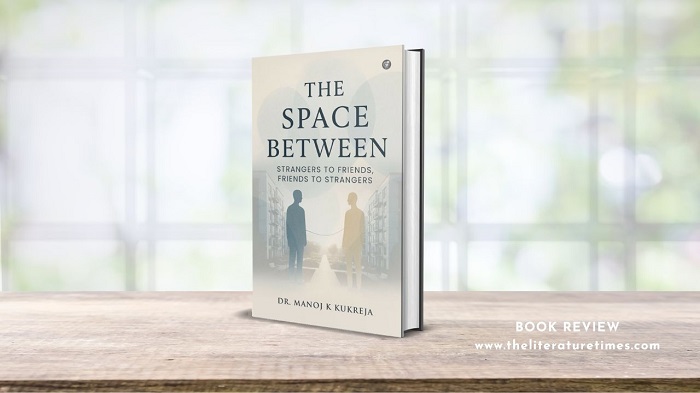
The Space Between: Strangers to Friends, Friends to Strangers is a quietly powerful and emotionally resonant book that lingers long after the last page is turned. Dr. Manoj K Kukreja does not attempt to impress with dramatic twists or grand declarations; instead, he draws the reader into the subtle, often unnoticed moments that define human connection. This is a book that understands that the most meaningful stories are not always loud—they unfold in silences, pauses, and unspoken feelings.
At its core, the book explores a relationship that exists outside conventional labels. It is neither a love story in the traditional sense nor a straightforward tale of friendship. What makes it compelling is precisely this ambiguity. The author focuses on the fragile emotional space where connections grow naturally, without promises or definitions, and where their eventual fading feels confusing and deeply personal. The narrative captures how two people can matter immensely to each other without ever clearly understanding what they are to one another.
The writing is gentle, reflective, and deeply introspective. Each chapter reads like a lived moment rather than a constructed scene. Walks, casual conversations, shared silences, and gradual emotional shifts are portrayed with honesty and restraint. There is no rush to explain or justify emotions; instead, the author allows them to exist as they are—messy, unresolved, and real. This makes the reading experience intimate, almost as if the reader is stepping into someone else’s private memories.
One of the book’s greatest strengths is its treatment of absence and silence. Dr. Manoj articulates how distance can hurt more than conflict, and how the lack of communication can feel heavier than harsh words. The pain described here is not explosive; it is slow, quiet, and persistent—the kind that seeps into daily life. Many readers will recognize themselves in these pages, especially those who have experienced bonds that slowly dissolved without closure.
The emotional honesty of the book stands out. There is vulnerability, but never self-pity. The author acknowledges confusion, attachment, longing, and regret with maturity and clarity. The story does not blame; it reflects. This balanced tone allows readers to empathize without feeling overwhelmed by negativity. It also reinforces the universality of the experience—this is not just one person’s story, but a shared emotional reality for many.
Dr. Manoj’s background as a researcher-turned-software professional subtly influences the narrative. There is precision in observation and discipline in expression, yet the emotions flow freely. This contrast makes the book unique: structured in thought, but soft in feeling. His ability to articulate the “in-between” emotions—those that are difficult to name or explain—is particularly striking.
The Space Between is not a book for readers seeking clear answers or resolutions. Instead, it offers understanding, recognition, and quiet companionship. It validates feelings that are often dismissed because they lack definition. For anyone who has lived through an unspoken connection, carried emotions in silence, or lost someone without ever truly having them, this book will feel deeply personal.
Ultimately, this is a reflective, tender, and honest work that honors the complexity of human relationships. It does not try to heal by offering solutions; it heals by acknowledging truth. The Space Between succeeds because it listens—to emotions, to silences, and to the reader’s own unspoken memories—and in doing so, it leaves a lasting emotional imprint.