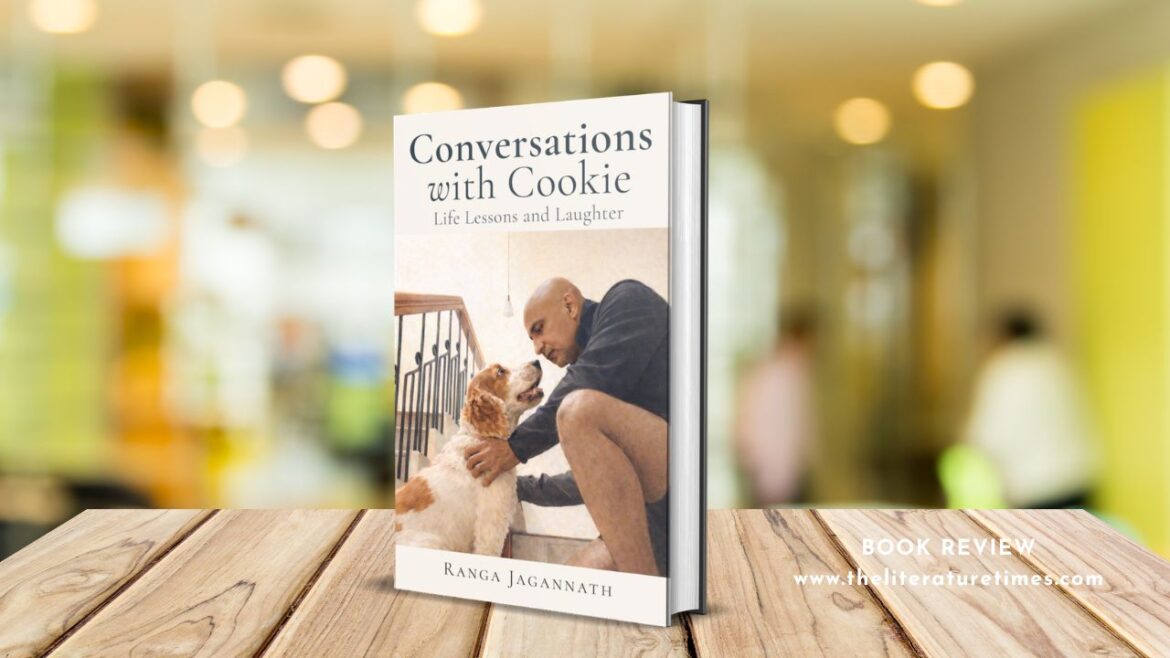
Some books aim to enlighten, some aim to entertain, and some—like Conversations with Cookie by Ranga Jagannath—manage the rare feat of doing both with irresistible charm. This collection of 52 short, dialogue-driven essays is a warm, witty, and surprisingly profound exploration of modern life, seen through the sharp, side-eyed wisdom of Cookie, the author’s late Cocker Spaniel. What begins as a playful premise quickly evolves into a series of heartfelt reflections on productivity, burnout, distraction, identity, ambition, and the quiet courage required to pause and breathe.
What sets this book apart is its unique narrative device: a series of fictional conversations between the author and his dog. It sounds whimsical, and it is—but it is also disarming, clever, and delightfully effective. Cookie’s voice is unapologetically blunt, grounded, and mischievously wise. He calls out the author’s excuses, questions his assumptions, and delivers home truths with a deadpan humour that makes the reader laugh while also wincing in recognition. Through these exchanges, the book captures universal human struggles with a lightness that never undermines their seriousness.
The writing is crisp, conversational, and effortlessly engaging. Ranga Jagannath has a gift for distilling complex emotional experiences into simple, relatable dialogues. The humour is never forced; it emerges naturally from personality and perspective. Cookie’s sass plays brilliantly against the author’s reluctant honesty, producing a rhythm that feels at once intimate and theatrical. This dynamic keeps each chapter lively, fresh, and memorable, even when touching on topics like imposter syndrome, fading ambition, or the addictive pull of digital distraction.
Despite the humour, the book carries a quiet but persistent depth. Many essays start with a seemingly trivial moment—a missed run, a phone notification, a cancelled plan—but gradually unfold into reflections that linger long after the page is turned. The author’s self-awareness is refreshing; he neither glorifies his flaws nor trivializes them. His vulnerability gives the book emotional authenticity, while Cookie’s no-nonsense commentary ensures it never veers into melodrama.
One of the most delightful aspects of the book is its blend of philosophical insight with contemporary relevance. Readers see bits of themselves in the patterns Cookie critiques: the compulsive refreshing of apps, the worship of efficiency, the inability to rest without guilt, the fear of starting over. Each essay feels like a mirror held up gently, with compassion rather than judgment. Cookie becomes both comic relief and unexpected therapist—a furry Socrates with sharper instincts than most humans.
The illustrations add another layer of charm, amplifying the playful tone and making the reading experience visually delightful. Each chapter feels complete yet connected, offering bite-sized reflections perfect for reading slowly or in a single immersive sitting. The pacing is just right; the book doesn’t overwhelm, nor does it leave readers wanting more clarity. Instead, it invites them to pause, smile, and ponder.
Fans of Murakami’s reflective musings, Brené Brown’s honest vulnerability, or the philosophical whimsy of Calvin & Hobbes will find a familiar yet refreshing voice here. Yet the book is distinct in its form and flavour. It feels personal—not just a commentary on the world but a map of the author’s internal landscape. Cookie becomes the anchor for this introspection, guiding both the writer and the reader through the noise of everyday chaos.
One of the book’s strengths is its versatility. It appeals equally to readers seeking humour, wisdom, comfort, or self-reflection. It can be read during moments of burnout, periods of transition, or simply when one needs a reason to stop scrolling and reconnect with something real. It’s a book that understands modern anxieties—because it is born out of them.
But what makes the book truly special is Cookie himself. He is not merely a literary device; he becomes a living presence; a voice readers grow to trust. His observations are sharp, his timing impeccable, his patience limited but his affection unmistakable. Through him, the author explores grief, memory, companionship, and the quiet wisdom animals bring into human lives. Cookie’s presence is comforting, teasing, grounding—a reminder that sometimes the clearest truths come from the silent, observant beings who share our homes and our hearts.
In the end, Conversations with Cookie is more than a book—it is an experience. It makes you laugh, wince, reflect, and feel seen. It urges you to slow down, question your autopilot habits, and pay attention to the small, meaningful details of life. It gently confronts the reader with questions that matter: Who are you without your deadlines? Why are you always rushing? What would happen if you paused long enough to listen—to your dog, to yourself, to the silence?
This is a beautifully crafted, witty, and quietly profound book that lingers in the mind long after the last essay. It is a celebration of humour, honesty, curiosity, grief, companionship, and the gentle rebellion of choosing to be more alive and less efficient. Whether you are a dog lover, a reflective reader, or someone simply trying to navigate modern chaos, this book is a joyful and deeply human companion.