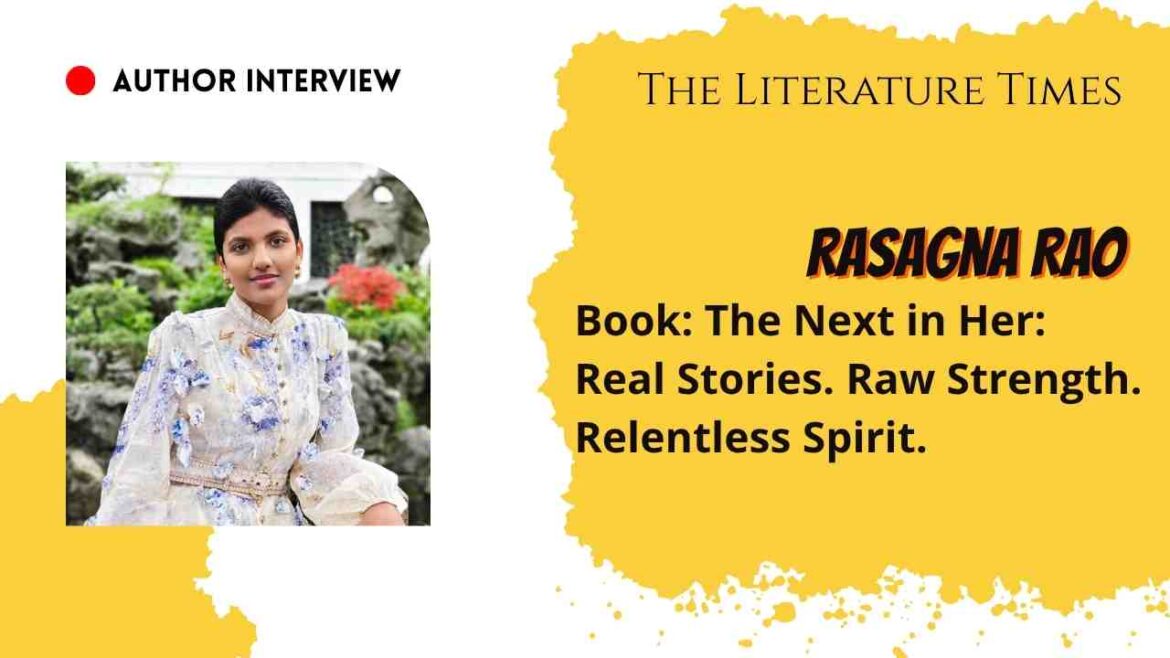
The Literature Times: What inspired you to compile real-life stories of women from different cultures?
Author:The inspiration came from my journey of travelling across different countries and meeting women from diverse cultures and backgrounds.
Despite the differences in language, lifestyle, and circumstances, I kept noticing something deeply powerful—strength is universal. Every woman, in her own way, carries it within her. Some express it boldly, others quietly, but it is always present.
I felt these stories needed to be told—not as perfect narratives, but as real, raw experiences. Because when women see reflections of themselves in others, across cultures, it creates a powerful connection and reminds them that they are not alone.
This book is my way of bringing those voices together—stories of resilience, self-belief, and women finding their strength in their own unique journeys.
The Literature Times: How did you ensure authenticity while narrating such emotionally intense stories?
Author: I focused on staying true to the emotions exactly as they were shared, without adding or exaggerating anything.
I listened with intent, respected each voice, and approached every story with deep sensitivity and responsibility. It was important for me not to shape the stories, but to honour them as they were lived.
The intention was simple—to let the truth of each story speak for itself, in its most raw and honest form.
The Literature Times: Which story in the book was the most challenging for you to write and why?
Author: Each story carried its own emotional weight, but the most challenging ones were those where the pain was deeply internal and largely unspoken.
One such story is Bhavabdhi’s. It wasn’t just about what was said, but about the depth of what remained unspoken. Translating those silent, layered emotions onto paper—without losing their intensity or over-explaining them—required thoughtful precision and emotional discipline, along with a deep respect for her experience.
Some stories test your writing, but some test your ability to feel without interfering—and this was one of them.:)
The Literature Times: How do you define “true empowerment” based on your experiences?
Author: To me, true empowerment is not about external validation or control. It is about a woman recognising her own worth, making choices for herself, and standing by them with confidence, come what may.
It is the quiet strength of knowing who you are, even when the world questions you, and the courage to choose yourself without guilt. As the saying goes, “No one can make you feel inferior without your consent.”
True empowerment is not loud—it is deeply personal. It is the moment a woman stops seeking permission and starts owning her life, fully and unapologetically.
The Literature Times: What message do you want readers to take away during difficult phases of life?
Author:I want readers to remember that difficult phases are not permanent—they are moments, not destinations.
Even in uncertainty, there is a quiet strength within them, waiting to be recognised. Sometimes, before anything around you changes, something within you begins to shift. And that shift starts with self-belief—with the simple but powerful thought, “I can get through this.”
As one scholar once said, “Once you believe in yourself, you are already halfway there.” Growth is often invisible before it becomes undeniable, and what feels like the weakest moment can become the strongest turning point.
I want them to trust that even when they feel stuck, there is always a “next” within them—ready to rise, ready to begin again. So don’t give up on yourself—because the moment you start believing in who you are, you begin to discover who you can become.