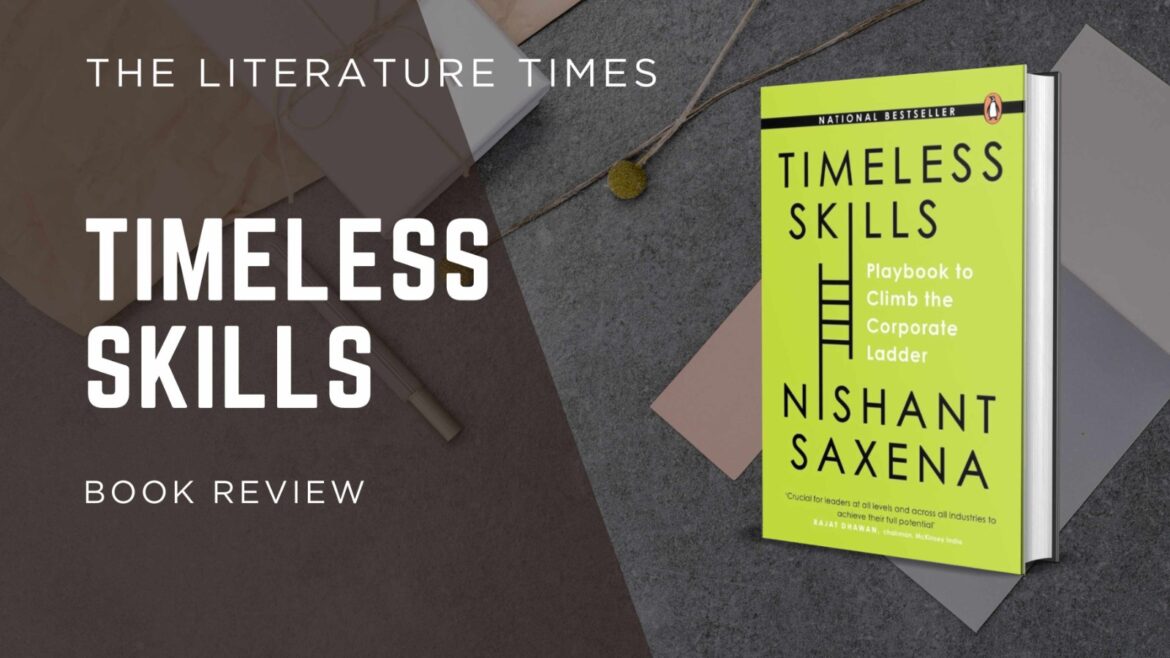
In today’s competitive corporate environment, technical expertise alone is no longer enough to guarantee career advancement. Many talented professionals begin their careers with enthusiasm, intelligence, and strong performance, only to find themselves stuck in middle management while others steadily climb to leadership positions. Timeless Skills: Playbook to Climb the Corporate Ladder by Nishant Saxena addresses this very challenge with remarkable clarity and honesty. Rather than offering quick-fix formulas or motivational clichés, the book presents a thoughtful exploration of the qualities that distinguish effective leaders from capable employees. Drawing on more than two decades of executive experience across multiple countries and industries, Saxena offers readers a practical roadmap for long-term professional growth.
The central premise of the book is both simple and compelling: careers rarely stall because of a lack of technical competence. Instead, professionals often fail to progress because of behavioural blind spots, limiting habits, or the absence of essential leadership skills. This perspective immediately sets the book apart from many career development titles that focus primarily on networking, visibility, or office politics. Saxena encourages readers to look inward, emphasizing that sustainable career advancement begins with self-awareness and continuous personal development. His approach is balanced and realistic, making the advice feel credible rather than idealistic.
One of the book’s greatest strengths is its practical orientation. Instead of relying on abstract management theories, Saxena builds his arguments through real-life experiences, workplace anecdotes, and lessons learned while mentoring professionals throughout his career. The inclusion of nearly fifty case studies makes the concepts highly relatable, allowing readers to connect theoretical principles with everyday corporate situations. These stories demonstrate how small behavioural changes can significantly influence professional success, making the book feel more like a mentoring session than a conventional business text.
The framework of the book revolves around seven timeless skills; Self-Management, Clarity, Focus, Accountability, Collaboration, Balance, and Rejuvenation. While these concepts may appear familiar at first glance, Saxena examines each with considerable depth and practical relevance. Particularly noteworthy is his discussion of Balance and Rejuvenation, subjects often neglected in leadership literature. Rather than promoting relentless hustle, the author argues that sustainable success depends on maintaining mental clarity, emotional resilience, and personal well-being. This perspective feels especially relevant in today’s high-pressure work environment, where burnout has become increasingly common.
Another distinguishing feature of the book is its strong Indian context. Much of the available leadership literature is rooted in Western organizational cultures, which do not always reflect the realities of Indian workplaces. Saxena acknowledges these differences by discussing cultural dimensions such as hierarchy, communication styles, and workplace relationships. Instead of simply adapting Western leadership models, he presents principles that resonate with professionals working in Indian organizations while remaining applicable in multinational environments. This thoughtful localisation significantly enhances the book’s relevance for its intended audience.
The author’s impressive professional background further strengthens the book’s credibility. Having served in senior leadership positions across India, Japan, Singapore, South Africa, the Philippines, and the UAE, Saxena writes with the confidence of someone who has experienced leadership challenges firsthand. His achievements as a Global CEO, combined with his academic credentials from prestigious institutions such as NIT Trichy, IIM Lucknow, and Chicago Booth, provide a solid foundation for the advice presented throughout the book. However, despite these accomplishments, his writing remains humble, conversational, and highly accessible.
The prose itself deserves appreciation. Saxena communicates complex leadership concepts in straightforward language without oversimplifying them. The chapters are concise, well-organized, and engaging, making the book suitable for both young professionals beginning their careers and experienced managers seeking personal growth. The exercises and reflective activities included towards the end reinforce the practical nature of the book, encouraging readers to apply the lessons rather than merely understand them intellectually. This emphasis on implementation transforms the book from a collection of ideas into a genuine professional development toolkit.
Another admirable aspect is the author’s ability to integrate insights from his long-running initiative, “99 Books to Make Us Wise,” without overwhelming readers with academic references. The wisdom drawn from decades of reading is seamlessly blended with personal experience, creating a rich learning experience that remains easy to follow. The balance between storytelling, reflection, and actionable guidance ensures that readers remain engaged throughout the book.
While the book excels in most areas, there are minor aspects that could have been explored further. Given the rapid evolution of modern workplaces, readers may have appreciated more discussion on topics such as digital transformation, artificial intelligence, hybrid work environments, and leading virtual teams. Although the timeless nature of the principles ensures their long-term relevance, connecting them more explicitly with emerging workplace realities would have strengthened the book even further. Likewise, professionals seeking advanced organizational strategy or complex management frameworks may find the content more focused on individual leadership development than enterprise-level management.
Nevertheless, these observations do not diminish the overall impact of the work. Timeless Skills: Playbook to Climb the Corporate Ladder succeeds because it addresses a universal professional challenge with authenticity, wisdom, and practicality. Rather than promising overnight success, Nishant Saxena advocates steady personal transformation built upon discipline, self-awareness, and continuous learning. His insights are grounded in experience, supported by relatable examples, and presented in a manner that encourages genuine reflection.
Overall, Timeless Skills is an insightful and highly relevant contribution to contemporary leadership literature. It serves not only as a guide for career advancement but also as a handbook for becoming a more thoughtful, balanced, and effective professional. Whether read by aspiring managers, middle-level executives facing career stagnation, HR professionals designing leadership programs, or experienced business leaders seeking fresh perspectives, the book offers enduring lessons that extend well beyond the corporate world. Nishant Saxena has produced a work that is practical without being simplistic, motivational without becoming preachy, and timeless in both concept and execution. It is a valuable addition to the bookshelf of anyone serious about building a meaningful and lasting leadership journey.