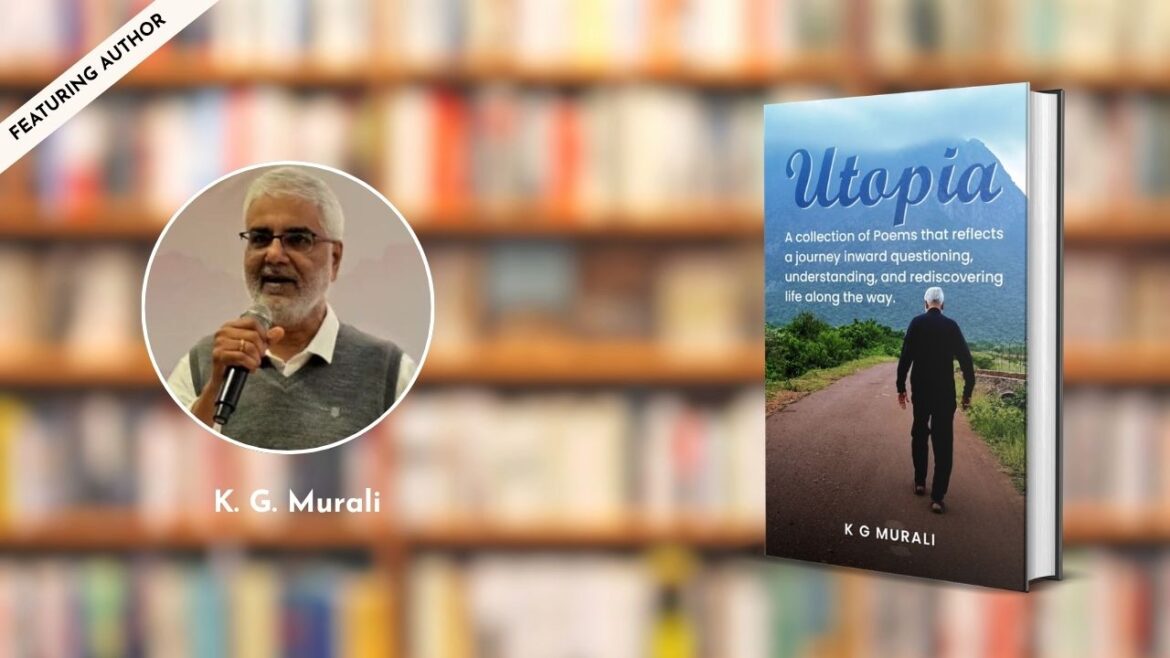
K. G. Murali’s life is a compelling example of how success can evolve into significance. While many people define achievement through careers, wealth, or recognition, Murali’s journey reflects a different philosophy—one where personal growth, compassion, and service become the true measures of a meaningful life. His latest poetry collection, Utopia, is not merely a compilation of verses but an intimate reflection of decades spent observing life, questioning accepted truths, and discovering deeper meaning through both personal experiences and human connections.
Popularly known as KGM, Murali has lived through diverse phases that have shaped his worldview. His professional journey began in the corporate world, where he spent nearly two decades building expertise and leadership. He later transitioned into entrepreneurship, successfully establishing a thriving enterprise. Yet, despite professional accomplishments, he found himself drawn toward a path that offered something far more enduring than commercial success—the opportunity to serve humanity.
This shift was not driven by circumstance but by conviction. Murali gradually chose to dedicate his life to working alongside people facing some of life’s most difficult challenges. For more than twenty-five years, he devoted himself to serving residents of a leprosy home while simultaneously supporting over three hundred children living with HIV. These experiences transformed not only the lives of those he served but also his own understanding of resilience, hope, dignity, and unconditional compassion.
His humanitarian work continued to expand over time. During the COVID-19 pandemic, he became actively involved in supporting semi-orphaned children and displaced mothers whose lives had been disrupted by unimaginable loss. His commitment to uplifting marginalized communities also extends to his ongoing association with a cancer hospital in Assam, where he contributes to fundraising efforts, leadership initiatives, and social outreach programs. Through these endeavors, Murali has consistently demonstrated that meaningful change begins with empathy and sustained commitment rather than grand gestures.
These decades of service profoundly influence his writing. Unlike poetry born solely from imagination, Murali’s verses emerge from lived experiences and quiet observations gathered while walking alongside people during their moments of vulnerability. His poetry reflects not only his own inner search but also the emotional landscapes of countless individuals whose lives have intersected with his. Every poem carries the authenticity of someone who has witnessed suffering firsthand while also discovering extraordinary strength within ordinary people.
His earlier work, Ubuntu, published during the pandemic, beautifully reflected this philosophy of shared humanity. More than a literary achievement, the book became an instrument of support for the social causes he deeply cares about, reinforcing his belief that literature can inspire both reflection and action. With Utopia, Murali continues this journey of introspection while inviting readers to embark on one of their own.
The poems in Utopia are characterized by simplicity, depth, and honesty. Rather than offering fixed conclusions, they gently encourage readers to question assumptions, pause amidst life’s constant noise, and reconnect with themselves. Each poem becomes less about providing answers and more about creating space for meaningful reflection. The collection explores themes such as identity, awareness, relationships, compassion, acceptance, and the continuous search for inner peace.
One of the defining qualities of Murali’s writing is accessibility. His poems avoid unnecessary complexity while preserving profound philosophical depth. Readers from different walks of life can find themselves within these verses because the emotions they explore are universal. Whether contemplating joy, uncertainty, purpose, or silence, Murali speaks in a voice that feels intimate and reassuring rather than instructional.
His philosophy is deeply rooted in mindfulness. Rather than chasing distant ideals of happiness or fulfillment, he emphasizes living fully in the present moment. This perspective permeates both his writing and his life. Every experience, whether joyful or painful, becomes an opportunity for awareness and transformation. His poetry reflects this gentle wisdom, encouraging readers to slow down and appreciate the richness hidden within everyday moments.
Murali’s personal life further reflects the balance he has cultivated between professional accomplishment, family, and social responsibility. He lives in Bangalore with his wife, Shanthi, who serves as a vice principal in a school. Their daughter, Architha, now an HR professional living in the United States with her husband and two daughters, represents another dimension of the values Murali cherishes—family, education, and continuous growth across generations.
What distinguishes K. G. Murali as both an author and humanitarian is his unwavering authenticity. He does not separate philosophy from practice or writing from living. The reflections found in Utopia are not abstract concepts but ideas tested through years of personal experience, social service, and quiet contemplation. His life demonstrates that wisdom is not accumulated through theory alone but through openness to people, experiences, and one’s own evolving understanding.
In an age where speed often replaces reflection and external achievement overshadows inner fulfillment, Murali offers a refreshing perspective. His work reminds readers that genuine transformation begins within and that every encounter, every challenge, and every moment holds the potential to deepen our understanding of ourselves and others.
Through Utopia, K. G. Murali extends an invitation—not simply to read poetry, but to participate in an inward journey. His words encourage us to question, to listen more deeply, to embrace compassion, and to rediscover life’s quiet beauty. It is this rare combination of lived wisdom, literary sensitivity, and lifelong service that makes his voice distinctive in contemporary literature. For readers seeking not just poetry but perspective, Utopia promises a meaningful companion on the lifelong journey of becoming more fully human.