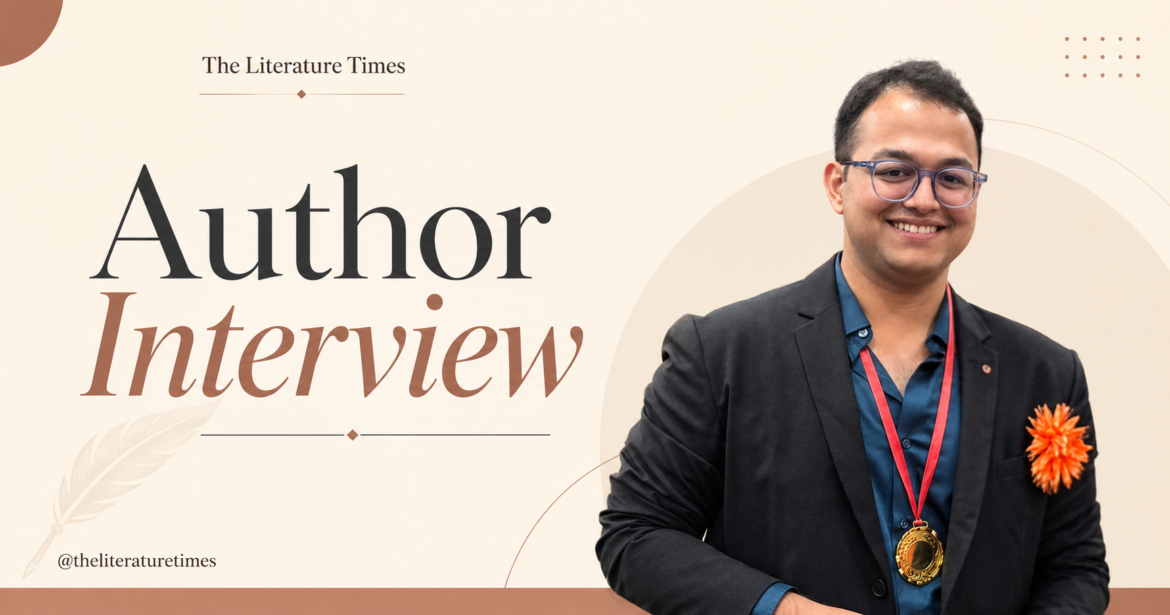
In a world where conversations about mental wellbeing are becoming increasingly important, Md Zaid Bin Eqbal is emerging as a thoughtful new voice exploring the emotional experiences that often remain unspoken. A medical student, writer, and keen observer of human behaviour, Zaid brings together his interest in psychiatry, emotional resilience, and storytelling to examine the complexities of being human. His writing is rooted in curiosity rather than certainty. Instead of presenting life as a collection of simple answers, he is interested in the questions people carry within themselves: Why do we feel lonely even when surrounded by others? Why do we hide our struggles? How do self-doubt and uncertainty shape our identity? And how do we continue moving forward when we do not know where the path leads? These questions form the emotional foundation of his debut book, BUT: Finding Hope in the Void.
For Zaid, writing is not about positioning himself as someone who has figured life out. His approach is personal and reflective. BUT: Finding Hope in the Void grew out of lived experiences, difficult questions, moments of uncertainty, and honest reflection. The book does not attempt to provide a universal formula for overcoming hardship. Instead, it creates space for readers to pause and recognize emotions they may have struggled to articulate themselves. Its central spirit lies in the possibility that even during periods of emptiness, confusion, or emotional exhaustion, hope can still exist. Zaid does not romanticize struggle, but neither does he treat struggle as the end of the story. His writing acknowledges the invisible weight that people carry the thoughts they conceal, the identities they construct for the outside world, and the emotional battles that may never be visible to those around them. Through these themes, he encourages readers to look beyond appearances and consider the stories that may exist beneath the surface.
Zaid’s background as a medical student adds another dimension to his perspective. Medicine introduces him to the human being not simply as a patient or a diagnosis, but as an individual with experiences, fears, relationships, expectations, and hopes. His interest in psychiatry and human behaviour reflects this broader curiosity. He is fascinated by the ways people think, respond to adversity, develop coping mechanisms, and search for meaning in their lives. Yet his writing remains distinct from a clinical textbook or a collection of professional advice. His purpose is not to diagnose readers or prescribe solutions. Rather, he uses storytelling and reflection to explore the emotional landscape that exists behind everyday experiences. This balance between scientific curiosity and human observation gives his work its distinctive character.
One of the recurring ideas in Zaid’s writing is that not every struggle is visible. A person can appear confident while privately battling self-doubt. Someone can be surrounded by friends while experiencing profound loneliness. A person can smile, study, work, communicate, and fulfill responsibilities while carrying an emotional burden that nobody else recognizes. These contradictions interest Zaid because they reveal how complicated human behaviour can be. People often wear masks, sometimes not because they want to deceive others, but because they are unsure how to reveal what is happening inside. His writing seeks to create a language for some of these experiences. Rather than telling readers how they should feel, he invites them to acknowledge what they already feel. That invitation to pause, reflect, and be honest with oneself is at the heart of his approach.
The idea of hope in Zaid’s work is particularly significant. Hope, in his perspective, does not necessarily mean believing that everything will immediately become better. Sometimes hope can be much smaller: choosing to continue, asking another question, allowing oneself another day, or recognizing that uncertainty does not mean that the future has already been decided. This understanding makes Finding Hope in the Void more than a title; it represents a philosophy of continuing despite incomplete answers. For readers navigating loneliness, self-doubt, identity struggles, or periods of uncertainty, this perspective can feel deeply relatable. Zaid’s work reminds them that having questions does not mean having failed, and that not knowing the next step does not mean there is no next step.
Although BUT: Finding Hope in the Void marks his debut as an author, Zaid’s interest in writing extends beyond a single book. When he is not studying medicine, he continues to write, observe, reflect, and explore the intersection of mental wellbeing, storytelling, and everyday life. His journey as a writer is still developing, but the themes that define his early work are already clear: human vulnerability, resilience, identity, loneliness, self-understanding, and the search for meaning. What makes Zaid’s voice noteworthy is not that he claims to possess all the answers. It is precisely the opposite. He writes from a place of questioning, observation, and sincerity. In an age where people are often encouraged to appear certain, successful, and emotionally composed, his work makes room for something different: the honesty of not having everything figured out.
Md Zaid Bin Eqbal is ultimately an author interested in the spaces between what people show and what they feel. Through BUT: Finding Hope in the Void, he invites readers into those quiet spaces not to promise that every void can immediately be filled, but to suggest that even there, something worth holding on to may still be found. And sometimes, that small possibility is where hope begins.