What happens when living longer becomes the norm, but society is not fully prepared for the realities that come with it?
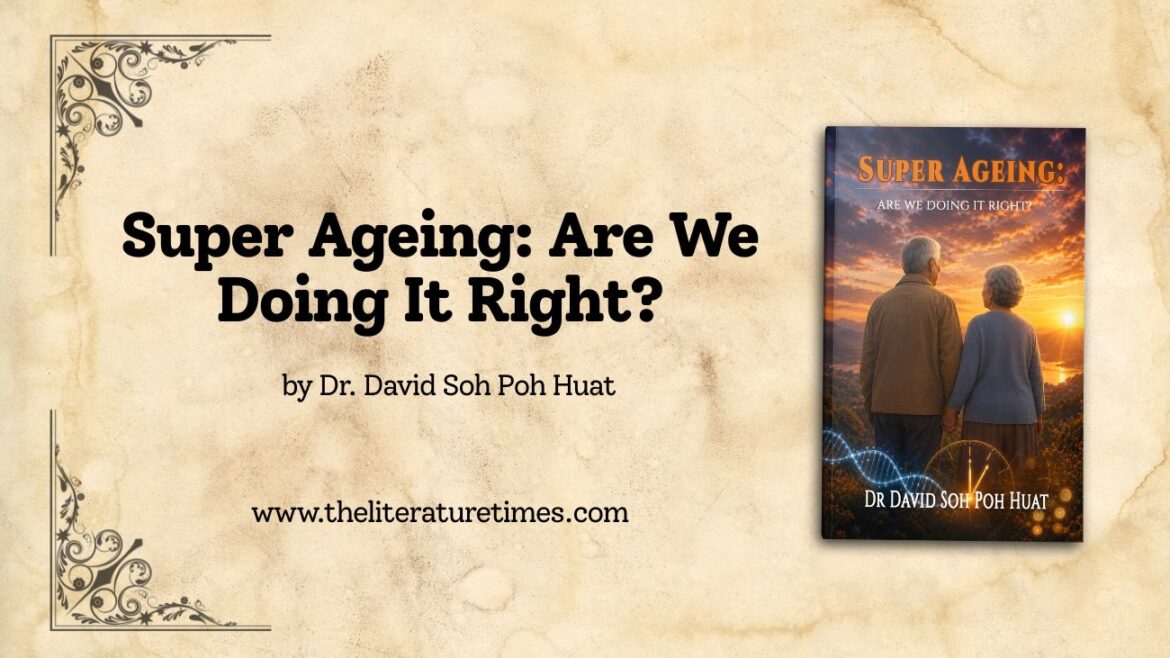
This question sits at the heart of Super Ageing: Are We Doing It Right? by Dr David Soh Poh Huat. Rather than treating population ageing as a distant demographic concern, the book brings the discussion closer to everyday life. It asks readers to think about ageing not merely in terms of years lived, but in terms of dignity, companionship, care, responsibility, and the quality of those additional years.
The strength of the book lies in its deeply human approach to a subject often dominated by statistics and policy discussions.
Looking Beyond Longer Life Expectancy
Modern societies frequently celebrate increased life expectancy as an achievement, and rightly so. Advances in medicine, healthcare, nutrition, and living standards have allowed people to live longer than previous generations.
But Dr Soh asks an important follow-up question: what kind of life awaits people during those additional years?
Longevity alone cannot define progress. Older people also need security, meaningful relationships, appropriate care, respect, and opportunities to remain connected to their communities.
Super Ageing: Are We Doing It Right? encourages readers to consider whether our social systems have evolved quickly enough to match our increasing lifespan.
This makes the book particularly relevant at a time when many countries are experiencing significant demographic changes.
The Human Cost of Social Isolation
Among the book’s most affecting themes is loneliness.
Ageing is often discussed through healthcare expenditure, retirement systems, infrastructure, and population figures. Dr Soh reminds us that behind these discussions are individuals who may be experiencing isolation, dependence, grief, or a gradual loss of social connection.
His examination of solitary deaths is especially sobering. It raises a difficult question about modern society: how can communities become increasingly connected through technology while some of their oldest members remain profoundly alone?
The book does not treat companionship as an optional comfort. Instead, human connection emerges as an essential part of ageing with dignity.
Rethinking the Role of Caregivers
Another important dimension of the book is its treatment of caregiving.
Dr Soh writes from a perspective shaped by his own experience as a freelance community caregiver. This gives his observations a practical foundation. He understands that caregiving involves much more than completing daily tasks.
A caregiver may become a source of reassurance, companionship, safety, and emotional stability for someone who is vulnerable or dependent on others.
For this reason, the book makes a strong case for recognizing caregiving as serious professional work.
Training, standards, accountability, legal protection, and professional recognition all matter. When society expects caregivers to shoulder significant responsibilities, it must also consider how those caregivers themselves are supported and protected.
Dr Soh’s advocacy for Professional Indemnity Insurance for freelance carers reflects this wider concern for professional recognition and safeguards.
A Conversation Between Policy and Compassion
One of the most interesting aspects of Super Ageing: Are We Doing It Right? is the way it moves between large social questions and individual human experiences.
There is policy, but there is also emotion.
There are statistics, but there are also stories.
There are questions about systems, but ultimately those systems exist to serve people.
This combination prevents the subject from becoming overly clinical. Readers are encouraged to consider not only what governments and institutions should do, but also how families, communities, caregivers, and individuals participate in creating a society where ageing does not mean becoming invisible.
A Question for Every Generation
Although the book focuses on ageing, its message is not limited to older readers.
Younger generations are part of this conversation too. Today’s younger adults may become tomorrow’s caregivers, policymakers, healthcare professionals, family supporters, and eventually older citizens themselves.
That makes ageing a shared social issue rather than a concern belonging exclusively to one generation.
Dr Soh encourages readers to consider what values should define an ageing society. Should efficiency come before companionship? Can professional care exist without losing its humanity? Are communities doing enough to prevent isolation? And are caregivers receiving the respect their responsibilities deserve?
These questions give the book relevance beyond its immediate subject.
A Thoughtful Call for Dignity
Super Ageing: Are We Doing It Right? is ultimately a book about how people treat one another.
Dr David Soh Poh Huat does not present ageing simply as a problem requiring management. He presents longevity as an achievement that creates new responsibilities.
If humanity has succeeded in extending life, the next challenge is ensuring that those longer lives are lived with dignity.
The book asks governments to examine policy, communities to strengthen human connections, families to reconsider responsibility, and society to recognize the importance of professional caregivers.
Most importantly, it asks readers to reconsider the language surrounding ageing itself.
Growing older does not erase a person’s need for respect, purpose, companionship, or belonging. A person’s later years should not be treated merely as a period to be managed.
That is what makes Super Ageing: Are We Doing It Right? meaningful. Beneath its discussion of demographic change and eldercare lies a simple but important idea: progress should not be measured only by how much longer humanity can live, but also by how well we care for people throughout those additional years.
It is a timely reflection on longevity, caregiving, and the responsibility that comes with becoming a longer-living society.