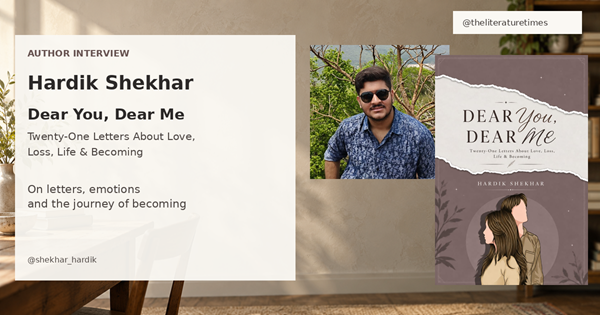
About the author
Hardik Shekhar is a young writer, student and Indian Sign Language enthusiast with an interest in human emotions, literature and social work. He is drawn to writing as a way of expressing feelings and exploring the stories people carry within them. His interest in Indian Sign Language reflects his wish to connect with others and contribute to a more inclusive society. He hopes to work with the Deaf community and explore opportunities for meaningful change. His first book, Dear You, Dear Me, brings together twenty-one letters about love, loss, memories, relationships and becoming. The collection grows from his curiosity about life and the person he is still becoming, addressing people we have loved, those we have lost and earlier versions of ourselves.
Interview questions
The Literature Times: Dear You, Dear Me brings together twenty-one letters. What drew you to the letter form, and how did you decide which experiences and emotions belonged in the collection?
Hardik Shekhar: I Think Letters Have A Kind Of Honesty That Other Forms Of Writing Sometimes Don’t. When You Write A Letter, You Don’t Always Have To Explain Everything Or Make Every Sentence Perfect. You Can Simply Let A Feeling Exist. That Was What Drew Me To This Form. I Didn’t Want To Write A Book That Felt Like It Was Trying To Teach People Something. I Wanted To Write About Feelings We All Experience But Don’t Always Know How To Express. The Twenty-One Letters Came Together Around Love, Loss, Memories, Growing Up, And Understanding Ourselves. I Chose These Themes Because They Felt Real To Me, And I Hoped They Might Feel Familiar To Someone Else, Too.
The Literature Times: The title addresses both another person and the self. How did writing to “you” differ from writing to “me”, and what did each perspective allow you to explore?
Hardik Shekhar: Writing To “You” Felt Like Speaking To Someone Who Might Never Hear Everything I Wanted To Say. It gave me space to explore relationships, memories, affection, distance, And The Things We Leave Unspoken. Writing To “Me” Was Different. It Was More Like Sitting With Myself Without Trying To Find An Excuse For Everything I Felt Or Did. It Meant Looking At My Own Mistakes, Hopes, And Uncertainties. I Think The Two Perspectives Eventually Started To Meet Somewhere In The Middle. Sometimes, When We Write To Another Person, We Discover Something About Ourselves. And Sometimes, Understanding Ourselves Helps Us Understand The People We Once Loved.
The Literature Times: How Did You Put Private Feelings Into Words Without Making Them Feel Less Personal?
Hardik Shekhar: I Tried Not To Overcomplicate Them. I Think Feelings Can Lose Something When We Try Too Hard To Make Them Sound Beautiful. Sometimes, A Simple Sentence Can Carry More Emotion Than A Whole Paragraph. I Wanted The Letters To Feel Like Thoughts Someone Might Have At Night, While Travelling, Or During A Quiet Moment When A Memory Suddenly Returns. I Also Didn’t Want Every Feeling To Have A Clear Explanation Or A Perfect Ending. Real Life Doesn’t Always Work That Way. Some Things Remain Unanswered, And Some Feelings Take Time To Understand. I Wanted To Leave Room For That Honesty, So Readers Could Bring Their Own Experiences To The Pages.
The Literature Times: How Did You Shape The Movement Between People You Have Loved, People You Have Lost, And Earlier Versions Of Yourself?
Hardik Shekhar: I Saw These Connections As Different Parts Of The Same Journey. The People We Love Often Become Part Of Our Memories, And The People We Lose Sometimes Teach Us Things About Ourselves That We Didn’t Understand Before. Then There Are The Earlier Versions Of Us—The People We Were Before Certain Experiences Changed Us. I Didn’t Want The Letters To Feel Like Twenty-One Completely Separate Thoughts. I Wanted Them To Feel Like Different Moments In One Larger Emotional Journey. The Book Moves Between Looking Back, Trying To Understand The Present, And Imagining The Person We Might Become. For Me, These Things Are Connected Because We Carry Pieces Of Our Past Into Everything That Comes Next.
The Literature Times: What Questions About Letting Go And Holding On Did You Return To While Writing?
Hardik Shekhar: One Question I Kept Coming Back To Was Whether Letting Go Means Forgetting. I Don’t Think It Always Does. Sometimes, You Can Accept That Something Has Ended And Still Be Grateful That It Happened. You Can Miss Someone Without Wanting Them Back, And You Can Remember A Part Of Your Life Without Wanting To Return To It. I Also Think We Sometimes Hold On Because We Are Afraid Of What Will Remain When We Finally Stop Holding On. But Perhaps Moving Forward Doesn’t Require Us To Erase Everything Behind Us. Perhaps It Means Learning To Carry Certain Memories Differently. I Wanted The Book To Explore That Possibility Without Pretending There Is One Right Way To Heal Or Move On.
The Literature Times: What Was The Most Challenging Part Of Bringing Your First Book Together, And What Helped You Keep Writing?
Hardik Shekhar: As A First-Time Writer, One Of The Most Challenging Things Was Learning To Trust My Own Words. There Is Always A Question In The Back Of Your Mind About Whether What You Write Will Matter To Anyone Else. You Wonder Whether Someone Will Understand What You Were Trying To Express Or Whether The Words Will Mean Anything Outside Your Own Thoughts. I Also Had To Learn That Writing Is Not Just About Having Feelings; It Is About Finding A Way To Communicate Them Honestly. What Kept Me Going Was The Possibility That Someone Might Read A Letter And Feel A Little Less Alone In Something They Had Experienced. I Didn’t Need To Have Every Answer. I Just Needed To Keep Writing What Felt True.
The Literature Times: Your interest in Indian Sign Language is connected to a wish for a more inclusive society. Has that interest influenced how you think about expression, listening or the emotions that words do not always convey?
Hardik Shekhar: My Interest In Indian Sign Language Has Made Me More Curious About The Different Ways People Communicate And Connect. Expression Is Not Limited To Spoken Words. Sometimes, A Gesture, An Expression, Or The Way Someone Gives Their Attention Can Communicate Something That Is Difficult To Explain In A Sentence. It Has Also Made Me Think About How Important It Is To Make Communication More Accessible And Inclusive. I Believe Listening Is About More Than Hearing Words; It Is Also About Being Willing To Understand Another Person’s Experience. That Idea Connects With My Writing, Too. Although This Book Is Made Of Letters, Much Of What It Explores Exists Beyond Words—the Feelings We Struggle To Explain And The Understanding We Hope To Find In Others.
The Literature Times: What would you like readers to reflect on after finishing these letters, and which aspects of life or becoming would you like to explore in your future writing?
Hardik Shekhar: I Hope Readers Finish The Book With A Little More Understanding Of Themselves. Maybe A Letter Reminds Them Of Someone They Once Knew. Maybe Another Helps Them Look At Their Younger Self With More Kindness. Or Maybe They Simply Find A Sentence That Describes Something They Have Felt But Never Known How To Say. I Don’t Expect Every Reader To Connect With Every Letter, And I Think That Is Completely Fine. In My Future Writing, I Would Like To Continue Exploring Human Emotions, Relationships, Identity, And The Experiences That Shape Us. I Am Still Learning As A Writer And As A Person. For Now, I Hope Dear You, Dear Me Can Be A Small Reminder That We Are All Still Becoming, And That There Is Nothing Wrong With Not Having Everything Figured Out Yet.