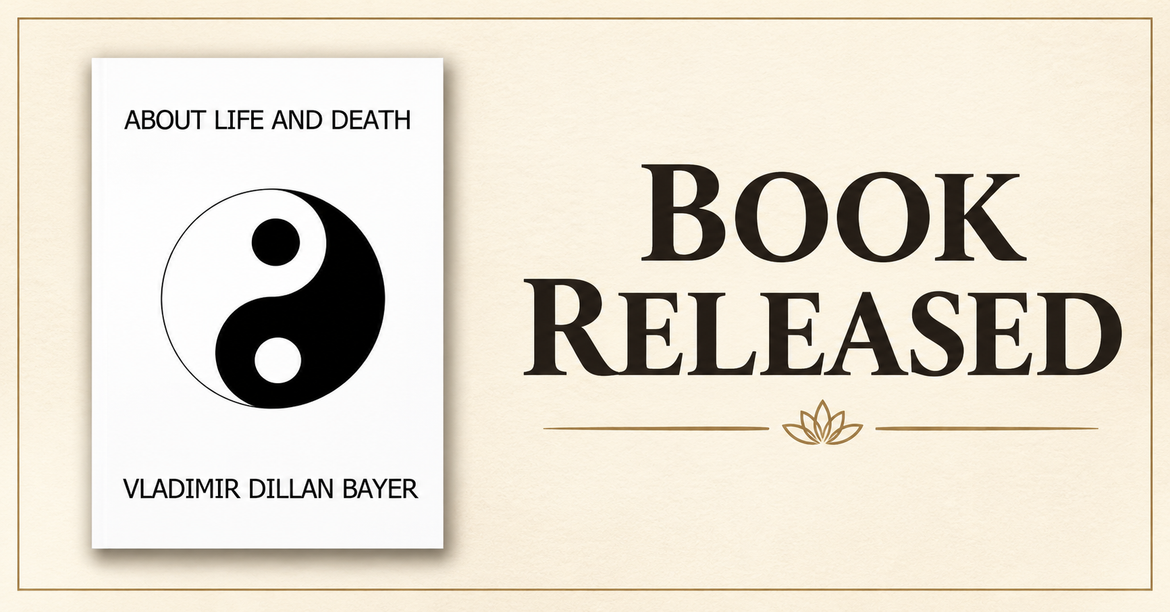
The philosophical book About Life and Death: Love and Fear by Vladimir Dillan Bayer has been released, inviting readers to embark on a profound journey into the mysteries of human existence, the nature of life, and the meaning of physical death. Through an introspective and deeply personal exploration, the book examines some of the most fundamental questions that have occupied human thought for centuries. It brings together reflections on love, fear, good and evil, free will, divine will, human relationships, and the spiritual dimensions of existence. With its central focus on the apparent opposites of life and death, the work encourages readers to reconsider their understanding of these experiences and explore the possibility that seemingly contrasting forces may be interconnected parts of a greater whole. The book is now available online through Amazon and Flipkart, making it accessible to readers interested in philosophy, spirituality, and the deeper meaning of life.
At its heart, About Life and Death: Love and Fear present an exploration of two powerful human experiences: love and fear. These emotions influence how individuals perceive the world, form relationships, make decisions, and confront uncertainty. The book approaches them not merely as opposing feelings but as essential aspects of a broader understanding of existence. The title itself reflects the author’s perspective that life and death, much like love and fear, may represent two apparent opposites belonging to a unified reality. This central idea establishes the philosophical foundation of the work, encouraging readers to look beyond conventional interpretations and consider the deeper connections between different aspects of human experience.
One of the book’s principal themes is the relationship between good and evil. These concepts have long been central to philosophical, spiritual, and ethical discussions, raising questions about human nature, morality, responsibility, and the choices individuals make throughout their lives. By bringing this theme into his exploration of existence, Vladimir Dillan Bayer invites readers to reflect on how they understand moral distinctions and the forces that shape human behaviour. The discussion also opens the door to broader questions about the nature of reality and whether the experiences people commonly interpret as opposing forces may hold a deeper significance when viewed from a more comprehensive perspective.
Another important subject addressed in the book is the relationship between free will and divine will. This philosophical question examines the extent to which human beings exercise independent control over their lives and how their choices might relate to a greater spiritual order. The tension between personal freedom and divine purpose has been explored across numerous philosophical and religious traditions, yet it continues to remain relevant in contemporary discussions about destiny, responsibility, and the meaning of existence. Through this theme, the book encourages readers to examine their own beliefs about the decisions they make, the circumstances they encounter, and the possibility of a larger purpose underlying their experiences.
The work also explores the spiritual treasure hidden within human relationships. Relationships often become the foundation of an individual’s emotional and personal development, shaping perspectives, values, and the understanding of oneself and others. Love, connection, compassion, attachment, and the experiences shared between individuals can influence the way people interpret the world around them. By incorporating the spiritual dimension of relationships into his broader inquiry, the author highlights the significance of human connection in the search for meaning. This theme provides an intimate and relatable aspect to the book’s philosophical exploration, allowing readers to connect abstract questions about existence with the realities of their own lives.
Physical death is another central subject of About Life and Death: Love and Fear. The author approaches death as more than a biological event, examining its deeper implications for human consciousness, identity, and the understanding of existence. The fear of death is one of the most fundamental anxieties experienced by human beings, often influencing their choices, priorities, and perceptions of life. The uncertainty surrounding what follows physical death has inspired countless philosophical and spiritual inquiries. Bayer’s exploration focuses on the true meaning of physical death and its connection to the source of human phobias and fears. By addressing this subject directly, the book encourages readers to engage with a question that is frequently avoided despite its universal relevance.
The exploration of death is closely connected to the book’s broader search for Universal Truth. Rather than treating the subject as an isolated concern, the author places it within the larger context of human existence, spiritual understanding, and the search for one’s origins. The book’s central inquiry suggests that understanding life may require a deeper examination of death, just as understanding fear may require an exploration of love. These interrelated themes create a philosophical framework in which readers are encouraged to question established assumptions and reflect on the nature of reality from a wider perspective.
The book has been described in the supplied reader review as a thought-provoking and enjoyable read, highlighting its complex, honest, and beautifully written account of one man’s search for meaning in life, acceptance of death, and development of a higher understanding of Universal Truth. The review also notes that although the narrative is deeply personal at times, it is not exclusively autobiographical. Instead, it deals with universal aspects of human existence that allow its ideas to resonate beyond the author’s individual experiences. This distinction is significant because it positions the book as a work that combines personal reflection with broader philosophical relevance.
The writing approach of About Life and Death: Love and Fear is rooted in introspection and the exploration of fundamental questions rather than a conventional narrative focused solely on external events. The author’s willingness to examine deeply personal subjects gives the work an intimate quality, while its broader themes extend the discussion into areas of universal interest. Readers are invited to engage with the author’s reflections while also considering their own perspectives on love, fear, life, death, spirituality, and the meaning of existence. This approach allows the book to function as both a personal journey and an invitation to independent contemplation.
Vladimir Dillan Bayer’s personal background provides an important context for the ideas explored throughout the book. According to his author biography, his interest in the question of mortality began in early childhood, when he first realised that life on Earth was not eternal. This early awareness led him to question whether physical death represented the definitive end of existence. As a young boy, he would gaze at the dark blue night sky and feel connected to the vastness above him. He describes an intuitive sense that life was too extraordinary a miracle to conclude with the insignificance of physical dust. These childhood reflections established the foundation for his enduring interest in the relationship between human existence and the greater universe.
The author’s biography further reflects his deeply personal and spiritual approach to identity. Introducing himself as Vladimir Dillan, God’s lost son, he acknowledges the difficulty of expressing his true self through written words. He notes that even the 175 pages he devoted to writing meaningfully about himself fall short of fully conveying who he believes himself to be. His invitation to readers to discover more about him, and to a considerable extent about themselves, connects his personal reflections with the book’s larger philosophical purpose. His description of humanity as cosmic travellers wandering across universes for aeons in search of their divine origin reinforces the spiritual perspective that runs through his work.
This background makes About Life and Death: Love and Fear particularly relevant to readers who are interested in examining existence beyond its material dimensions. The book may appeal to those who enjoy philosophical literature, spiritual reflections, existential inquiry, and works that encourage deeper thinking about the human condition. Readers interested in questions of consciousness, mortality, destiny, morality, and the relationship between the individual and the universe may find its central themes engaging. It may also resonate with individuals who have experienced periods of personal reflection and are seeking to explore questions about purpose, identity, and the nature of life.
The significance of the book lies in its engagement with questions that remain relevant across generations and cultures. Life, death, love, and fear are experiences that connect human beings regardless of their backgrounds. While individuals may hold different beliefs and interpretations regarding these subjects, the questions themselves remain universal. By bringing these themes together in a single philosophical exploration, Bayer creates an opportunity for readers to examine their own assumptions and consider alternative ways of understanding existence. The book’s emphasis on personal inquiry also encourages readers to approach its ideas thoughtfully, allowing them to form their own interpretations of the concepts presented.
The release of About Life and Death: Love and Fear adds a reflective and spiritually oriented work to the landscape of contemporary philosophical literature. Its focus on the relationship between opposing forces, the meaning of mortality, and the search for Universal Truth distinguishes its central subject matter. Rather than limiting its inquiry to a single philosophical question, the book connects several dimensions of human existence, from moral choices and personal relationships to spiritual identity and the possibility of a greater universal origin. This interconnected approach makes the work a substantial invitation to explore the deeper questions that shape human understanding.
With its release, Vladimir Dillan Bayer presents readers with an opportunity to engage in a thoughtful exploration of life and death through the lens of love, fear, and spiritual reflection. About Life and Death: Love and Fear is intended for readers who appreciate meaningful literature that moves beyond surface-level discussions and examines the profound questions underlying human existence. Its combination of personal introspection and universal themes offers a reflective reading experience that may encourage readers to reconsider their understanding of themselves and the world around them.
The book is now available online through Amazon and Flipkart. Readers interested in philosophy, spirituality, existential questions, and the search for deeper meaning can explore About Life and Death: Love and Fear and engage with the ideas presented by its author. Through this release, Vladimir Dillan Bayer invites readers to reflect on the relationship between life and death, the influence of love and fear, and the enduring human search for a deeper understanding of Universal Truth.