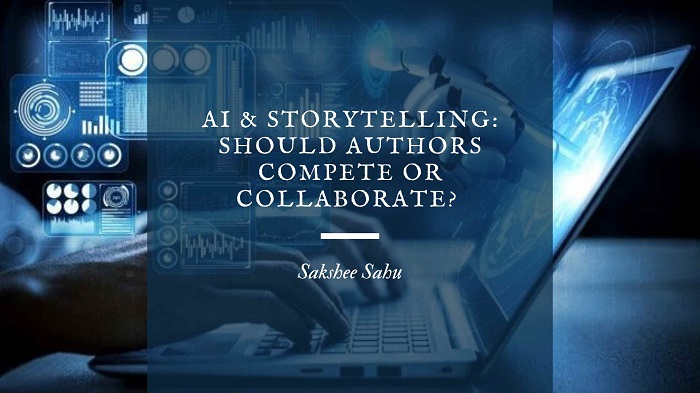
Artificial Intelligence has entered nearly every field, from healthcare to business strategy, and literature has not been left untouched. With the rise of AI-powered writing tools, a debate has emerged among authors, publishers, and readers: should human storytellers see AI as competition, or as a collaborator in the art of storytelling? This question is not just about technology; it is about creativity, originality, and the very soul of literature.
Get Free Marketing and Publishing Guide
The Fear of Competition: Is AI a Threat to Writers?
The idea of AI-generated stories can unsettle many writers. Traditionally, literature has been celebrated as an expression of uniquely human emotions – love, despair, joy, betrayal, hope. When algorithms learn patterns of storytelling, predict character arcs, or even generate entire novels, it raises an unsettling question: can machines replicate the depth of human experience?
Many authors worry that publishers and content platforms may begin to rely more on AI-generated works because they are cheaper, faster, and easier to produce. An AI can generate thousands of words within minutes, while a writer might labor over a single chapter for days. This speed advantage could appear attractive to industries that thrive on quantity. Moreover, AI writing tools are improving rapidly. They can mimic styles, create engaging dialogues, and weave plots that at first glance, look seamless. For some, this feels like a looming threat to human authorship, where creative writing becomes just another automated industry.
But the danger is not only about job security. Writers also fear a dilution of art. Stories created by algorithms may capture patterns, but can they capture the subtlety of lived experiences, the pain of loss, the beauty of silence, or the contradictions of human choices? Literature has always been more than just words on a page; it is an imprint of human consciousness. If Artificial Intelligence begins to dominate storytelling, will the personal, vulnerable, messy heart of literature be lost in the process?
Collaboration: When Human Imagination Meets Machine Intelligence
While the fear of competition is real, there is also another perspective, one where AI does not replace writers, but works alongside them. In this view, AI is not a rival, but a tool that can expand human creativity. Just as typewriters and word processors revolutionized how stories were written, AI could represent the next stage of literary innovation.
Must Read: https://www.theliteraturetimes.com/the-changing-face-of-readers-in-2025-what-authors-must-know
An author struggling with writer’s block might use AI to generate prompts, unexpected twists, or alternate endings. A poet could experiment with AI-generated metaphors as seeds for deeper exploration. Novelists can use AI to build immersive worlds quickly, filling in details of landscapes, histories, or even background characters, while keeping the central emotional journey authentically human. In such collaborations, the human writer remains the heart and soul of the work, while AI serves as a catalyst for imagination.
There is also the possibility of using AI to amplify inclusivity in storytelling. By analyzing vast libraries of world literature, AI can surface underrepresented voices, cultural myths, and narrative styles, helping authors step outside their own limited perspectives. This does not mean the machine becomes the storyteller, but rather, it becomes a mirror that shows writers new directions they might not have seen otherwise.
Furthermore, AI can aid in the technical aspects of storytelling – grammar, pacing, consistency, allowing authors to focus on the emotional and philosophical depths of their work. In this light, AI becomes less of a competitor and more of an assistant, enabling writers to reach their fullest potential.
The Future of Storytelling: Finding Harmony Between Man and Machine
The question then is not whether AI should compete with or collaborate with authors, but how society chooses to define creativity in the age of machines. Human beings are not just storytellers; they are meaning-makers. AI, no matter how advanced, lacks lived experience, it has never felt heartbreak, nor watched the sunrise after a sleepless night, nor carried the memory of a childhood lullaby. These are the textures of human life that give literature its soul.
At the same time, ignoring AI altogether would be shortsighted. The technology is here to stay, and it will only grow more sophisticated. Authors who choose to embrace AI as a companion can discover new creative horizons. Instead of asking, “Can AI write better stories than us?” perhaps the better question is, “What kinds of stories can we write together that neither could create alone?”
New Article: https://www.theliteraturetimes.com/virtual-book-tours-do-they-still-work
Publishing industries, too, must find ethical boundaries. Transparency will be essential, readers should know when a story is written by a human, AI, or a collaboration of both. Education for writers should include not just traditional literary training but also an understanding of how to use AI responsibly and creatively. And most importantly, society must continue to value the irreplaceable essence of human storytelling, the vulnerability, empathy, and imagination that no machine can fully replicate.
In the end, AI is a reflection of its human creators. It learns from the stories we tell, the emotions we express, and the cultural values we encode in language. Its existence is not a replacement for human creativity but a testament to it. Just as painters embraced new brushes, filmmakers embraced cameras, and musicians embraced electronic instruments, writers now face a new tool, one that can either be feared or embraced.
The future of storytelling is not a duel between humans and machines. It is a dialogue, a collaboration, and perhaps, a new chapter in the eternal story of human imagination.