The Literature Times: What inspired you to begin your journey as a writer?
Amit Kohli: I began writing because I wanted to give shape and voice to lives that teach by example. Working closely with Dr. Prakash Amte and the Lok Biradari Pralalp showed me how quiet courage and steady service change people’s lives; I felt compelled to record that resilience so others could draw strength from it.
The Literature Times: Can you tell us about your latest book and the idea behind it?
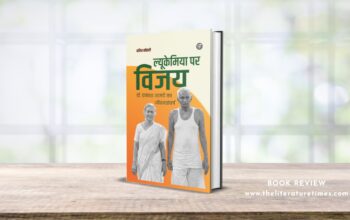
Amit Kohli: This book was originally published in English as ‘Triumph Over Leukaemia: The Resilient Journey of Dr. Prakash Amte’, (first published 2024 by Banyan Tree, Indore).
The idea was simple: document a medical and human struggle so that readers, patients, caregivers and health workers, see a practical, humane model of facing a grave diagnosis without surrendering purpose. The Hindi edition is my translation of the English original; the Marathi translation was also published by Astitva Prakashan. All translations (English→Hindi and English→Marathi) were done by me.
The Literature Times: How do your personal experiences influence your writing style and themes?
Amit Kohli: My style for this book is largely documentary but intimate: I combine factual medical detail with the everyday textures of life at Hemalkasa and around. Years of fieldwork and long conversations with Dr. Amte taught me to value plain language, concrete scenes and short, human anecdotes, so readers can both learn and feel. I aim to be accurate with medical facts while preserving the subject’s voice and dignity.
The Literature Times: What challenges did you face while writing this book?
Amit Kohli: The main challenges were, firstly, translating clinical complexity into accessible prose without losing precision and secondly preserving the humility of the subjects while making the narrative compelling. Practically, coordinating reviews with Drs. Prakash and Mandakini Amte and verifying medical timelines required patience and repeated checks. The Hindi edition was completed two years after the English first edition; publishing logistics with Astitva Prakashan (Bilaspur) required additional coordination.
The Literature Times: How do you develop your characters and make them relatable to readers?
Amit Kohli: I listen first. Long interviews, on-site observation and cross-checking with family members let me capture mannerisms, small rituals and recurring phrases. For Dr. Amte I focused on habits (how he works, how he eats, how he meets people), decisions (medical choices, service priorities) and moments of vulnerability (hospital nights, family conversations). Those concrete details make a public figure feel human and relatable.
The Literature Times: What message or takeaway do you hope readers gain from your work?
Amit Kohli: Three things:
(1) Medical diagnoses are not only clinical problems but human journeys.
(2) Courage is often ordinary, daily choices, not dramatic gestures.
(3) Community care and steady service matter as much as any treatment.
If one reader, patient, caregiver, or volunteer, finds renewed hope or a practical way forward, the book has done its work.
The Literature Times: How do you manage your writing process—do you follow a routine or write spontaneously?
Amit Kohli: I follow a disciplined routine: research and interviews first, then a drafting phase where I write daily for fixed hours and finally iterative edits with the subjects. Translation work requires an extra pass: I translate for fidelity first, then for flow and idiom. For this project I translated the English manuscript into Hindi during a focused period (the Hindi edition followed the English by two years) and I handled the Marathi translation similarly.
The Literature Times: Who are your literary influences, and how have they shaped your writing?
Amit Kohli: I draw from narrative non‑fiction traditions, writers who combine reportage with empathy. Practically, that means careful sourcing, respect for subjects and a preference for clear, unadorned prose. In medical and social biographies I admire authors who let lived detail carry the argument rather than rhetorical flourish.
The Literature Times: In your opinion, how is modern literature evolving today?
Amit Kohli: Modern literature is increasingly hybrid: memoir, reportage and advocacy blend to address urgent social themes. Readers want authenticity and usable insight, stories that teach how to live, not just how to feel. That trend makes space for books like mine, which sit at the intersection of medical narrative and social history.
The Literature Times: What advice would you like to give to aspiring writers?
Amit Kohli: Listen more than you speak. Build trust with your subjects. Verify facts relentlessly. Write plainly, clarity is a kindness. And if you translate your own work, treat translation as a second act of authorship: preserve meaning first, then shape voice for the new language and readership.